
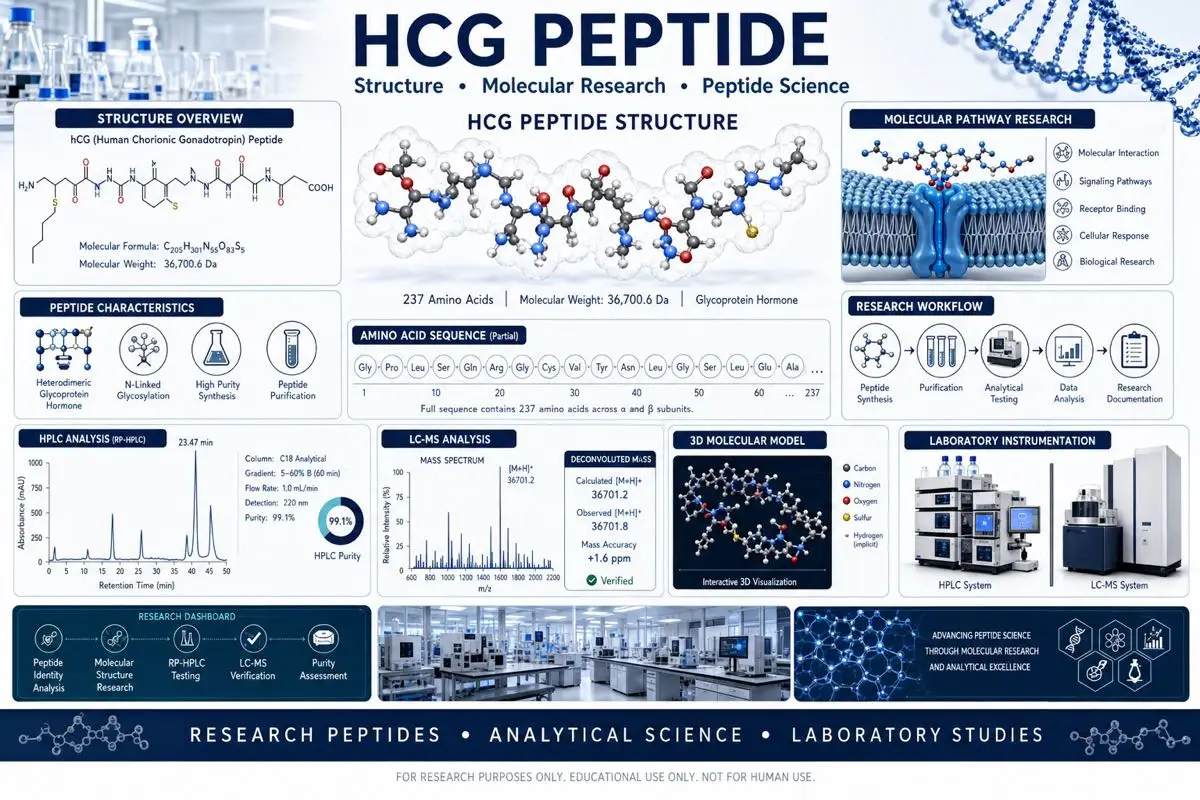
HCG Peptide: Best Research Structure Insights for 2026
2026 HCG peptide research structure insights: glycoprotein hormone classification, alpha/beta subunits, glycosylation, LC-MS and RP-HPLC. Lab use only.
📋 Table of Contents
Research Use Only Notice: The products discussed on this site are sold strictly for in vitro laboratory research purposes only. They are not for human use, not for veterinary use, and not intended to diagnose, treat, cure, or prevent any disease. All information presented is for educational purposes in a research context. Must be 21+ to purchase.
No — hCG is not a peptide. Human chorionic gonadotropin (hCG) is a glycoprotein hormone composed of alpha and beta protein subunits with attached carbohydrate chains. Searches for ‘HCG peptide’ in 2026 typically map to glycoprotein hormone literature covering hormone-receptor interactions, protein structure, and analytical characterization. This 2026 guide preserves that classification and provides structure insights for laboratory researchers.
Key takeaways
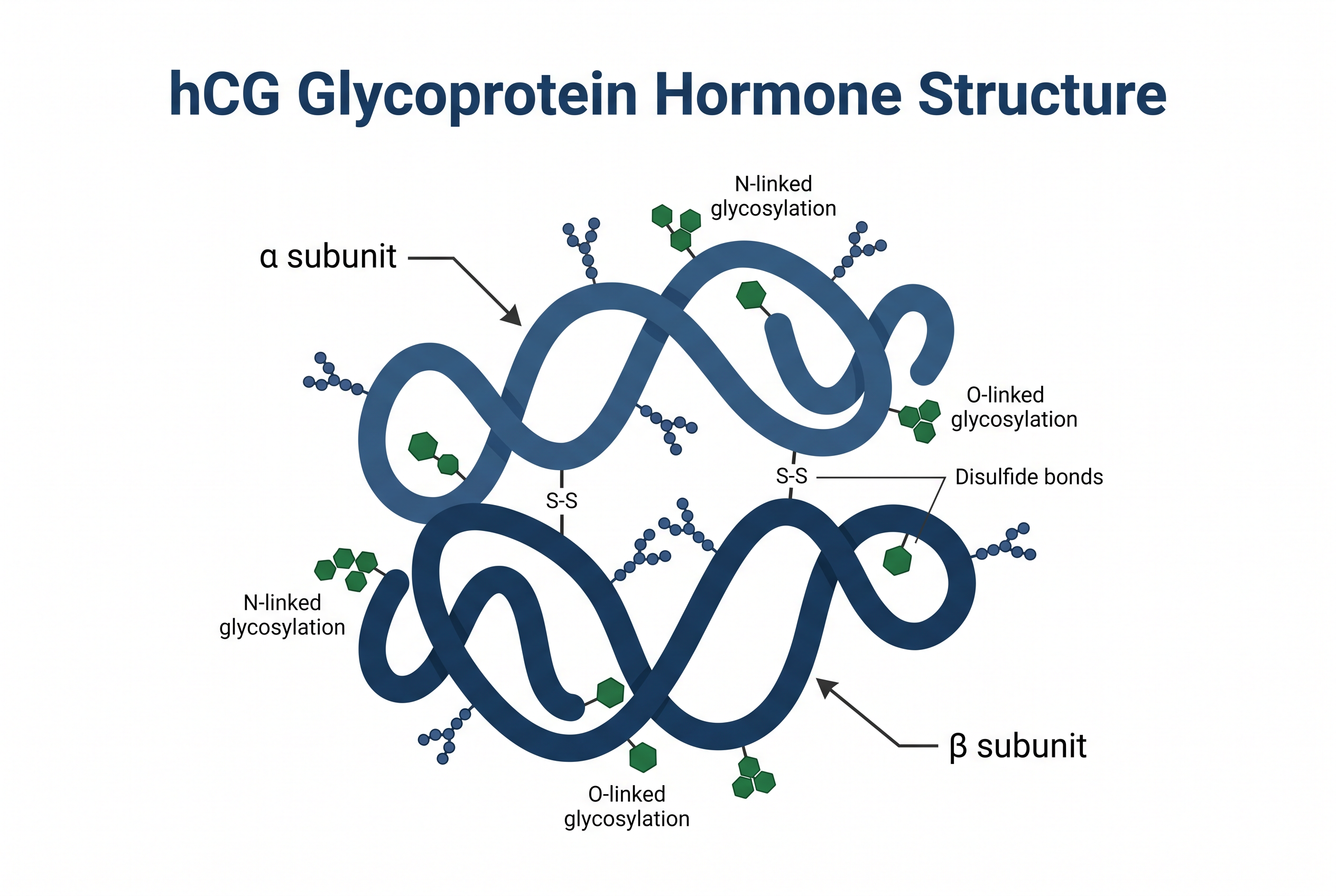
- Despite the common search term ‘HCG peptide,’ hCG is scientifically classified as a glycoprotein hormone, not a peptide. For 2026 research planning, this distinction matters for study design and analytical method selection.
- Researchers investigate human chorionic gonadotropin in 2026 to better understand hormone-receptor interactions, molecular signaling pathways, and protein structure.
- Analytical techniques including LC-MS, RP-HPLC, and computational modeling support molecular characterization and structural research in 2026 laboratory workflows.
- Studying hCG alongside peptide-based research compounds helps scientists understand similarities and differences between glycoprotein hormones and engineered peptides in 2026 comparative projects.
- All hCG research in 2026 remains strictly in vitro and research-use only; no human or veterinary applications are implied.
What is human chorionic gonadotropin (hCG) in 2026 research?
Human chorionic gonadotropin (hCG) is a naturally occurring glycoprotein hormone extensively studied in molecular biology, endocrinology, reproductive biology, and protein chemistry. Although many internet searches refer to ‘HCG peptide,’ the scientific classification is different: hCG belongs to the glycoprotein hormone family rather than the peptide family. This classification remains unchanged in 2026 and guides laboratory method selection.
Researchers investigate hCG to better understand hormone-receptor interactions, protein folding, molecular signaling pathways, glycosylation patterns, and structural biology. These investigations contribute to broader scientific knowledge regarding protein hormones and cellular communication. For 2026 projects, this foundation supports comparative studies with engineered peptides and other glycoproteins.
| Quick Fact | Detail |
|—|—|
| Common Name | Human Chorionic Gonadotropin (hCG) |
| Research Category | Glycoprotein Hormone Research |
| Protein Structure | Alpha and Beta Glycoprotein Subunits |
| Molecular Composition | Alpha and Beta Protein Subunits with Glycosylation |
| Scientific Interest | Hormone Signaling, Molecular Biology & Receptor Research |
| Analytical Evaluation | LC-MS, RP-HPLC & Protein Characterization |
| Research Methods | Protein Characterization, LC-MS & Computational Biology |
| 2026 Research Context | Glycoprotein hormone structure, LC-MS and RP-HPLC characterization |
Classification vs peptide nomenclature in 2026
In 2026 laboratory literature, the term ‘peptide’ generally refers to short chains of amino acids linked by peptide bonds. Glycoprotein hormones like hCG are larger, multi-subunit proteins with covalently attached carbohydrate groups. This distinction is not merely semantic; it affects how researchers select analytical columns, digestion protocols, and reference standards. When a 2026 study protocol lists ‘HCG peptide,’ the investigator should confirm whether the target analyte is a synthetic peptide fragment or the intact glycoprotein hormone.
Is an HCG peptide classification accurate in 2026?
One of the most common questions researchers ask is ‘Is hCG a peptide?’ The scientific answer is no. Human chorionic gonadotropin is classified as a glycoprotein hormone because its molecular structure consists of two protein subunits — an alpha subunit and a beta subunit — with attached carbohydrate chains. In 2026, this classification remains the starting point for any laboratory study design involving hCG reference material or related glycoprotein standards.
Peptides are generally shorter chains of amino acids, whereas glycoprotein hormones are larger and possess additional carbohydrate components that influence molecular stability, receptor recognition, and biological function. Understanding this difference prevents method errors in 2026 analytical workflows that may combine peptide and glycoprotein analytes.
| Scientific Feature | Peptide | Human Chorionic Gonadotropin (hCG) |
|—|—|—|
| Molecular Classification | Peptide | Glycoprotein Hormone |
| Primary Structure | Amino acid chain | Protein subunits with carbohydrate groups |
| Molecular Complexity | Relatively smaller molecules | Larger multi-subunit protein hormone |
| Research Focus | Peptide biology | Hormone signaling and receptor biology |
Why does the internet call it an HCG peptide in 2026?
Many online sources group hCG alongside research peptides because both are commonly discussed within laboratory research communities and appear together in educational catalogs. Scientifically, however, human chorionic gonadotropin is a glycoprotein hormone. The phrase ‘HCG peptide’ has become a common search term, but researchers should interpret it as a gateway to glycoprotein hormone literature rather than a true peptide classification. For 2026 literature reviews, this search-term clarification saves time and prevents misclassification in study protocols. Supplier pages such as Tiger Peptides | Research-Grade Peptides for Laboratories often separate glycoprotein reference materials from peptide products to help researchers avoid this confusion.
💡 Key Takeaway: Is an HCG peptide classification accurate? In 2026, no — hCG is a glycoprotein hormone, not a peptide. This distinction drives correct analytical method selection.
💡 Key Takeaway: Is an HCG peptide classification accurate in 2026?
What protein structure and glycosylation define hCG for 2026 studies?
Researchers studying human chorionic gonadotropin investigate its three-dimensional protein architecture, glycosylation patterns, and receptor-binding characteristics. The alpha and beta subunits work together to create the complete glycoprotein hormone structure examined in molecular biology research. In 2026, high-resolution structural biology tools continue to refine these models.
Protein structure analysis, computational modeling, and biochemical characterization help scientists understand how molecular organization influences receptor interactions and structural stability. Labeled reference material packaging supports lot tracking during HCG peptide related laboratory intake. For 2026 laboratory inventory, researchers should verify that glycoprotein reference standards include glycosylation profiling data.
| Structural Component | Scientific Significance |
|—|—|
| Alpha Subunit | Shared structural component among several glycoprotein hormones |
| Beta Subunit | Provides molecular specificity for hCG |
| Glycosylation Sites | Influence protein stability and molecular properties |
| Three-Dimensional Structure | Supports receptor interaction research |
Alpha and beta subunit roles in 2026 structural research
The alpha subunit of hCG shares sequence and structural homology with alpha subunits of luteinizing hormone, follicle-stimulating hormone, and thyroid-stimulating hormone. The beta subunit confers biological specificity to hCG. In 2026, researchers use computational docking and molecular dynamics simulations to examine how the beta subunit’s unique loops and glycosylation sites interact with receptor interfaces. This work informs the design of glycoprotein analogs and helps distinguish hCG from related hormones in multiplex assays.
Glycosylation site mapping in 2026
Glycosylation — the covalent attachment of carbohydrate moieties to asparagine, serine, or threonine residues — affects protein folding, stability, and receptor binding. For 2026 glycoprotein characterization, laboratories often combine enzymatic deglycosylation with LC-MS to map occupied sites. This approach reveals microheterogeneity that would be invisible to peptide-only analysis. Accurate site mapping supports lot-to-lot comparison of reference materials and improves reproducibility across independent research groups.
How does hormone receptor biology connect to HCG peptide discussions in 2026?
Scientific investigations involving hCG focus on receptor biology, molecular signaling pathways, and protein interaction networks. Researchers study how glycoprotein hormones communicate with specific receptor systems through highly regulated molecular processes. In 2026, advances in structural biology, computational modeling, and analytical chemistry continue improving scientific understanding of hormone-receptor interactions and protein signaling mechanisms.
| Research Area | Scientific Investigation |
|—|—|
| Receptor Biology | Hormone-receptor interaction studies |
| Protein Chemistry | Structural characterization |
| Molecular Biology | Cellular signaling investigations |
| Computational Biology | Protein structure modeling |
Although hCG is not classified as a peptide, it is frequently discussed alongside peptide-based research because both areas contribute to molecular biology, analytical chemistry, and receptor signaling research. Comparative studies help scientists understand the structural and functional differences between peptide molecules and glycoprotein hormones. This broader scientific perspective strengthens research into protein engineering, analytical characterization, computational biology, and molecular communication systems. For 2026 multi-analyte studies, researchers can consult supplier resources like Tiger Peptides | Research-Grade Peptides for Laboratories to compare glycoprotein and peptide reference material categories.
Receptor binding and signaling pathways in 2026
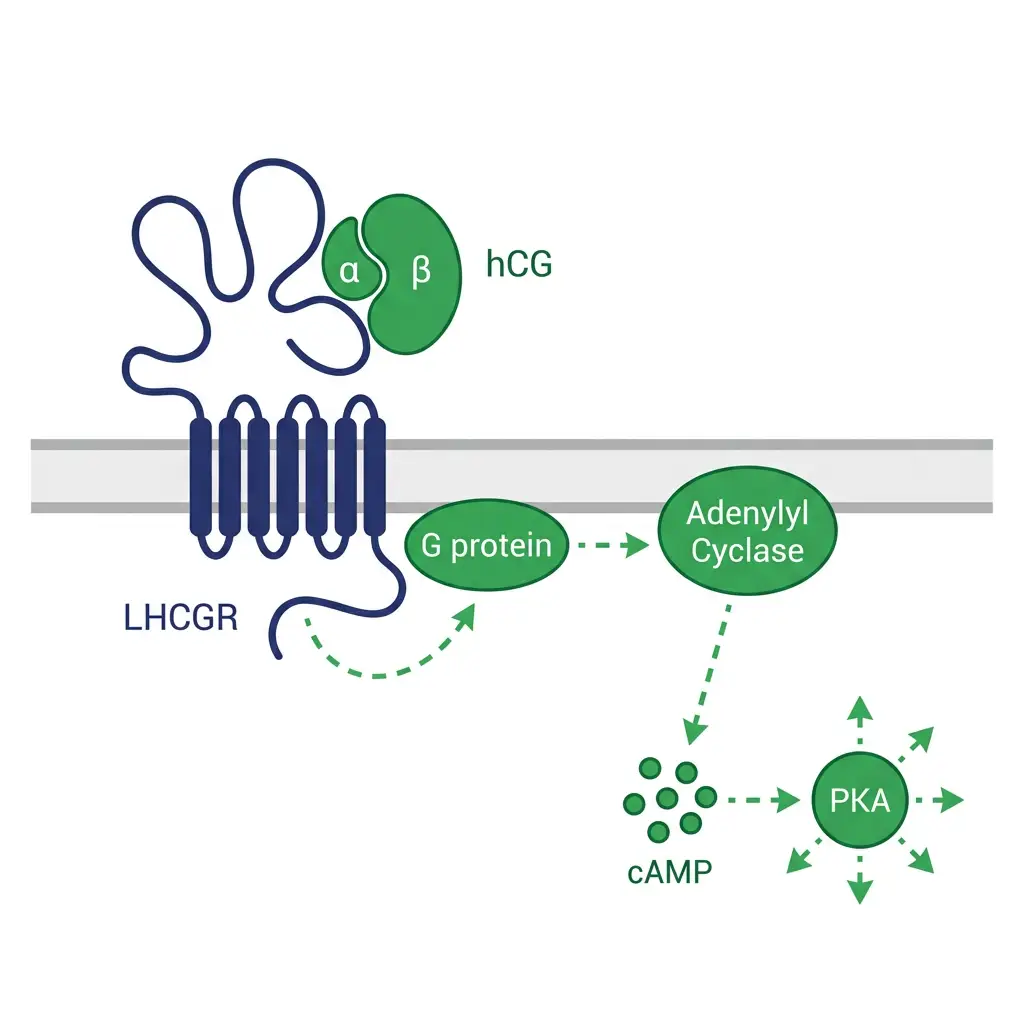
hCG binds to the luteinizing hormone/choriogonadotropin receptor, a G protein-coupled receptor, initiating intracellular signaling cascades. In 2026 research, receptor binding assays and cell-based models help map which glycosylation variants retain high-affinity binding. These experiments remain strictly in vitro; no human or animal administration is involved. Understanding receptor interactions at the molecular level informs the development of glycoprotein-based research tools and supports peptide analog screening.
What analytical characterization and laboratory testing methods are used in 2026?
Modern analytical technologies provide detailed insights into hCG’s molecular composition and biochemical properties. In 2026, common laboratory methods include:
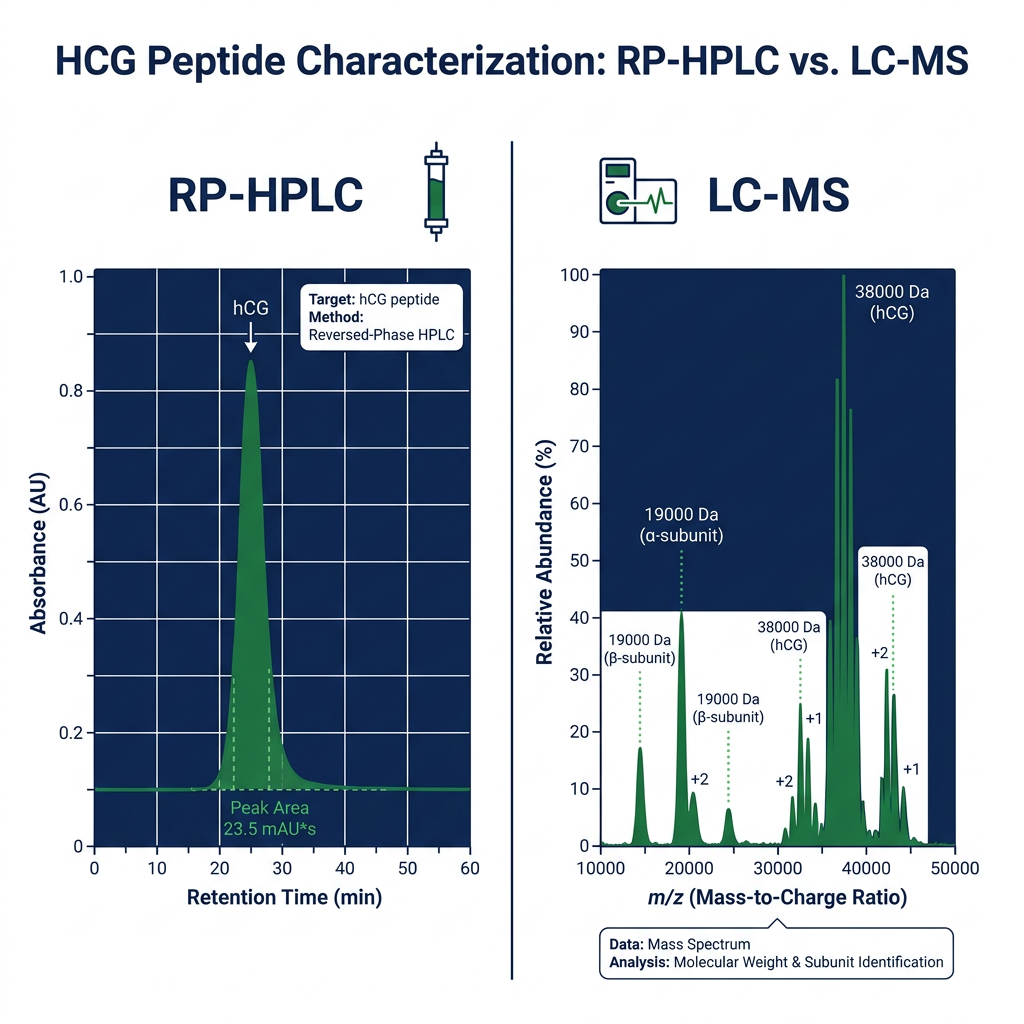
- LC-MS (liquid chromatography–mass spectrometry): Used to separate and identify protein and glycoprotein components, including glycosylation variants.
- RP-HPLC (reverse-phase high-performance liquid chromatography): Supports purity assessment and separation of protein subunits or modified forms.
- Protein characterization: Includes structural analysis, subunit identification, and glycosylation profiling.
- Computational biology and modeling: Helps predict three-dimensional structure, receptor-binding interfaces, and stability under experimental conditions.
These methods are applied strictly within laboratory research settings and are not intended for diagnostic or human-use applications. For 2026 analytical method validation, laboratories should document LC-MS and RP-HPLC parameters such as column type, mobile phase, and detection wavelength in their standard operating procedures.
LC-MS workflow for 2026 glycoprotein analysis
Liquid chromatography–mass spectrometry separates glycoprotein isoforms based on physicochemical properties and then measures intact mass or peptide fragments. For hCG research, a typical 2026 LC-MS workflow includes sample preparation, enzymatic digestion if needed, chromatographic separation, and high-resolution mass detection. Data analysis software assigns glycan compositions and identifies subunit-specific peptides. This method provides the molecular detail needed to distinguish hCG from related glycoprotein hormones.
RP-HPLC purity assessment in 2026
Reverse-phase high-performance liquid chromatography is a core technique for assessing purity and separating protein subunits or modified forms. In 2026, laboratories use RP-HPLC to monitor batch consistency of hCG reference material and to isolate alpha or beta subunits for downstream characterization. Because RP-HPLC does not require volatile buffers, it can be coupled directly to fraction collectors for preparative research. Purity results are reported as relative peak area percentages in research documentation, not as product specifications for human use.
Computational modeling in 2026
Computational biology complements wet-lab analysis by predicting three-dimensional structures, receptor-binding interfaces, and stability under experimental conditions. For 2026 hCG research, homology modeling and molecular dynamics simulations help visualize how glycosylation affects protein conformation. These in silico tools reduce the number of physical experiments needed and support hypothesis generation for receptor interaction studies. All computational predictions require experimental validation before conclusions are drawn.
💡 Key Takeaway: What analytical characterization and laboratory testing methods are used? In 2026, LC-MS, RP-HPLC, protein characterization, and computational modeling remain the core tools for hCG glycoprotein research.
💡 Key Takeaway: What analytical characterization and laboratory testing methods are used in 2026?
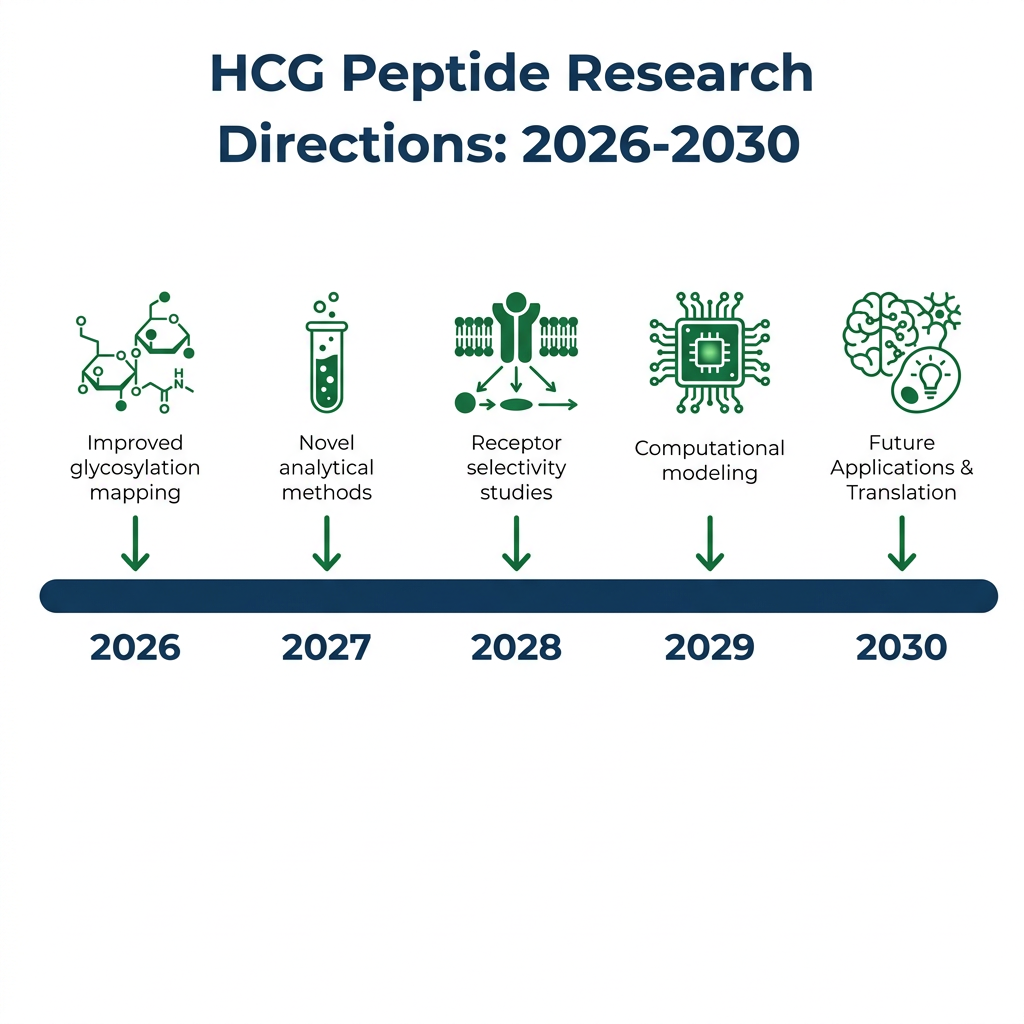
What are future HCG peptide research directions for 2026 and beyond?
Future research directions in the hCG space — often searched as ‘HCG peptide’ — continue to expand through advances in structural biology, computational modeling, and analytical chemistry. Key areas of interest include:
- Higher-resolution characterization of glycosylation patterns and their effect on protein stability and receptor recognition.
- Comparative studies between glycoprotein hormones and engineered peptide analogs to understand structural and functional differences.
These directions build directly on current 2026 analytical capabilities. Researchers may also consult Research Peptides vs Cosmetic Peptides: Lab Basics to clarify how engineered peptides differ from glycoprotein hormones in research settings.
Comparative studies in 2026
A major 2026 research theme is side-by-side analysis of intact hCG and synthetic peptide fragments derived from its beta subunit. Such comparisons reveal which receptor-binding determinants reside in the peptide backbone and which require full glycoprotein context. These studies use identical LC-MS and RP-HPLC conditions for both analyte classes, allowing direct method transfer. Results inform the design of simplified research probes that retain specific binding properties without the complexity of full glycosylation.
Where can I find scientific resources and references for 2026 HCG peptide research?
For 2026 reference sourcing, consult the NCBI Bookshelf entry on human chorionic gonadotropin. A PubMed search for hCG glycoprotein structure returns current literature relevant to 2026 laboratory research. Researchers comparing suppliers may also review 10 Signs of a Reliable Peptide Supplier in the USA to evaluate reference material sources.
Primary literature databases for 2026
Peer-reviewed databases remain the foundation for 2026 hCG research literacy. PubMed indexes structural biology, analytical chemistry, and receptor pharmacology papers. NCBI Bookshelf provides stable summaries suitable for laboratory training. When searching, use both ‘human chorionic gonadotropin’ and ‘glycoprotein hormone’ as keywords to capture the full literature. Avoid relying solely on commercial product pages for scientific definitions.
FAQ
Is HCG a peptide in 2026?
No. In 2026, hCG is classified as a glycoprotein hormone, not a peptide. It consists of alpha and beta protein subunits with attached carbohydrate chains. The common search term ‘HCG peptide’ is a misnomer that leads researchers to glycoprotein hormone literature.
What analytical methods are used for hCG research in 2026?
Core methods include LC-MS for glycosylation variant identification, RP-HPLC for purity assessment and subunit separation, protein characterization for structural analysis, and computational modeling for three-dimensional structure prediction. All methods are research-use only.
Can hCG be used for human consumption in 2026 research?
No. hCG and all related reference materials discussed here are strictly for in vitro laboratory research. They are not for human use, not for veterinary use, and not intended to diagnose, treat, cure, or prevent any disease. Researchers must be 21+ to purchase.
What are the two subunits of hCG?
hCG has an alpha subunit shared with other glycoprotein hormones and a beta subunit that provides molecular specificity. Both subunits contain glycosylation sites that influence protein stability and receptor recognition.
How does hCG compare to research peptides in 2026?
In 2026, hCG is a larger multi-subunit glycoprotein hormone, while research peptides are shorter amino acid chains. Comparative studies help scientists understand structural and functional differences between these two analyte classes, but they require different analytical handling and reference standards.
Ready to Take the Next Step?
Every product includes lot-specific documentation and third-party purity testing.
Explore Our Research Products →Free shipping on qualifying orders · Batch COA on request