
BPC-157 vs TB-500: Best Scientific Differences Guide (2026)
BPC-157 vs TB-500: compare molecular structure, analytical verification, and preclinical evidence in this essential 2026 research guide for laboratories.
📋 Table of Contents
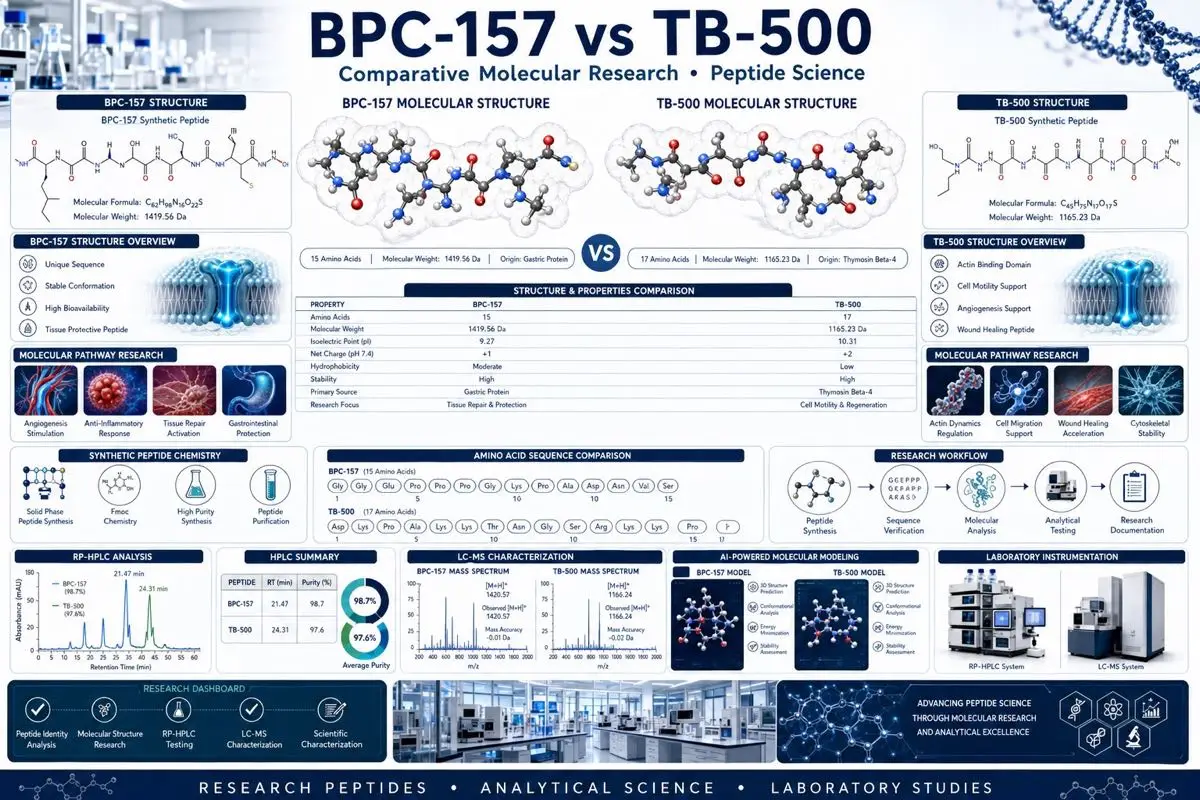
bpc 157 and TB-500 are two synthetic research peptides frequently compared in preclinical laboratory studies, yet they differ fundamentally in origin, molecular architecture, and experimental focus. bpc 157 is a 15‑amino‑acid synthetic pentadecapeptide derived from a protective gastric protein sequence, while TB‑500 is a synthetic fragment modeled after biologically active regions of Thymosin Beta‑4 (Tβ4). These structural differences drive distinct research applications: bpc 157 is studied for cellular signaling, angiogenesis, and extracellular matrix interactions, whereas TB‑500 is investigated for actin regulation, cytoskeletal dynamics, and cell migration.
Key takeaways
- bpc 157 and TB-500 come from different biological frameworks and have distinct molecular architectures.
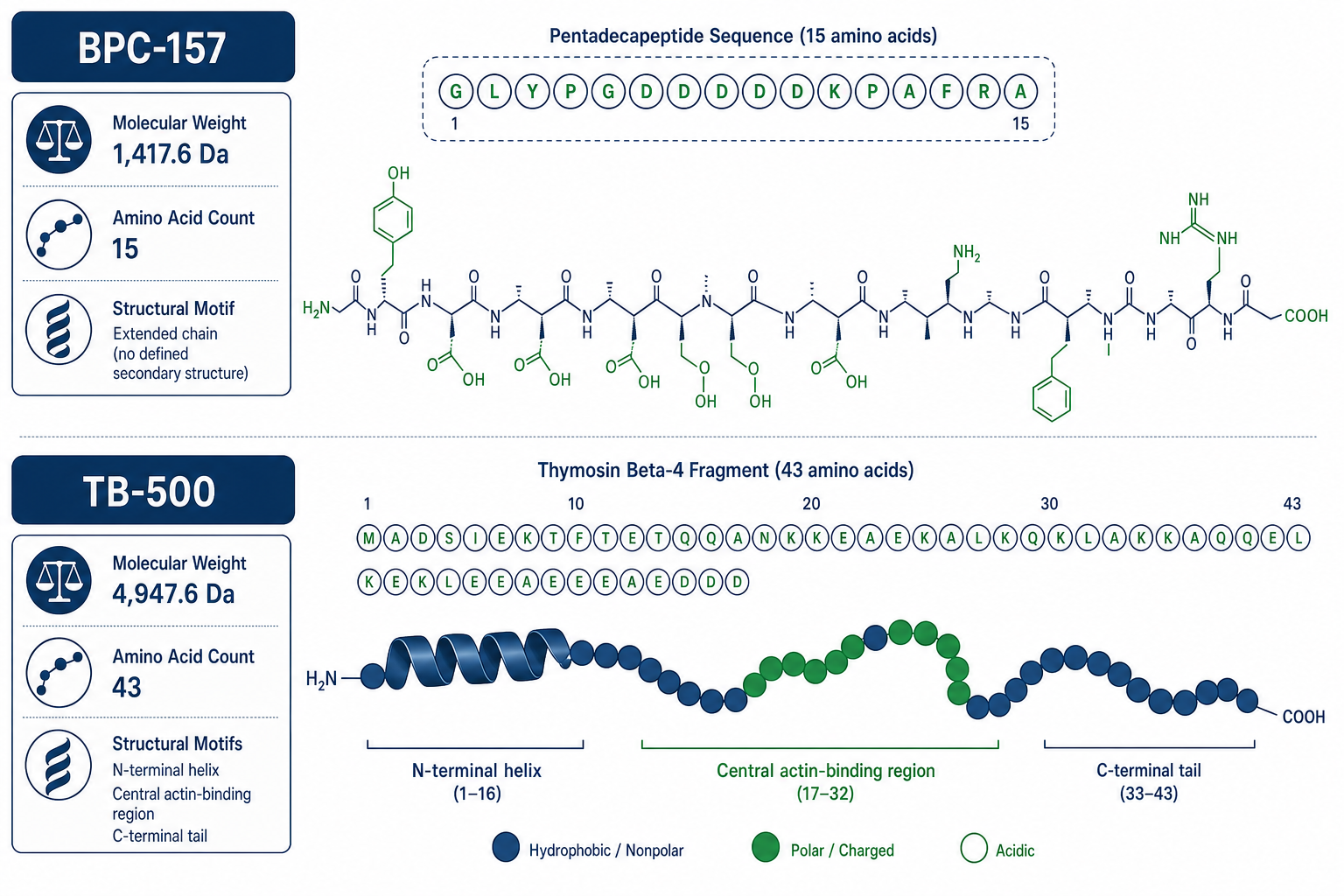
- bpc 157 is a 15‑amino‑acid synthetic pentadecapeptide; TB‑500 is a synthetic research fragment based on Thymosin Beta‑4.
- Their primary research focuses differ: bpc 157 on cellular signaling and tissue biology, TB‑500 on cell migration and cytoskeletal biology.
- Both peptides demand rigorous analytical characterization (RP‑HPLC, LC‑MS, amino acid sequencing, purity analysis) before experimental use.
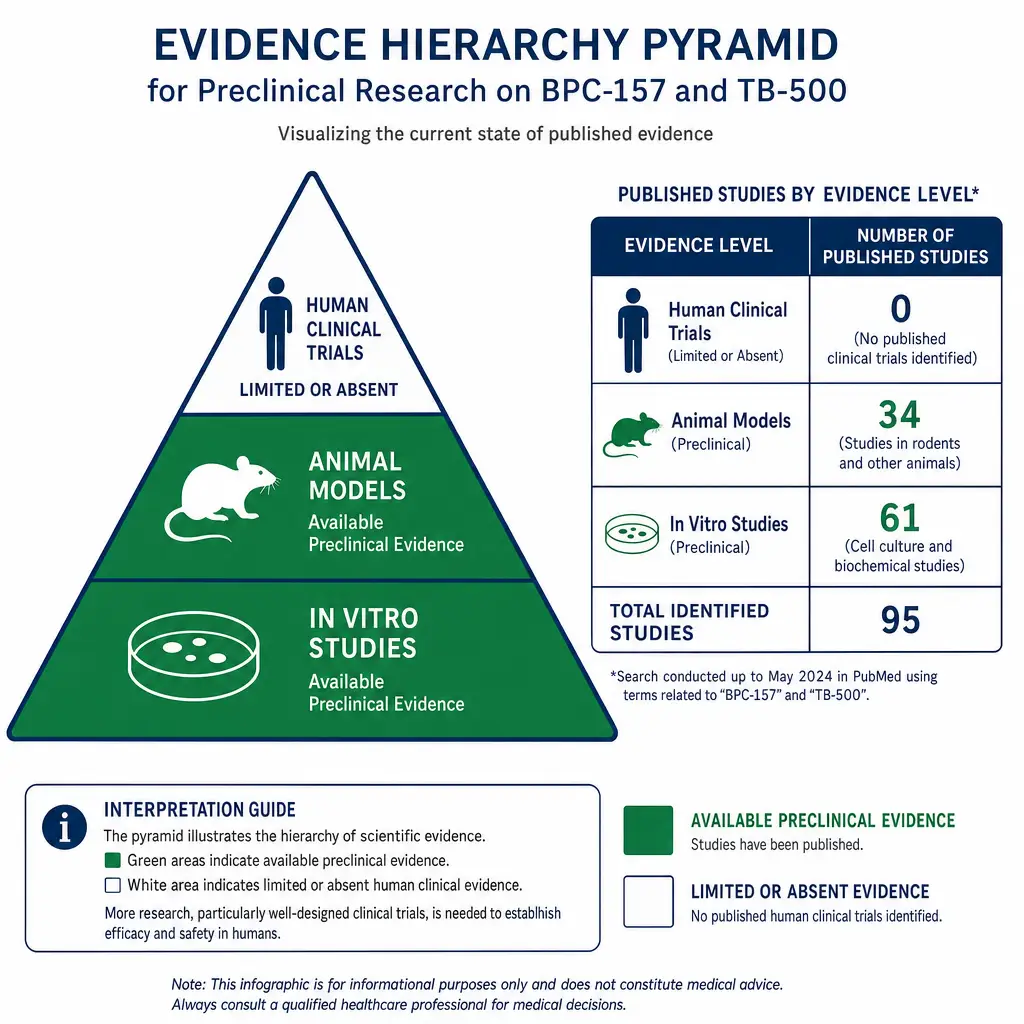
- Published evidence for both compounds remains largely preclinical, consisting of in vitro and animal model studies, not large‑scale human clinical trials.
⚠️ Research Use Only Notice: The products discussed on this site are sold strictly for in vitro laboratory research purposes only. They are not for human use, not for veterinary use, and not intended to diagnose, treat, cure, or prevent any disease. All information presented is for educational purposes in a research context. Must be 21+ to purchase.
What are the scientific foundations of bpc 157 vs TB-500?
bpc 157, abbreviated from Body Protection Compound‑157, is a synthetic pentadecapeptide composed of exactly 15 amino acids. It was derived from a naturally occurring protective protein sequence associated with gastric juice. Laboratory interest in bpc 157 has centered on cellular signaling pathways, tissue biology, angiogenesis, and interactions with components of the extracellular matrix. Most published data involving bpc 157 come from preclinical investigations—in vitro experiments and animal models—rather than human clinical research.
TB‑500, by contrast, is a synthetic peptide designed to model biologically active regions of Thymosin Beta‑4 (Tβ4), an endogenous protein widely distributed throughout mammalian tissues. TB‑500 does not represent the complete native protein; it serves as a research analogue intended to investigate specific biological processes associated with actin dynamics, cytoskeletal organization, and cellular migration. This molecular design difference means TB‑500 is typically evaluated through experimental models focused on cell movement and structural protein regulation.
Although both peptides appear in studies involving tissue biology, they are not interchangeable research tools. Each compound represents a separate area of peptide research with its own biochemical rationale, experimental methodology, and analytical requirements. Researchers searching for bpc 157 literature can use PubMed to locate peer-reviewed preclinical studies, while TB‑500 research is indexed under thymosin beta‑4 terms on NCBI.

How do the molecular structures of bpc 157 and TB-500 compare?
The molecular architecture of each peptide determines how it behaves in laboratory assays and which analytical techniques are appropriate for verification.
bpc 157 is a synthetic pentadecapeptide—a chain of exactly 15 amino acids. Its sequence derives from a protective protein found in gastric juice, giving it a specific primary structure that researchers can confirm through amino acid sequencing and mass spectrometry. Its relatively short length makes it amenable to high‑resolution analytical methods like reversed‑phase high‑performance liquid chromatography (RP‑HPLC) and liquid chromatography–mass spectrometry (LC‑MS).
TB‑500 is a synthetic research peptide based on the active region of Thymosin Beta‑4. It is not a full‑length native protein but a designed fragment intended to model key biological activities. Because TB‑500 mimics only a portion of Tβ4, its exact amino acid sequence and purity profile must be verified independently for each research batch using the same analytical toolkit: RP‑HPLC, LC‑MS, and peptide sequencing.
Neither peptide has a well‑defined three‑dimensional crystal structure published in the context of routine research characterization; both are evaluated primarily by primary sequence and purity. Researchers must request a certificate of analysis (COA) that confirms identity, purity percentage, and residual solvent levels before using either compound in experiments. When comparing suppliers for bpc 157, laboratories should review 10 Signs of a Reliable Peptide Supplier in the USA to ensure analytical documentation is complete.

💡 Key Takeaway: How do the molecular structures of bpc 157 and TB-500 compare?
How do bpc 157 and TB-500 compare biologically?
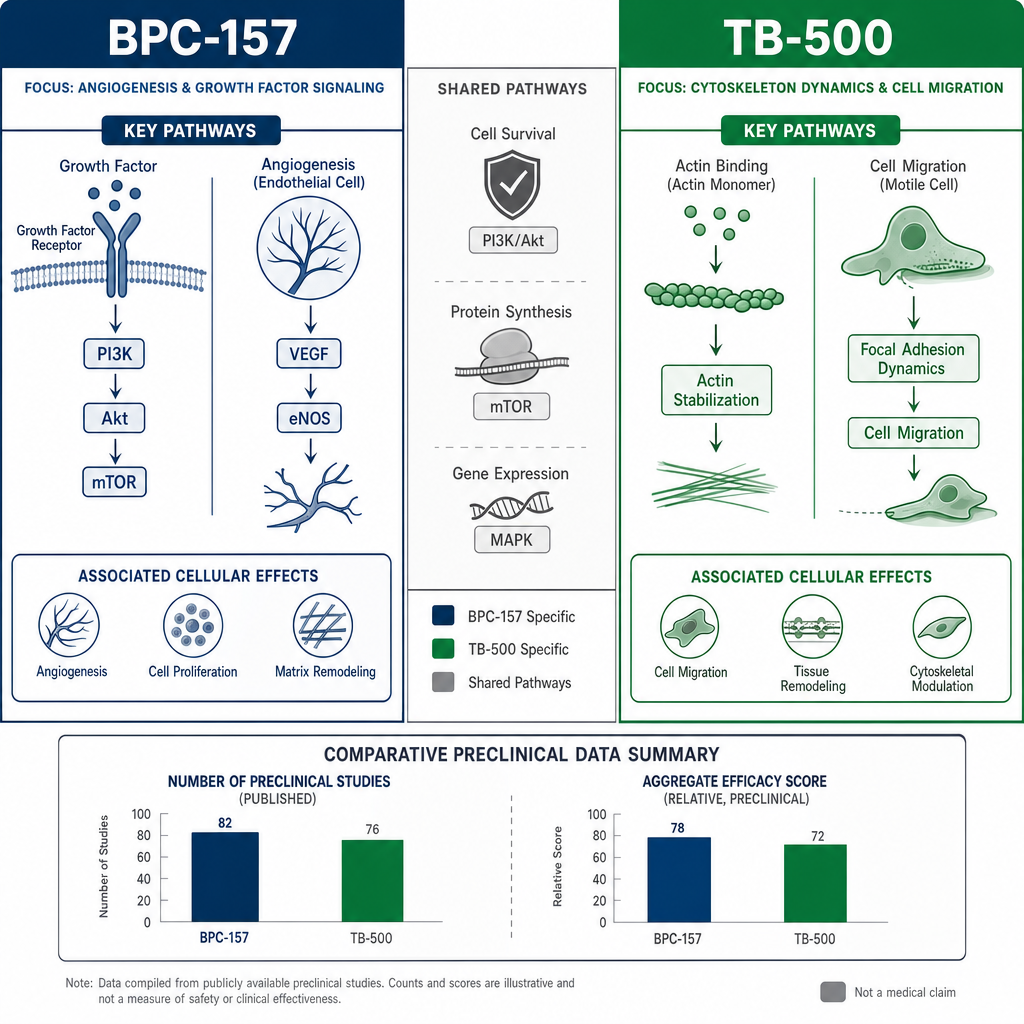
The biological research questions surrounding bpc 157 and TB-500 are distinct, reflecting their different origins and structural designs.
bpc 157 research focus:
- Cellular signaling pathways involved in tissue maintenance and repair processes
- Angiogenesis (formation of new blood vessels) in laboratory models
- Extracellular matrix composition and remodeling
- Interactions with gastric‑derived protective protein sequences
TB‑500 research focus:
- Actin cytoskeletal dynamics and regulation
- Cellular migration and motility in vitro
- Tissue biology related to cytoskeletal organization
- Modeling activities of Thymosin Beta‑4 without using the full native protein
These divergent focuses mean that even when both peptides are studied in similar tissue‑biology contexts, the experimental endpoints and readouts differ. A bpc 157 study might measure angiogenic markers or extracellular matrix protein expression, whereas a TB‑500 study might quantify actin polymerization or cell migration rates. Published evidence for both remains preclinical; no large‑scale human clinical trials have established efficacy or safety for either compound.

Which analytical methods are used to verify bpc 157 and TB-500?
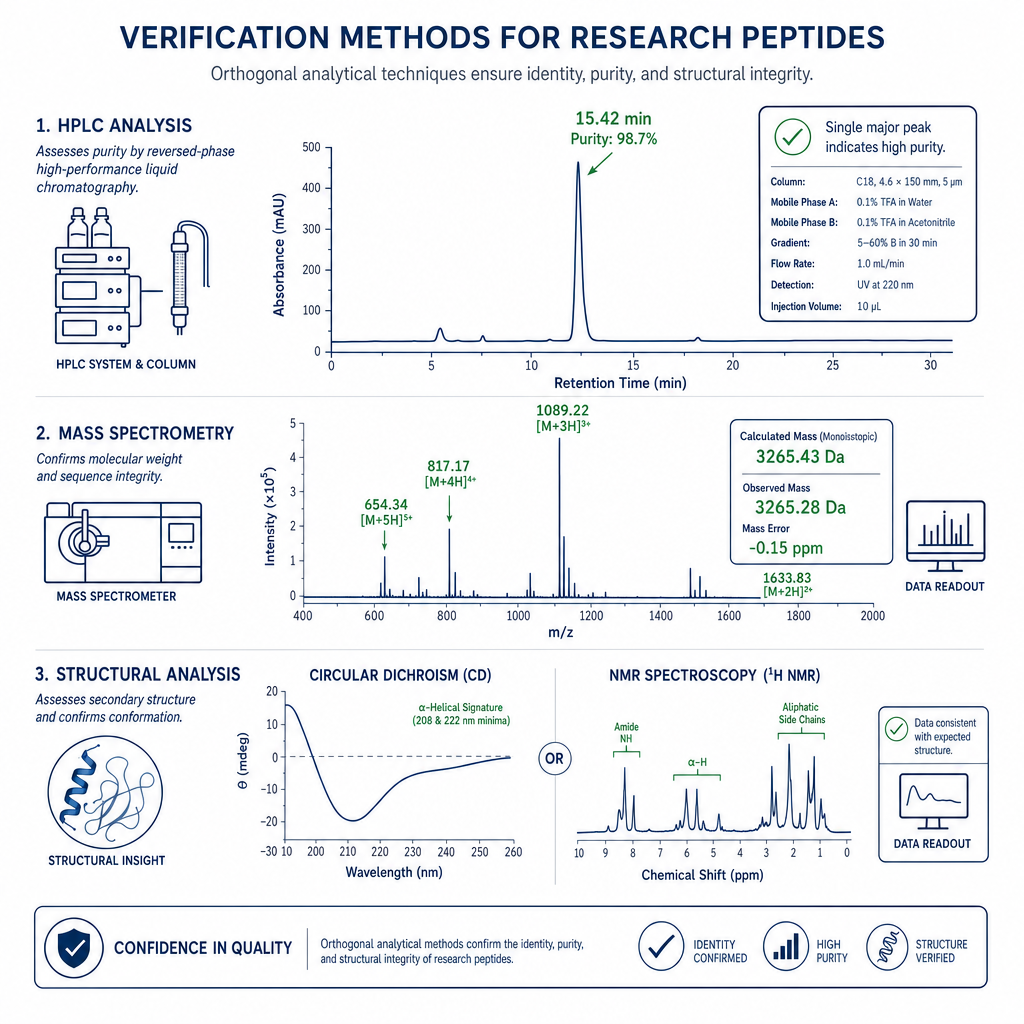
Laboratory characterization of research peptides requires multiple orthogonal techniques to confirm identity, purity, and structural integrity. For both bpc 157 and TB-500, the standard analytical workflow includes:
- RP‑HPLC (reversed‑phase high‑performance liquid chromatography): Separates peptide species based on hydrophobicity, providing a purity percentage (typically reported as ≥95% or ≥98% for research‑grade material).
- LC‑MS (liquid chromatography–mass spectrometry): Confirms the molecular mass of the peptide matches the expected theoretical mass for the stated sequence.
- Amino acid sequencing: Verifies the primary sequence of the peptide, ensuring no truncations, deletions, or substitutions.
- Purity analysis: Quantifies the proportion of the target peptide relative to impurities, degradation products, or residual synthesis by‑products.
Every research batch should be accompanied by a certificate of analysis (COA) from the supplier that lists these results, including the exact purity percentage, retention time, and mass spectrum. Storage conditions also matter: peptides are typically stored lyophilized at –20°C or –80°C, protected from light and moisture, to maintain stability. Researchers should request and review the COA before using either peptide in any experiment. For bpc 157 specifically, the COA should confirm the 15‑amino‑acid sequence and a purity of at least 95% for reliable research results.

What is the current state of scientific evidence for bpc 157 vs TB-500?
The evidence base for both bpc 157 and TB-500 consists primarily of preclinical laboratory research—in vitro cell culture studies and animal model experiments. Neither compound has been validated in large‑scale, randomized human clinical trials, and no regulatory agency has approved either peptide as a therapeutic agent for any indication.
Published studies on bpc 157 have investigated its role in cellular signaling, angiogenesis, and extracellular matrix interactions, often using rodent models of tissue injury or gastric biology. TB‑500 research has focused on actin regulation, cytoskeletal dynamics, and cell migration, frequently employing in vitro assays or animal models of tissue repair. While the number of publications on bpc 157 has grown steadily over the past two decades, the clinical translation remains absent. Researchers can review the current preclinical literature on bpc 157 via PubMed and on TB‑500 via PubMed thymosin beta‑4 search.
💡 Key Takeaway: What is the current state of scientific evidence for bpc 157 vs TB-500?
Why is a Certificate of Analysis important for research peptides like bpc 157 and TB-500?
A Certificate of Analysis (COA) is the primary quality document for any research peptide. For bpc 157 and TB-500, the COA verifies that the material matches the claimed sequence, purity, and physical characteristics. Without a COA, researchers cannot confirm whether a peptide is authentic, truncated, contaminated, or degraded.
Key elements of a reliable COA for bpc 157 include:
- Exact amino acid sequence confirmation (15 residues for bpc 157)
- Purity percentage from RP‑HPLC (≥95% or ≥98%)
- Mass spectrum from LC‑MS matching theoretical mass
- Residual solvent analysis results
- Batch number and date of manufacture
- Storage recommendations
Suppliers that do not provide COAs for bpc 157 or TB-500 should be treated with caution. The same analytical rigor applies to both peptides; a missing COA makes experimental reproducibility impossible. For guidance on evaluating peptide vendors, see Research Peptides vs Cosmetic Peptides: Lab Basics and Tiger Peptides | Research-Grade Peptides for Laboratories.
How should researchers store and handle bpc 157 and TB-500?
Proper storage is critical for maintaining peptide integrity. Both bpc 157 and TB-500 are typically supplied as lyophilized powders that should be stored at –20°C or –80°C, protected from light and moisture. Repeated freeze‑thaw cycles should be avoided because they can promote aggregation or degradation.
For short‑term use, aliquoting the reconstituted peptide into single‑use vials reduces the risk of repeated thawing. The lyophilized form is more stable than solution; once reconstituted, the peptide should be used promptly according to the laboratory’s protocol and stored at recommended temperatures. Always consult the supplier’s COA and handling instructions for bpc 157 and TB-500, as specific stability data may vary by batch and formulation.
What factors should laboratories consider when sourcing bpc 157 and TB-500?
When sourcing bpc 157 or TB-500 for research, laboratories should evaluate several critical factors beyond price:
- COA availability: Does the supplier provide a detailed, batch‑specific COA for bpc 157 and TB-500?
- Analytical methods: Are RP‑HPLC, LC‑MS, and amino acid sequencing results included?
- Purity level: Is the reported purity at least 95%, preferably 98% or higher for bpc 157?
- Storage and shipping: Are peptides shipped lyophilized with appropriate temperature control?
- Supplier reputation: Does the vendor have a track record of serving research laboratories, as described in Nationwide Peptides for Research Labs?
These criteria help ensure that the bpc 157 or TB-500 received is suitable for preclinical experiments. Because these peptides are not approved for human use, all handling must remain within a research‑only framework.
💡 Key Takeaway: What factors should laboratories consider when sourcing bpc 157 and TB-500?
FAQ
What is the main difference between bpc 157 and TB-500?
The main difference is origin and structure. bpc 157 is a 15‑amino‑acid pentadecapeptide derived from a gastric protective protein, while TB-500 is a synthetic fragment modeled on Thymosin Beta‑4. This leads to distinct research focuses: bpc 157 on cellular signaling and tissue biology, TB-500 on actin dynamics and cell migration.
Are bpc 157 and TB-500 the same peptide?
No. They are entirely different peptides with unrelated amino acid sequences and biological origins. bpc 157 contains exactly 15 amino acids, whereas TB-500 is a fragment based on a much larger native protein, Tβ4. They are not interchangeable in research protocols.
What purity level should I look for when buying bpc 157?
For research use, bpc 157 should have a purity of at least 95% by RP‑HPLC, with many suppliers offering 98% or higher. The COA should confirm this percentage along with LC‑MS mass data and amino acid sequencing.
How should bpc 157 and TB-500 be stored?
Both peptides should be stored lyophilized at –20°C or –80°C, protected from light and moisture. Avoid repeated freeze‑thaw cycles by aliquoting reconstituted solutions into single‑use vials.
Is there clinical trial data for bpc 157 or TB-500?
No. Published evidence for both bpc 157 and TB-500 remains preclinical—in vitro and animal model studies. Neither peptide has been validated in large‑scale human clinical trials or approved by any regulatory agency for therapeutic use.
Ready to Take the Next Step?
Every product includes lot-specific documentation and third-party purity testing.
Explore Our Research Products →Free shipping on qualifying orders · Batch COA on request