
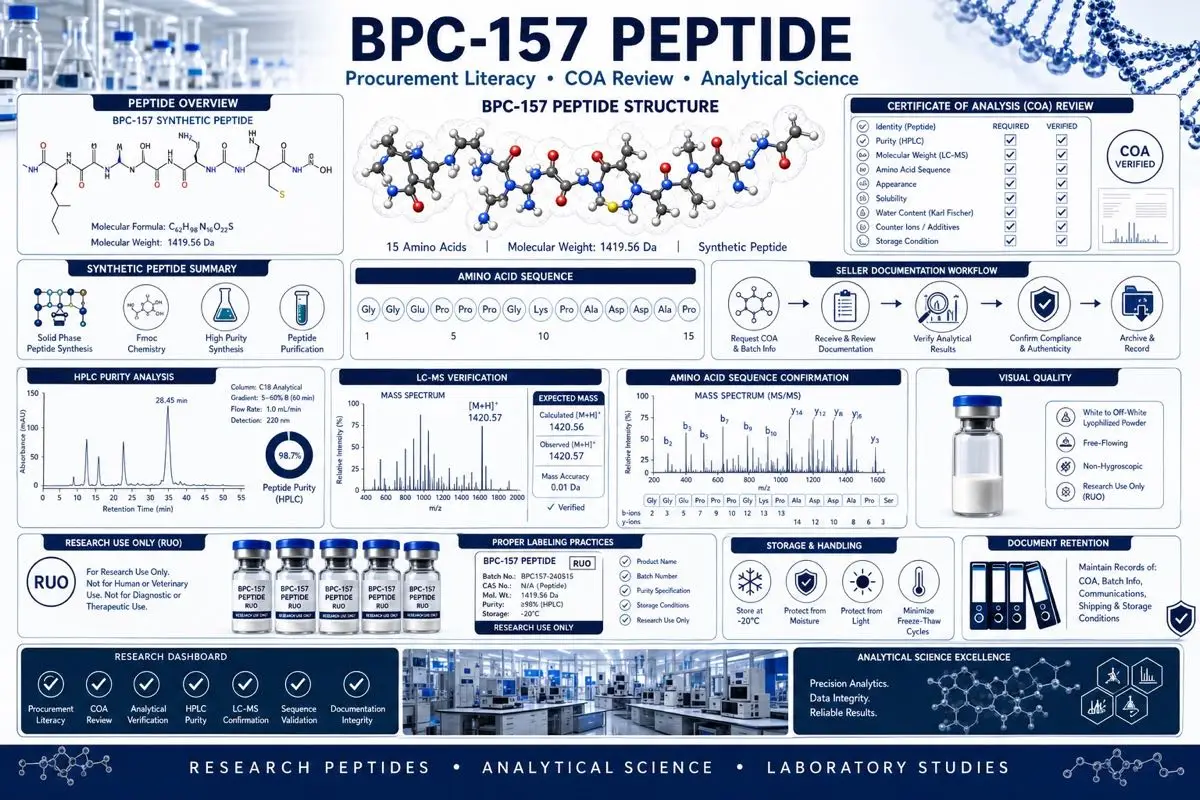
5 Checks Before You Buy BPC-157 Peptide Online for Research
Buy bpc 157 peptide with 5 proven checks: verify COA, HPLC/MS purity, seller traceability, vial size, and research-only labels before ordering for research.
📋 Table of Contents
For laboratory researchers who need to buy bpc 157 peptide for a defined assay, the decision is a documentation and qualification task, not a simple ecommerce checkout. Run five qualification checks before you buy bpc 157 peptide online: confirm the listing is explicitly research-use-only with a batch-matched certificate of analysis (COA), verify the analytical method (HPLC/MS) and lot-specific purity, vet the seller’s traceable U.S. business identity and documentation discipline, match vial size to your protocol rather than marketing, and reject any human-use or therapeutic claims. BPC-157 is not a component of an FDA-approved drug and remains investigational, so documentation and sourcing checks outweigh price or milligram count.
Key takeaways
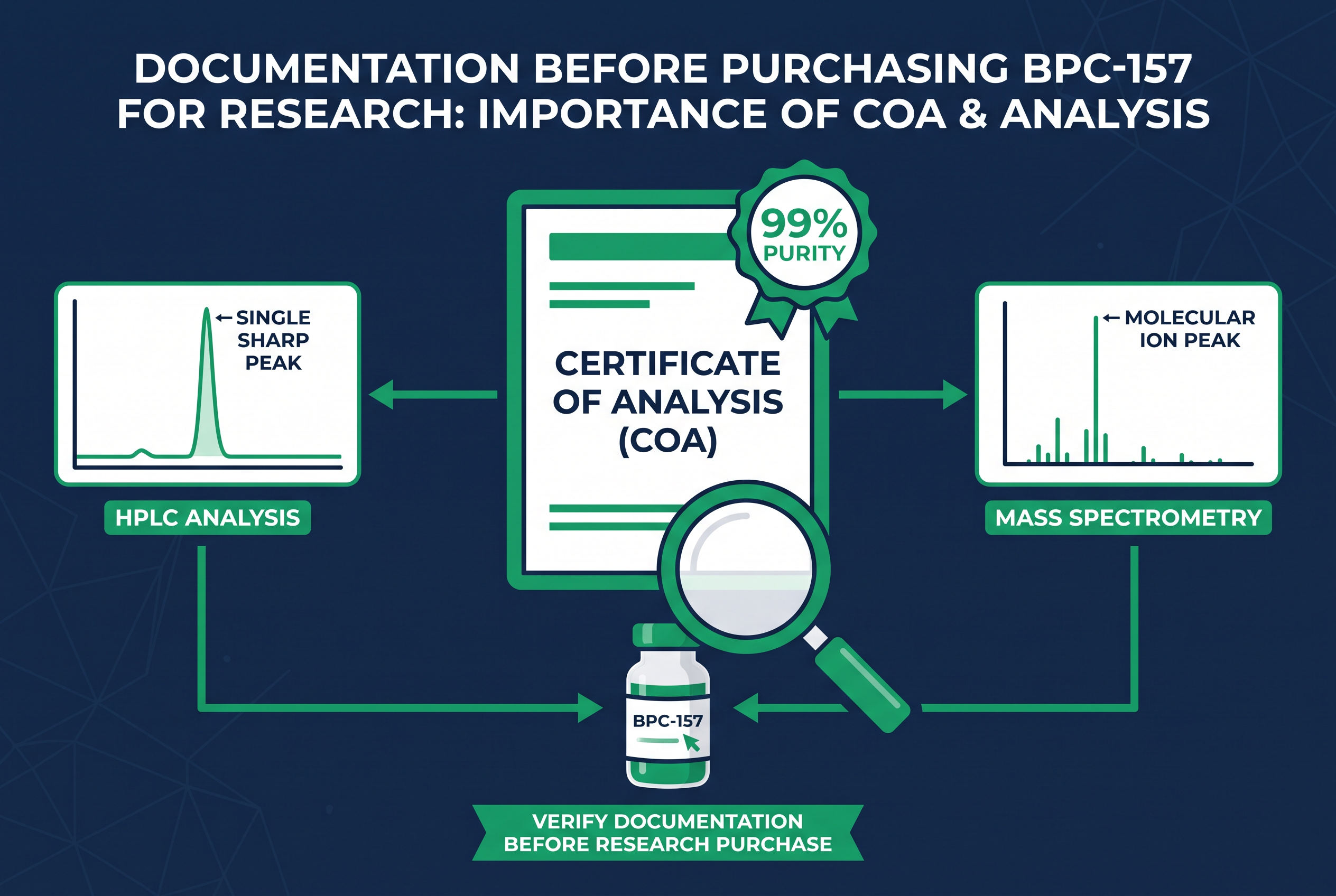
- BPC-157 is not FDA-approved, lacks a USP or NF drug substance monograph, and is not on the 503A Bulks List; procurement must stay research-only.
- Before you buy bpc 157 peptide, confirm the listing is research-use-only and the COA batch number matches the vial.
- PubMed reviews identify only three pilot human studies, no validated dosing regimen, and no completed Phase II trial, so human-treatment claims are a hard stop.
- A low price alone is a poor signal; FDA warns that unsafe online products can be counterfeit, contaminated, expired, or otherwise unsafe.
- The five checks to buy bpc 157 peptide cover listing, batch, seller, format, and claims.
- Tiger Peptides lists BPC-157 in 5 mg, 10 mg, and 20 mg vials with a batch-linked certificate of analysis and explicit “For Research Use Only” / “Not for human use” labeling.
Why does documentation matter before you buy bpc 157 peptide for research?
Documentation comes first. FDA and PubMed point to the same baseline: the compound is investigational, so the best criteria before you buy bpc 157 peptide are research-only labeling, batch-specific testing, and traceable sourcing.
Start by ignoring the most distracting signals—flashy claims, dramatic testimonials, and bargain pricing. A serious listing should clearly state that the peptide is for research use only, identify the batch, and provide a certificate of analysis that matches the lot being sold. If that basic chain is missing, the rest of the page does not matter.
This is where many buyers make the wrong first move. They compare the milligram count before they confirm identity and status. For a research peptide, identity, purity, and documentation matter before vial size, because an undocumented compound can disrupt an entire study plan.
Tiger Peptides lists the compound used when researchers buy bpc 157 peptide as “For Research Use Only” and “Not for human use,” which is the baseline positioning serious labs should expect. The same discipline appears across Tiger Peptides | Research-Grade Peptides for Laboratories, where batch-linked documentation is the default, not an exception.
An undocumented peptide is not a bargain. If a lab cannot trace the lot number to a dated COA, the material cannot be reliably cited in a study, and troubleshooting becomes guesswork. Documentation is the difference between a reproducible reagent and an uncontrolled variable.
Is BPC-157 FDA-approved or legally established for human use?
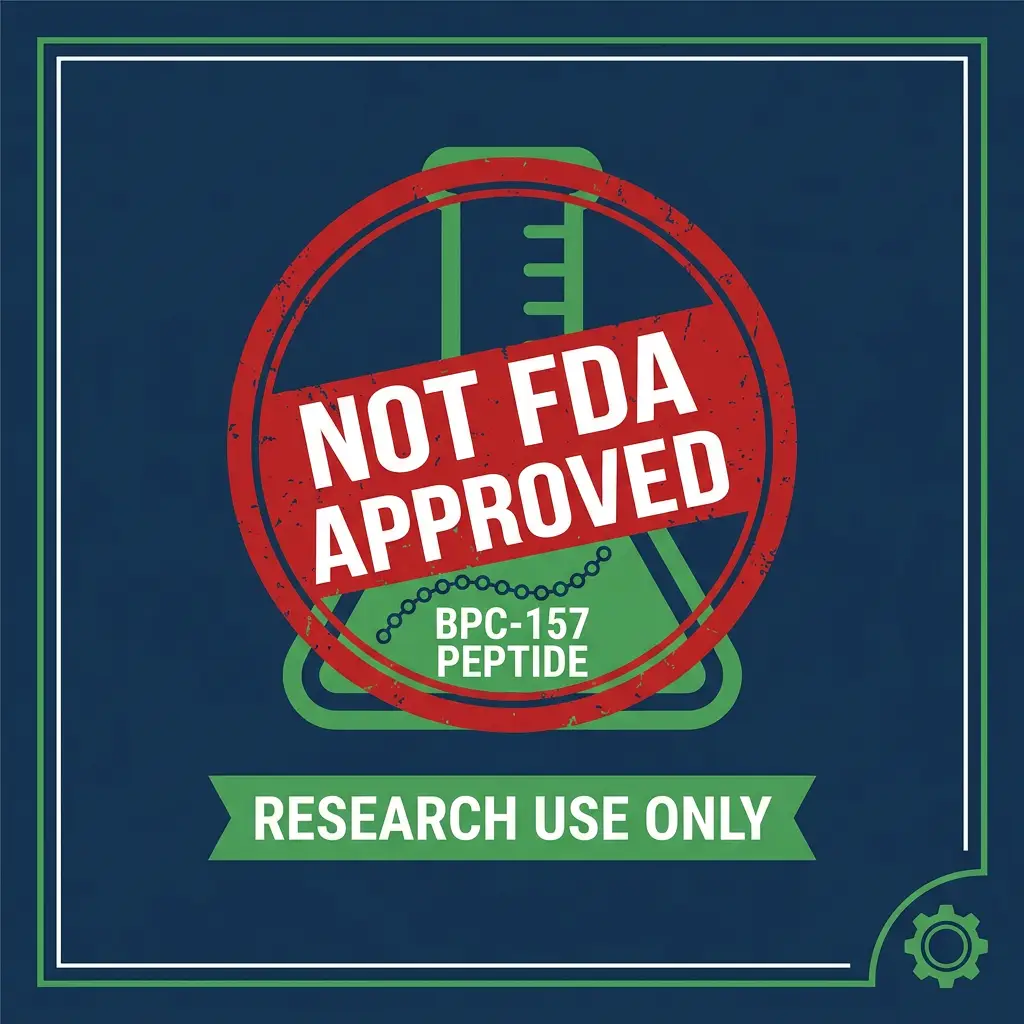
No, BPC-157 is not FDA-approved. If you plan to buy bpc 157 peptide for laboratory work, know that FDA and PubMed both indicate the compound lacks an approved drug status and remains investigational rather than clinically established for human use.
That distinction matters because some online listings blur the line between research material and medicine. FDA says BPC-157 is not a component of an FDA-approved drug. FDA also notes there is no USP or NF drug substance monograph for BPC-157 or its acetate form, and its evaluation weighs against placement on the 503A Bulks List. You can review the agency’s warning about unapproved and misbranded BPC-157 products on the FDA medication health fraud page.
A common misconception is that strong preclinical interest means a compound is close to routine clinical use. That is not what the published record shows here. PubMed reviews say BPC-157 has over three decades of preclinical research, yet human pharmacokinetics remain undercharacterized, no validated dosing regimen exists, and no completed Phase II clinical trial is available. A relevant search on PubMed for BPC-157 returns that same picture: extensive preclinical data, limited human trial evidence. This record should anchor your decision before you buy bpc 157 peptide.
If a seller presents BPC-157 as if it were equivalent to an approved therapeutic, that is a hard stop. For research purchasing, the clearer signal is explicit investigational positioning. Every time you buy bpc 157 peptide, that positioning should be visible before the checkout page.
💡 Key Takeaway: Is BPC-157 FDA-approved or legally established for human use?
What are the 5 checks every lab should run before you buy bpc 157 peptide online?
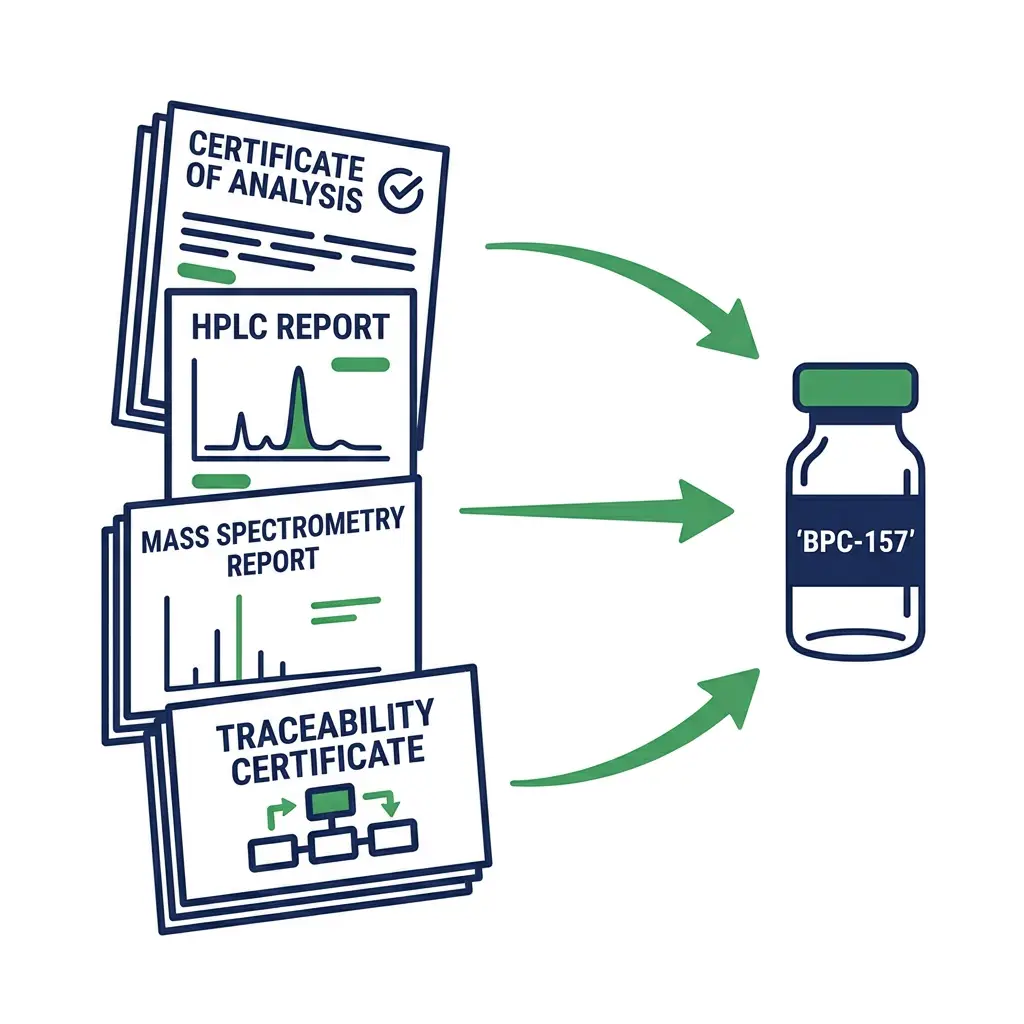
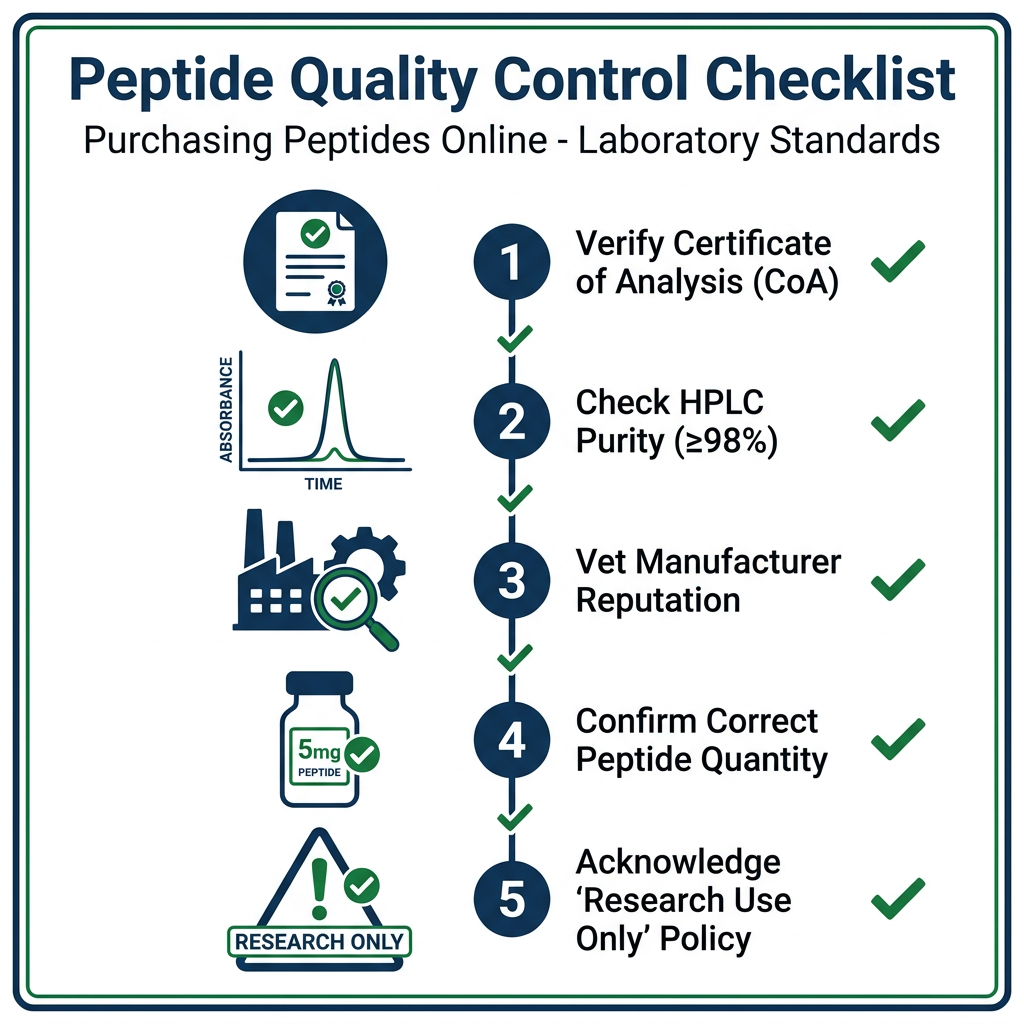
Five checks matter most. A reliable process to buy bpc 157 peptide should screen the listing, the batch, the seller, the format, and the claims before any order is placed. Use this as a minimum screen, not an advanced audit.
1. Listing positioning — the product must say “For Research Use Only” and “Not for human use,” with no therapeutic or disease claims.
2. Batch-level documentation — a COA that matches the exact lot number on the vial and is available before payment.
3. Analytical method and purity — HPLC/MS or comparable identity and purity data tied to a dated batch, not a generic PDF.
4. Seller traceability — verifiable U.S. business presence, contact path, shipping terms, and security practices.
5. Vial format and protocol fit — choose 5 mg, 10 mg, or 20 mg based on assay volume and waste control, not marketing hype.
These five checks capture most of the avoidable failure points when labs buy bpc 157 peptide online. They do not prove quality on their own, but they quickly separate serious research listings from questionable ones. Run this screen every time you buy bpc 157 peptide, not just on the first order. For a broader supplier screen, the 10 Signs of a Reliable Peptide Supplier in the USA article expands on traceability and documentation red flags.
| Check | What to look for | Red flag |
|—|—|—|
| Listing positioning | “For Research Use Only,” “Not for human use” | Therapeutic claims, dosing language, disease claims |
| Batch documentation | COA lot number matches vial | Generic PDF, no lot, no date |
| Analytical method | HPLC/MS with purity context | No method stated, unverifiable purity |
| Seller traceability | U.S. address, contact path, shipping terms | Anonymous storefront, no business identity |
| Vial format | 5 mg, 10 mg, or 20 mg matched to protocol | Size chosen by price or hype only |
How do you verify a certificate of analysis before you buy bpc 157 peptide?
COA review should be methodical. HPLC/MS data, lot matching, and batch specificity are the fastest ways to judge whether documents used when you buy bpc 157 peptide are useful or just decorative.
Step 1 is identity matching. Compare the lot or batch number on the product listing with the COA. If the numbers do not match, ask for the current batch document before ordering. A lot mismatch is a reason to pause before you buy bpc 157 peptide.
Step 2 is method review. A strong COA should indicate how the peptide was analyzed. In this category, HPLC and mass spectrometry are common benchmarks because they speak to purity and molecular identity rather than marketing language.
Step 3 is context. A purity claim like 99%+ is meaningful only if it is tied to a real batch and test method. A generic PDF with no lot number, no date, or no testing context is weaker than a simple but traceable document.
Step 4 is recency and access. If the COA is publicly accessible and easy to review before purchase, that usually signals better process control than a seller who only sends vague screenshots after payment. This access check matters every time you buy bpc 157 peptide from a new vendor.
A pro tip here: do not confuse a polished label with analytical transparency. The COA is the evidence layer; the label is only the packaging layer.
Tiger Peptides offers options to buy bpc 157 peptide in 5 mg, 10 mg, and 20 mg vials with a certificate of analysis tied to each batch. This batch-linked approach is also visible in the Research Peptides vs Cosmetic Peptides: Lab Basics guide, which separates research-grade documentation from consumer-style presentation.
How do you vet a seller before you buy bpc 157 peptide?
Seller vetting should look like vendor qualification. FDA guidance and standard lab procurement logic both favor traceability, clear labeling, and business legitimacy over aggressive sales copy when you buy bpc 157 peptide.
Step 1 is identity. Check whether the company shows a real U.S. business presence, contact path, shipping terms, and security practices. Anonymous storefronts are poor candidates for research procurement.
Step 2 is category fit. A research peptide supplier should sound like a research supplier. If the site reads like a consumer treatment portal, promises recovery outcomes, or uses disease claims, the positioning is off. That category check protects you before you buy bpc 157 peptide.
Step 3 is documentation discipline. Look for batch-level COAs, consistent storage language, and a chain-of-custody mindset. These signals matter more than influencer-style endorsements.
There is one nuance worth keeping straight. FDA advice on checking a state board of pharmacy license applies when a site acts as a pharmacy or sells medicines. A research peptide vendor is not the same thing. Still, the warning signs the FDA lists—such as unbelievable prices, unapproved products, and weak traceability—remain useful screening criteria. If you are comparing suppliers, the Searching “Almighty Peptides”? How to Compare Suppliers article applies the same vendor-qualification logic.
How do you choose the right vial size for your BPC-157 research protocol?
Vial size is a protocol variable, not a marketing decision. When you buy bpc 157 peptide for a specific assay, choose 5 mg, 10 mg, or 20 mg based on assay volume, replicate count, and waste control.
A 5 mg vial often fits low-throughput experiments where the researcher needs only a small amount per run. A 10 mg vial reduces the number of reconstitution events while still limiting excess inventory. A 20 mg vial can make sense for high-volume screening or multi-arm studies, but only if the protocol can consume the material before storage-related degradation becomes a concern. The same protocol logic applies when you buy bpc 157 peptide across multiple vendors.
Match the vial to the experimental plan, not to the boldest discount. Storage conditions also matter: follow the supplier’s stated temperature and lyophilized-storage guidance for research peptides. If the listing does not state storage conditions, that is a documentation gap you should close before you buy bpc 157 peptide.
| Vial size | Best fit | Waste risk |
|—|—|—|
| 5 mg | Low-throughput assays, single-investigator pilot work | Low if used promptly |
| 10 mg | Routine assays, moderate replicate counts | Moderate |
| 20 mg | High-volume screening, multi-arm protocols | High if storage is unmanaged |
How do transparent research listings differ from risky online offers?
Transparent listings state the legal and scientific status plainly. Risky listings lean on ambiguity. The difference becomes obvious when you apply the five checks before you buy bpc 157 peptide.
A transparent listing says “For Research Use Only,” “Not for human use,” and provides a batch-linked COA with HPLC/MS data. A risky listing may show only a product name, a milligram count, and a price, with no lot number, no analytical method, and no business address.
FDA warns that unsafe online products can be counterfeit, contaminated, expired, or otherwise unsafe. That warning does not mean every online research peptide is bad; it means documentation and traceability are the load-bearing walls. If a listing cannot survive the five checks, it does not belong in a laboratory purchasing queue. Use these differences as a checklist each time you buy bpc 157 peptide. Before you buy bpc 157 peptide from an unfamiliar source, run the full screen again.
What documentation should you request before you buy bpc 157 peptide?
Request a complete documentation packet before payment. The packet should include the certificate of analysis, the lot or batch number, the analytical method, purity context, storage conditions, and a clear research-use-only statement. If any element is missing, ask the seller to provide it in writing.
A complete packet reduces the chance of receiving counterfeit, contaminated, expired, or otherwise unsafe material. It also creates a paper trail that supports reproducibility. Labs that treat documentation as a prerequisite, not an afterthought, tend to have fewer sourcing-related failures.
FAQ
Is BPC-157 legal to buy for research?
Yes, as a research-use-only peptide, BPC-157 can be purchased for laboratory studies in the United States when the listing is explicitly labeled “For Research Use Only” and “Not for human use.” It is not FDA-approved, lacks a USP/NF monograph, and is not on the 503A Bulks List, so any human-use or therapeutic framing should be rejected. Always verify the seller’s research-use positioning before you buy bpc 157 peptide.
What does a valid COA need to show for BPC-157?
A valid COA should show a lot or batch number that matches the vial, an analytical method such as HPLC or mass spectrometry, a purity value tied to a dated batch, and storage context. A generic PDF without a lot number, date, or method is weak documentation. Batch-linked COAs are the standard to expect when you buy bpc 157 peptide from a serious research supplier.
Why is BPC-157 not FDA-approved if it has preclinical research?
Preclinical data do not equal clinical approval. PubMed reviews note over three decades of preclinical research, but human pharmacokinetics remain undercharacterized, no validated dosing regimen exists, and no completed Phase II trial is available. FDA also notes BPC-157 is not a component of an approved drug and lacks a USP/NF monograph, so the compound remains investigational.
What are the three vial sizes available for BPC-157 research?
Tiger Peptides lists BPC-157 in 5 mg, 10 mg, and 20 mg vials. The choice should match assay volume and waste control. A 5 mg vial suits low-throughput work, 10 mg balances convenience and inventory, and 20 mg fits high-volume screening when the protocol can consume the material within appropriate storage windows. Confirm the vial size before you buy bpc 157 peptide.
Can I use BPC-157 for human treatment if a seller says it is safe?
No. BPC-157 is not for human use, not for veterinary use, and not intended to diagnose, treat, cure, or prevent any disease. Any seller claiming otherwise is mispositioning the product. Before you buy bpc 157 peptide, reject therapeutic claims, disease claims, and dosing language as hard stops.
Ready to Take the Next Step?
Every product includes lot-specific documentation and third-party purity testing.
Explore Our Research Products →Free shipping on qualifying orders · Batch COA on request