
What Are Peptides? Research Guide to Cellular Signaling Molecules (2026)
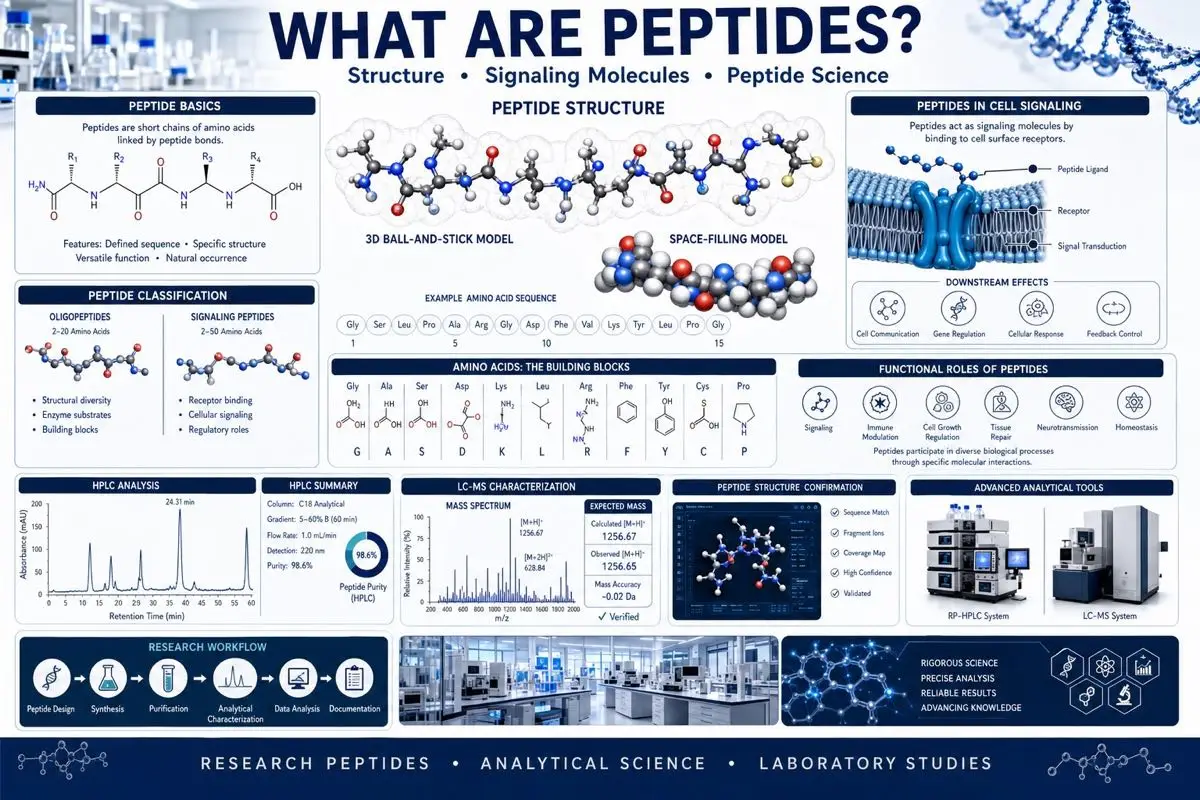
Peptides are short chains of 2–50 amino acids that act as cellular signaling molecules. This 2026 guide covers structure, five classes, and evidence review for lab research.
📋 Table of Contents
Peptides are short chains of 2–50 amino acids linked by peptide bonds that function as highly specific cellular signaling molecules rather than bulk structural proteins. In laboratory research, peptides are studied for their roles in collagen synthesis, tissue repair, inflammatory modulation, and intercellular communication. This 2026 guide explains peptide structure, five common research classes, topical and muscle-recovery research themes, and how to evaluate peptide literature using primary sources and certificate-of-analysis documentation.
Research Use Only Notice: The products discussed on this site are sold strictly for in vitro laboratory research purposes only. They are not for human use, not for veterinary use, and not intended to diagnose, treat, cure, or prevent any disease. All information presented is for educational purposes in a research context. Must be 21+ to purchase.
Key takeaways
- Peptides are defined by length (2–50 amino acids) and function as signaling molecules, not structural proteins.
- Five research classes—signal, carrier, enzyme-inhibitor, neurotransmitter-inhibitor, and antimicrobial/tissue-repair—organize the peptide literature.
- Topical peptide research focuses on fibroblast stimulation and extracellular matrix remodeling, with randomized trials reporting improvements after 4–12 weeks in research models.
- Muscle-recovery and injury-repair research peptides (e.g., BPC-157, TB-500, LL-37) are studied for angiogenesis and inflammatory pathway modulation in laboratory models.
- Evidence literacy requires separating peer-reviewed findings from marketing language, using citations and certificate-of-analysis (COA) documentation.
What Are Peptides and How Do They Function as Cellular Communicators?
Peptides are short chains of 2–50 amino acids linked by peptide bonds. When chains exceed roughly 50 amino acids, they typically fold into full proteins. This size distinction is critical in research: smaller peptides remain highly bioavailable, mobile, and capable of crossing biological barriers that larger molecules cannot.
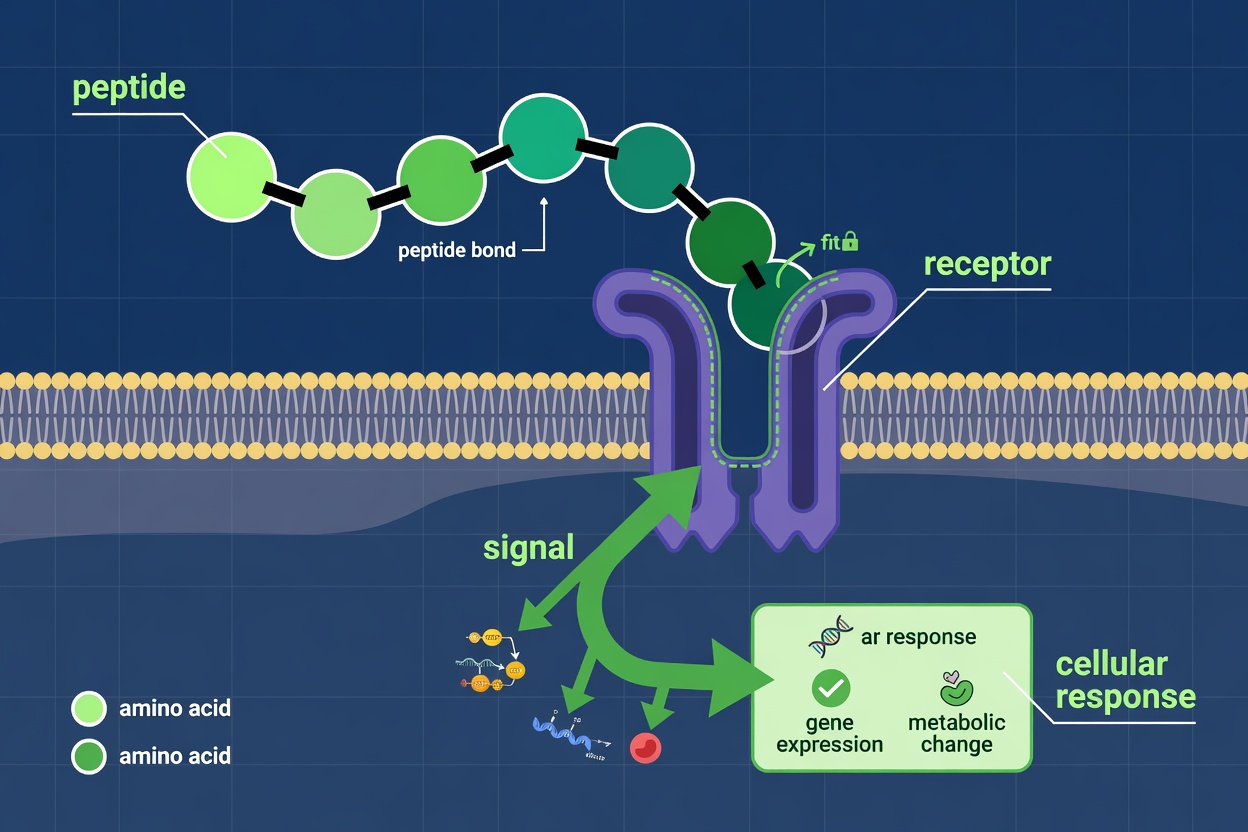
A useful analogy: amino acids are individual letters, a dipeptide is a two-letter word, a polypeptide is a complete sentence, and a protein is an entire instruction manual. Because peptides are concise, they function as highly specific signals rather than bulk material. They bind to cell-surface receptors like keys in locks, triggering intracellular cascades that regulate gene expression, enzyme activity, and tissue remodeling.
The table below summarizes the key differences between peptides and proteins in a research context.
| Aspect | Peptides | Proteins |
|——–|———-|———-|
| Length | 2–50 amino acids | 50+ amino acids |
| Bioavailability | High (rapid absorption in research models) | Lower (requires extensive digestion) |
| Mechanism | Signaling & regulation | Structural & enzymatic |
| Skin Penetration | Excellent in research models | Poor |
| Targeted Action | Highly specific | General nutrient supply |
| Research Use | Therapeutic & cosmetic models | Nutritional supplementation models |
This size advantage explains why topical collagen applications often show limited results in research models while peptide formulations deliver measurable dermal firmness—small peptides reach fibroblasts deep in the dermis and instruct them to produce more extracellular matrix. In fact, the ability of peptides to penetrate the stratum corneum in laboratory models is a key reason they are investigated for elasticity and repair applications.
For researchers evaluating supplier documentation, the 10 Signs of a Reliable Peptide Supplier in the USA checklist offers a practical starting point for verifying COA availability and purity data.
What Are Peptides Doing at the Cellular Level?
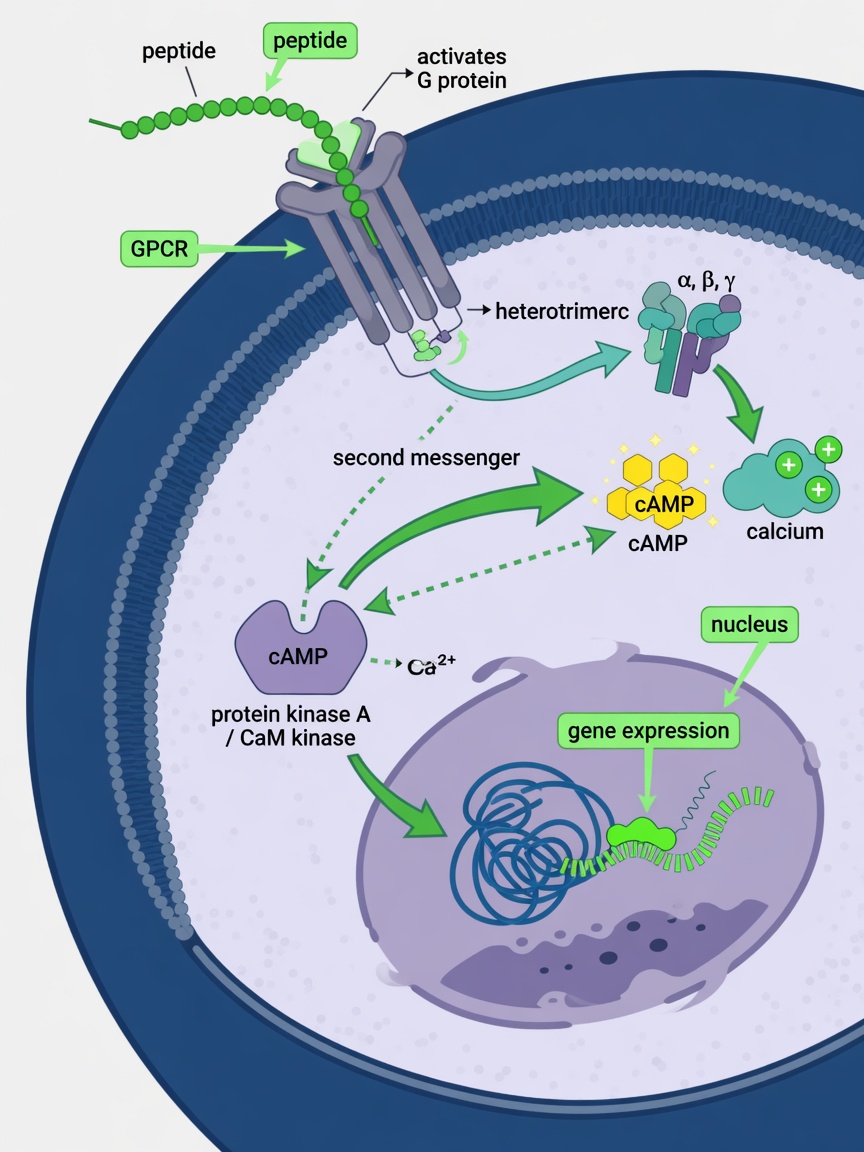
Peptides bind specific G-protein-coupled receptors or enzyme-linked receptors on cell surfaces. This binding activates second-messenger systems such as cAMP, IP3, and calcium fluxes, which ultimately alter gene transcription and protein synthesis. In laboratory models, this receptor-mediated signaling is the core mechanism through which peptides exert measurable effects on tissue markers.
For example, signal peptides upregulate TGF-β and other growth factors that stimulate collagen I and III production. Carrier peptides like GHK-Cu transport copper ions into cells, acting as cofactors for lysyl oxidase—the enzyme that cross-links collagen fibers to increase tensile strength. These biochemical pathways are well documented in peer-reviewed literature and form the basis for many research protocols involving peptides.
Published research using targeted peptide protocols reports improvements in skin elasticity, measured by cutometer, reduced delayed-onset muscle soreness via creatine kinase (CK) levels, and enhanced wound healing in laboratory models. These are not placebo effects; they reflect restored intercellular communication that declines with age in research models. For researchers, the key is to track these measurable endpoints rather than relying on subjective observations.
Key Takeaway: What Are Peptides Doing at the Cellular Level? Peptides act as molecular switches that restore signaling efficiency in aged or damaged tissue models, driving measurable changes in collagen, elastin, and repair markers.
To deepen your understanding of how functional categories map to laboratory versus cosmetic applications, review our guide on Tiger Peptides | Research-Grade Peptides for Laboratories.
💡 Key Takeaway: What Are Peptides Doing at the Cellular Level?
What Are the Five Peptide Classes Commonly Discussed in Research Literature?
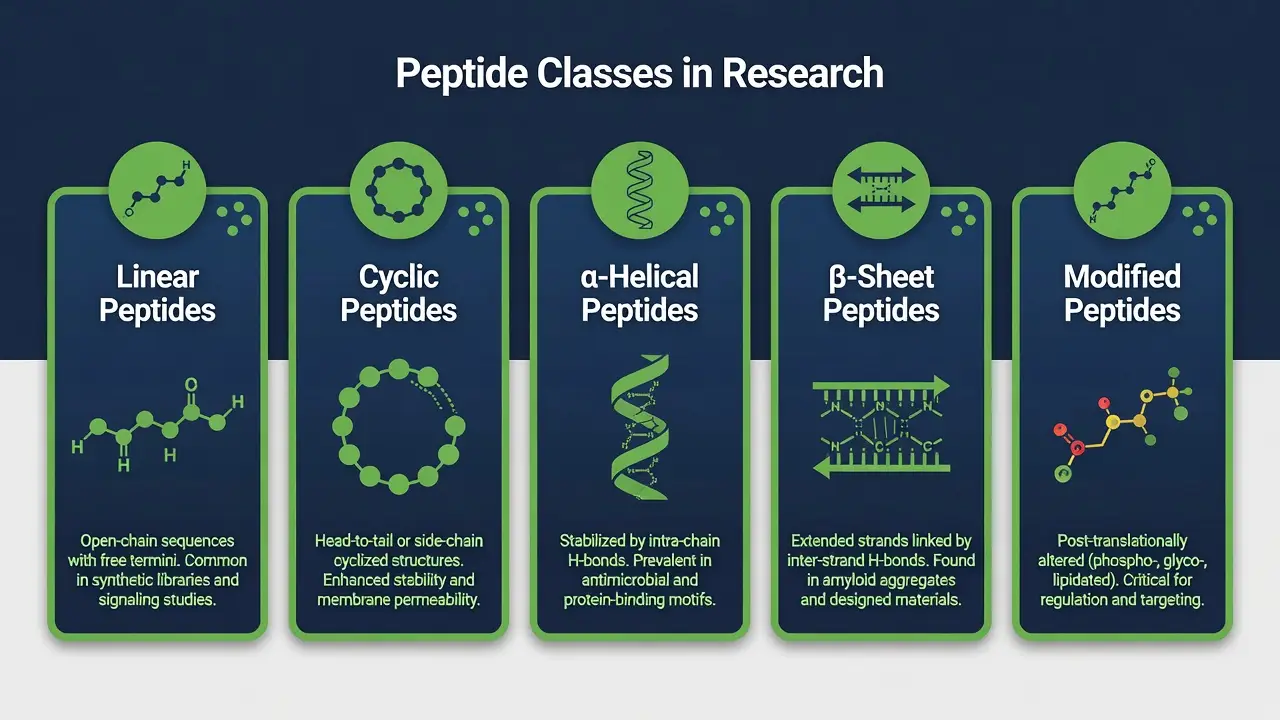
Research literature organizes peptides into five functional classes. Each class has distinct mechanisms and applications in laboratory models. Below is a concise breakdown of each class, with representative research compounds.
Signal Peptides
Signal peptides command fibroblasts to increase collagen, elastin, and glycosaminoglycan production. Matrixyl 3000 (palmitoyl tripeptide-1 + palmitoyl tetrapeptide-7) is a flagship example with robust clinical data in research settings. These peptides are often studied in dermal remodeling protocols.
Carrier Peptides
Carrier peptides deliver trace minerals—especially copper—to sites of repair. GHK-Cu remains one of the most studied and clinically effective carrier peptides in research literature. Its copper-binding capacity supports enzymatic cross-linking of collagen, which increases tensile strength in laboratory models.
Enzyme-Inhibitor Peptides
Enzyme-inhibitor peptides downregulate matrix metalloproteinases (MMPs) that break down existing collagen. This preserves what is already present while new matrix forms, making these peptides valuable in models of age-related collagen loss. Researchers often combine them with signal peptides to maximize net matrix deposition.
Neurotransmitter-Inhibitor (Neuropeptides)
Argireline (acetyl hexapeptide-8) and related compounds reduce facial muscle contractions, softening dynamic wrinkles without needles in research models. These peptides are investigated for topical neuromuscular modulation in laboratory settings, with outcomes measured by wrinkle depth and muscle activity assays.
Antimicrobial & Tissue-Repair Research Peptides
BPC-157, TB-500, and LL-37 support tissue repair, angiogenesis, and modulation of inflammatory pathways. These are studied extensively in musculoskeletal injury research models. All findings remain in research-use-only contexts; no human dosing information is provided or implied.
Researchers comparing these classes should review our guide on tigerpeptides: 7 Proven Research-Grade Peptide Solutions to understand how functional categories map to laboratory applications and how to select appropriate peptides for specific research questions.
What Are the Topical Peptide Research Themes for Elasticity and Repair Models?
Aging skin loses both its capacity for collagen production and its signaling efficiency. Topical peptides bypass this by directly stimulating dermal fibroblasts in laboratory models. Multiple randomized trials show statistically significant improvements in wrinkle depth, skin roughness, and elasticity after 4–12 weeks of consistent use in research settings.
Research protocols often study copper-peptide formulations layered with signal-peptide applications. Published reports describe firmer, more hydrated skin models, but researchers should consult primary literature for exact formulation parameters and purity data from certificate-of-analysis documentation. The measurable outcomes in these studies typically include cutometer readings for elasticity and profilometry for wrinkle depth.
When sourcing topical peptides for elasticity and repair models, laboratories should verify supplier reliability using our checklist in 10 Signs of a Reliable Peptide Supplier in the USA. This helps ensure that the peptides used in experiments have documented identity and purity data, which is essential for reproducible results.
How Are Peptides Studied in Muscle-Recovery and Injury-Repair Research Models?
Muscle-recovery and injury-repair research peptides—including BPC-157, TB-500, and LL-37—are investigated for their roles in tissue repair, angiogenesis, and modulation of inflammatory pathways. These compounds are studied in laboratory models of musculoskeletal injury, where they are evaluated for effects on healing kinetics and inflammatory markers. No human dosing information is provided or implied; all findings remain in research-use-only contexts.
Researchers working with these peptides should verify sourcing through certificate-of-analysis documentation to confirm identity and purity data before drawing conclusions from experimental results. For a comparison of supplier options, see Searching “Almighty Peptides”? How to Compare Suppliers. This guide walks through key criteria such as COA availability, third-party testing, and batch consistency for research peptides.
Key Takeaway: How Are Peptides Studied in Muscle-Recovery and Injury-Repair Research Models? These peptides are not human therapeutics; they are laboratory tools for investigating tissue repair pathways in controlled research models.
💡 Key Takeaway: How Are Peptides Studied in Muscle-Recovery and Injury-Repair Research Models?
How Is Peptide Research Discussed Safely in Education? Monitoring Themes
Safe educational discussion of peptides requires strict adherence to research-use-only framing. This means every statement about peptides should specify the experimental context—in vitro, ex vivo, or animal model—and avoid any implication of human consumption, dosing, or therapeutic use. Monitoring themes in the literature include distinguishing between peer-reviewed evidence and marketing language, verifying that product pages display research-use-only notices, and requiring 21+ age confirmation for laboratory procurement.
Educational content should also emphasize that peptides sold for research are not for human use, not for veterinary use, and not intended to diagnose, treat, cure, or prevent any disease. When discussing results, always cite primary literature and note the model system used. This discipline prevents misinterpretation and maintains compliance with laboratory standards.
Here is a practical monitoring checklist for educational discussions of peptides:
- State the model system (cell line, tissue, animal) for every claim.
- Use phrases like “in research models” or “laboratory studies” instead of general wellness language.
- Verify that any cited study is peer-reviewed and indexed in PubMed or similar databases.
- Request COA documentation for any experimental peptide before citing purity data.
- Never extrapolate in vitro results to human outcomes without explicit disclaimers.
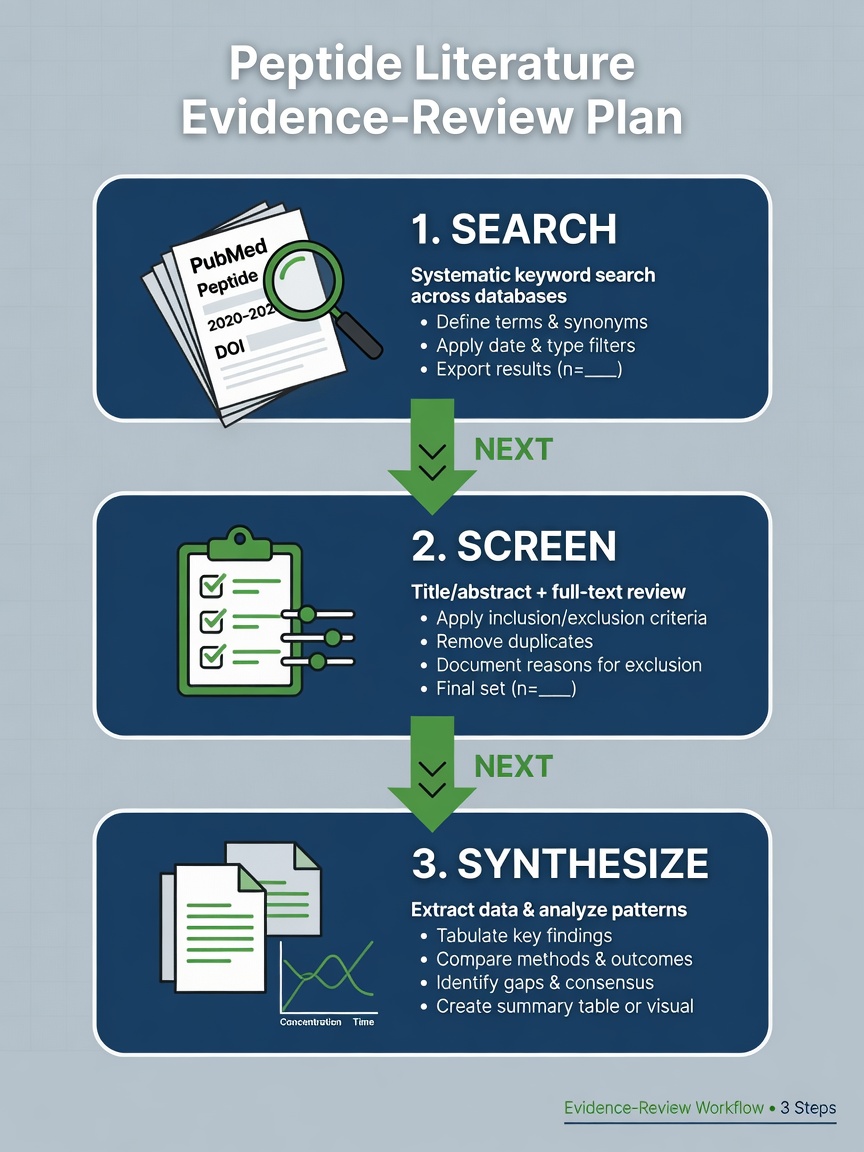
What Is a 3-Step Evidence-Review Plan for Peptide Literature?
Evaluating peptide literature requires a systematic approach. Use this three-step plan to separate credible findings from promotional claims.
Step 1: Separate peer-reviewed findings from marketing language. Look for studies published in indexed journals. Authoritative sources include PubMed and the NCBI. Marketing pages often cite anecdotal outcomes without control groups or blinding; peer-reviewed papers report methods, endpoints, and statistical significance.
Step 2: Check citations and study design. A credible peptide study will describe the model system (e.g., fibroblast culture, murine wound model), the peptide concentration, the duration, and the outcome measures. Randomized controlled trials in research settings are stronger than open-label observations. Verify that the paper actually supports the claim being made about peptides.
Step 3: Verify certificate-of-analysis (COA) documentation. For any experimental peptide, request the supplier’s COA. This document confirms identity, purity data, and sometimes storage conditions. Reputable suppliers provide batch-specific COAs; absence of a COA is a red flag for research integrity.
Following this plan helps researchers avoid common pitfalls when reviewing peptides literature and ensures that conclusions are based on reproducible evidence.
FAQ
What exactly are peptides in a research context?
Peptides are short chains of 2–50 amino acids linked by peptide bonds. In research, they function as signaling molecules that bind cell-surface receptors and regulate gene expression, enzyme activity, and tissue remodeling.
How do peptides differ from proteins?
Peptides contain 2–50 amino acids, while proteins contain more than 50. Peptides are more bioavailable, more specific in signaling, and show better skin penetration in research models. Proteins primarily serve structural and enzymatic roles.
Which peptide classes are most commonly studied?
The five common classes are signal peptides, carrier peptides, enzyme-inhibitor peptides, neurotransmitter-inhibitor peptides, and antimicrobial/tissue-repair research peptides. Examples include Matrixyl 3000, GHK-Cu, Argireline, BPC-157, TB-500, and LL-37.
Are peptides for human use?
No. The peptides discussed on this site are sold strictly for in vitro laboratory research purposes only. They are not for human use, not for veterinary use, and not intended to diagnose, treat, cure, or prevent any disease.
How long do topical peptide studies run in research models?
Randomized trials often report statistically significant improvements in wrinkle depth, skin roughness, and elasticity after 4–12 weeks of consistent use in research settings. Exact durations vary by protocol.
Ready to Take the Next Step?
Every product includes lot-specific documentation and third-party purity testing.
Explore Our Research Products →Free shipping on qualifying orders · Batch COA on request