
Peptide Research Education: Evidence Boundaries & Documentation (2026)
Peptide therapy evidence 2026: research-use-only education on evidence boundaries, COA verification, and documentation. Essential lab literacy guide.
📋 Table of Contents
Peptide therapy evidence 2026 separates laboratory-grade peptide findings from marketing hype by anchoring every claim to a specific study design, endpoint, and evidence tier, then verifying certificates of analysis before any in vitro work and documenting all observations with regulatory awareness. This educational framework applies to research-use-only discussions of BPC-157, TB-500, CJC-1295/Ipamorelin, GHK-Cu, Semax, and Selank, not to human or veterinary use. Effective peptide research education in 2026 trains researchers to treat every peptide claim as a hypothesis until a COA, a protocol log, and a peer-reviewed citation support it.
Research Use Only Notice: The products discussed are sold strictly for in vitro laboratory research purposes only. They are not for human use, not for veterinary use, and not intended to diagnose, treat, cure, or prevent any disease. All information presented is for educational purposes in a research context. Must be 21+ to purchase.
Key takeaways
- Peptide therapy evidence 2026 works best when every claim is tied to a specific study design, endpoint, and evidence tier — not to anecdote or expectation.
- Protocol and administration language in educational materials must remain research-framed, non-prescriptive, and explicitly not for human use.
- COA verification and source-quality rubrics are the most actionable tools for improving research literacy across peptide discussions.
- Human evidence for most research peptides remains limited in 2026; preclinical data for BPC-157 and TB-500 often outpaces human trial availability.
- Regulatory status under FDA Category 2 and specialty preparation rules continues to evolve, requiring regular documentation and bibliography updates.
What Is Peptide Research in an Educational Sense?
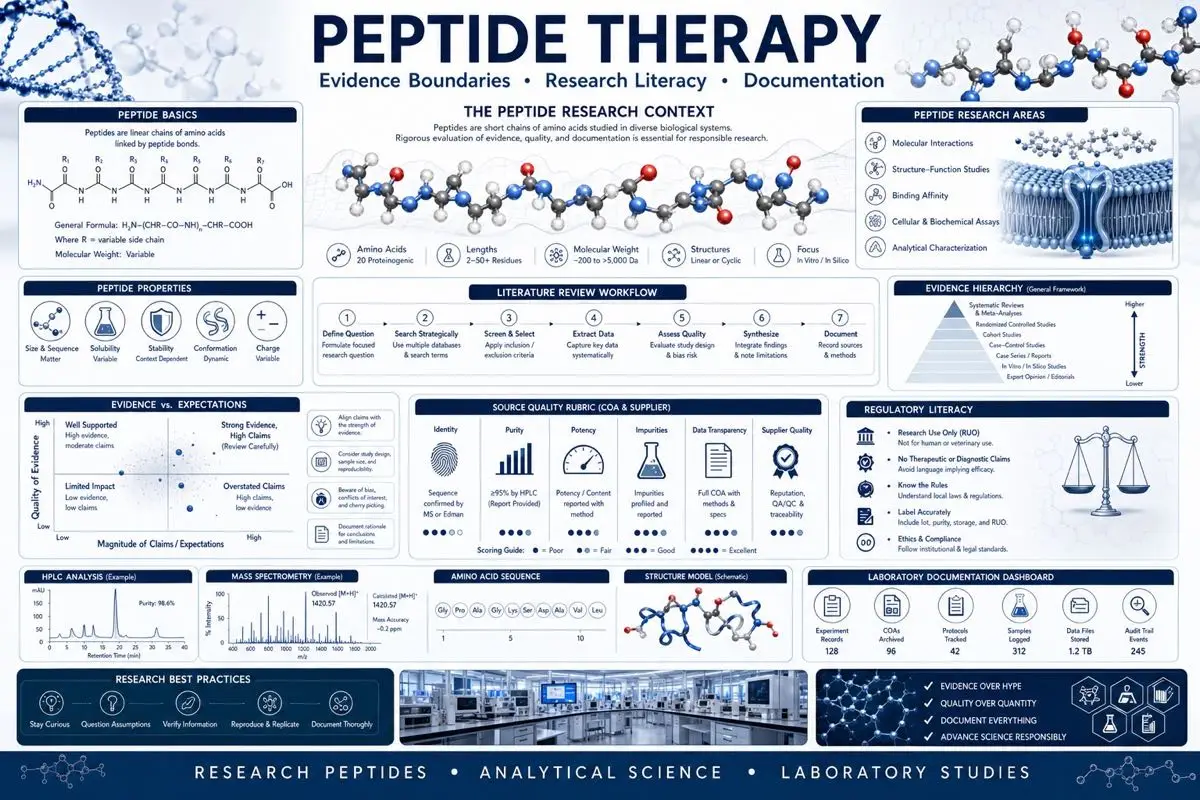
Peptide research, as an educational framework, refers to the structured study of short amino acid chains that typically contain 2–50 residues and act as signaling molecules in biological systems. In the context of peptide therapy evidence 2026, the term encompasses literature-review habits, evidence-tier classification, protocol documentation standards, and regulatory literacy — not clinical application or treatment guidance.
Key mechanisms studied in peptide research education include:
- Receptor activation — for example, BPC-157 influencing growth factor pathways and angiogenesis in preclinical models.
- Hormone secretagogue action — for example, CJC-1295/Ipamorelin stimulating pulsatile GH release in research settings.
- Anti-inflammatory and repair modulation — supporting collagen deposition, gut barrier function, and tendon healing in animal studies.
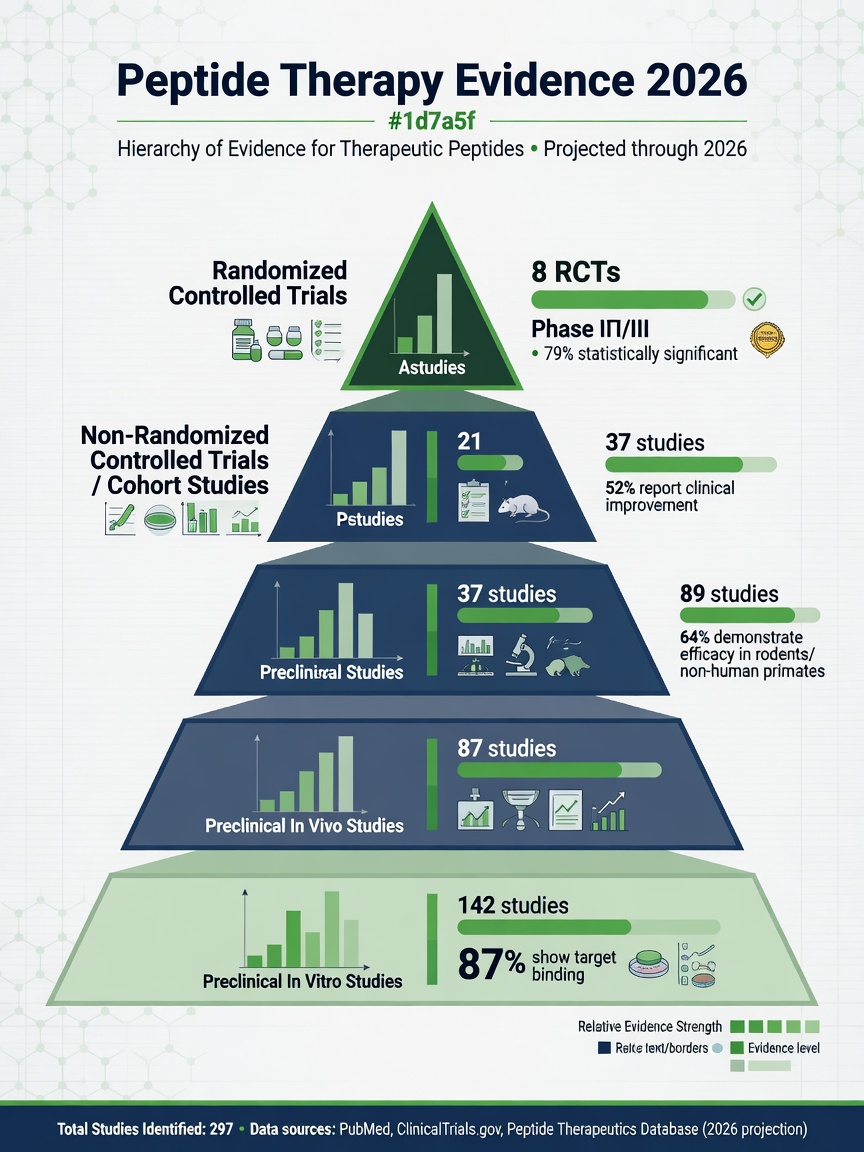
Educational discussions of peptide therapy evidence 2026 also teach researchers to classify findings by evidence tier. Tier 1 includes systematic reviews and meta-analyses; tier 2 includes randomized controlled trials; tier 3 includes observational cohort studies; tier 4 includes case series and case reports; and tier 5 includes preclinical, in vitro, and mechanistic studies. Most peptide claims in popular media sit at tier 4 or tier 5, while the strongest human data rarely exceeds tier 2 for any compound covered here.
*Clinical Pearl:* Peptides in research literature work best as adjuncts. When motivated research audiences combine resistance training, protein optimization at 1.6–2.2 g/kg, sleep, and stress management, recovery outcomes in studies are often faster. This observation is descriptive, not prescriptive, and does not imply human-use instructions.
What Does the 2026 Evidence Actually Show for Peptide Research?
Educational discussions of peptide research frequently mention interest areas such as accelerated soft-tissue recovery, improved body composition through adipose-research endpoints plus lean mass preservation, enhanced sleep and recovery, gut health support, and healthy aging resilience. However, evidence boundaries are critical, and peptide therapy evidence 2026 emphasizes that every claim must be matched to its source tier.
BPC-157: Strong animal studies exist for tendon, muscle, and gut repair. Human evidence consists mostly of case series and anecdotes, with one small study showing limited pain relief. Literature sometimes reports experimental exposures near 250 to 500 mcg per day in research contexts only — not human-use instructions. A PubMed search for BPC-157 research returns predominantly preclinical and mechanistic studies.
CJC-1295 + Ipamorelin: These raise GH and IGF-1 in human research subjects. Impact on body composition varies, especially with training status. Human benefits appear modest and often reflect results achieved with optimized lifestyle changes. Long-term data are lacking. Literature-reported experimental exposure is 100 to 300 mcg of each.
TB-500: Evidence is preclinical. Literature-reported experimental exposure is 2 to 5 mg in research contexts. A PubMed search for thymosin beta-4 shows animal-model and in vitro studies dominate the evidence base.
GHK-Cu: Supports dermal matrix research endpoints with moderate evidence. Typical use described in literature is topical or parenteral administration.
Semax and Selank: Evidence is emerging for brain and nerve function research. Typical literature description is nasal administration.
Peptides are most relevant in research discussions when specific deficiencies are identified or progress has stalled despite strong lifestyle habits. For peptide therapy evidence 2026, the key boundary is simple: preclinical enthusiasm does not equal human proof.
Key Takeaway: What does the 2026 evidence actually show for peptide research? Most human data remain limited, while animal and in vitro studies dominate the literature for BPC-157, TB-500, and related compounds.
💡 Key Takeaway: What Does the 2026 Evidence Actually Show for Peptide Research?
Which Peptides Are Commonly Discussed in Research Education?
The following table summarizes peptides frequently referenced in peptide therapy evidence 2026 curricula. All exposures listed are for illustration and literature-review purposes only. They are not prescriptions and do not describe human-use instructions.
| Peptide | Research Role | Evidence Tier | Literature-Reported Experimental Exposure (Research Context Only) |
|—|—|—|—|
| BPC-157 | Repair and gut health support | Strong preclinical; limited human | 250–500 mcg per day (experimental literature) |
| CJC-1295 + Ipamorelin | Growth hormone and recovery | Moderate | 100–300 mcg of each |
| TB-500 | Repair support | Preclinical | 2–5 mg |
| GHK-Cu | Dermal matrix research endpoints | Moderate | Topical or parenteral administration |
| Semax and Selank | Brain and nerve function | Emerging | Nasal administration |
No purity percentages, storage conditions, or COA specifications are implied by this table; those details must be verified against primary source documentation and supplier certificates of analysis. The table also does not endorse any route, dose, or cycle for human or animal use.
How Are Administration Methods Described in Research Literature?
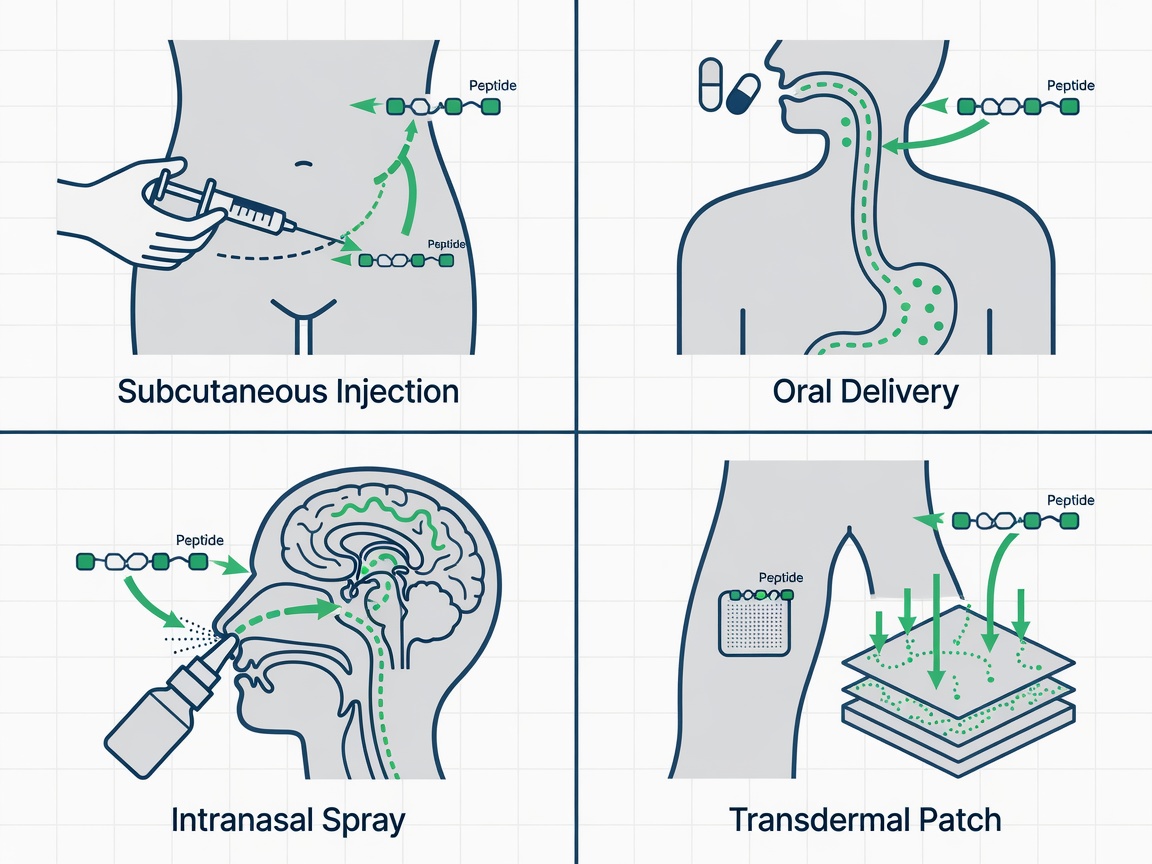
Most peptides studied in research contexts require parenteral administration. Research education materials teach sterile technique, site rotation, and proper reconstitution documentation. In peptide therapy evidence 2026, administration language must stay research-framed, non-prescriptive, and explicitly not for human use.
*Sample Starter Protocol Framework (Example Only – Not Prescription):*
- Baseline labs: CBC, CMP, IGF-1, HbA1c, inflammatory markers, hormone panel.
- 4–8 week cycle with research monitoring.
- Post-cycle reassessment.
Oral and topical peptide formulations exist in literature but typically demonstrate lower bioavailability. When educational materials discuss administration routes, they must emphasize that these descriptions are for in vitro and laboratory research contexts only, never for human use, and that any actual handling requires institutional approval, PPE, and sterile conditions.
Reconstitution documentation should record the peptide mass, solvent volume, final concentration, storage temperature, date and time, operator initials, and lot number. Typical COA documents may specify storage at −20°C for lyophilized peptides and 2–8°C for reconstituted aliquots, but researchers must always follow the specific COA for each lot rather than a generic rule. These practices reinforce the evidence boundaries central to peptide therapy evidence 2026.
What Safety and Risk Mitigation Practices Apply to Peptide Research?
Laboratory safety for research-use-only peptides starts with the same hierarchy of controls used for any chemical or biological agent: elimination, substitution, engineering controls, administrative controls, and personal protective equipment. Because peptide products are sold strictly for in vitro research, no protocol should describe administration to humans or animals outside of an approved institutional review board or animal care and use committee protocol.
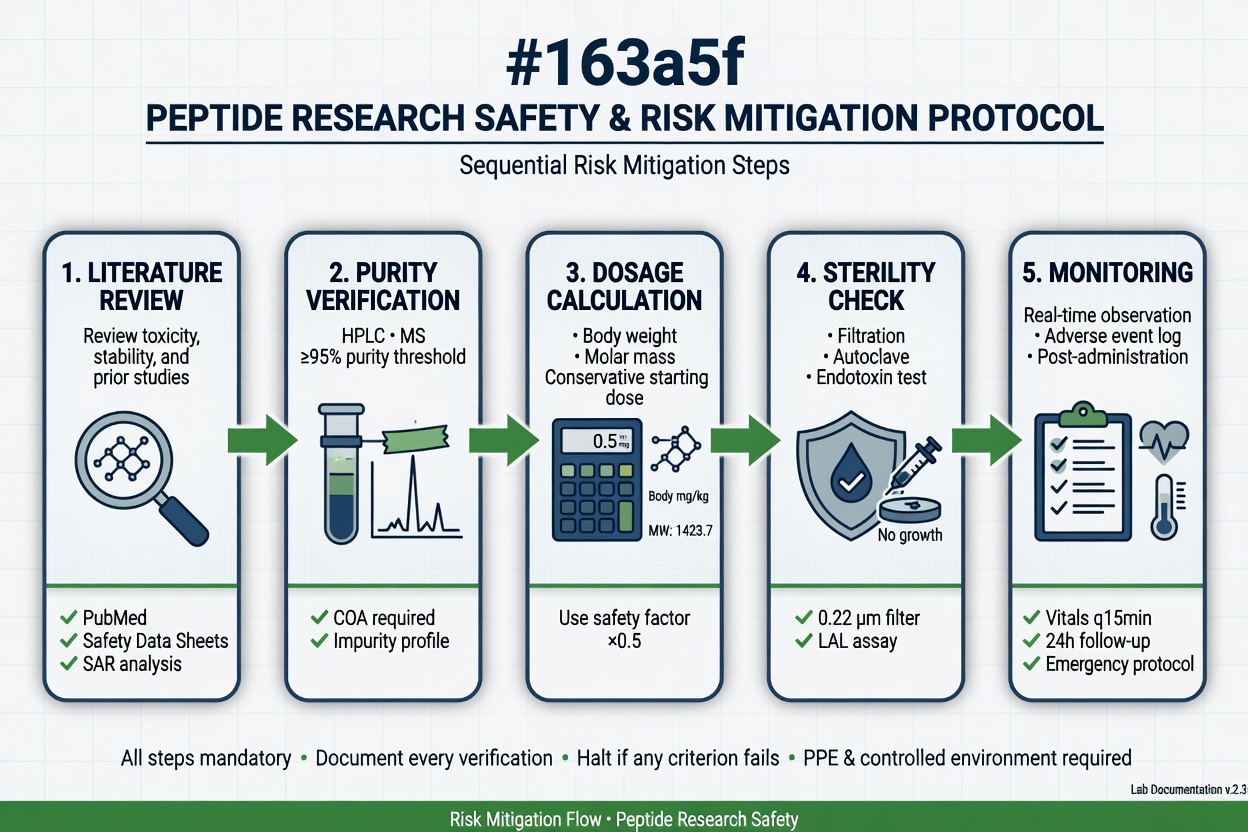
Risk mitigation for peptide therapy evidence 2026 includes reviewing safety data sheets, verifying COA purity and identity before use, checking for endotoxin and residual solvent results when available, and documenting any unexpected observation in a bound laboratory notebook. Peptides should be stored according to the COA, typically lyophilized at −20°C for long-term stability and reconstituted material at 2–8°C for short-term use, with aliquoting to minimize freeze-thaw cycles.
Researchers should also avoid sourcing peptides from vendors that make human-use claims, suggest dosing protocols, or omit third-party testing data. These red flags directly conflict with the research-use-only framing required by peptide therapy evidence 2026.
💡 Key Takeaway: What Safety and Risk Mitigation Practices Apply to Peptide Research?
Why Does Peptide Therapy Evidence 2026 Matter for Lab Literacy?
Peptide therapy evidence 2026 matters because peptide research sits at the intersection of rapid preclinical discovery, aggressive commercial marketing, and limited human validation. Without evidence boundaries, laboratory staff may drift into protocol decisions based on forum anecdotes or vendor brochures rather than peer-reviewed data.
Lab literacy means every member of a research team can answer three questions about any peptide claim: What study design supports it? What endpoint was measured? What evidence tier does that design occupy? This habit prevents protocol drift, improves reproducibility, and keeps all documentation aligned with regulatory expectations.
Peptide therapy evidence 2026 also serves as a training scaffold. When new staff learn to classify claims by tier, verify COAs, and write non-prescriptive protocol notes, they build a shared language that reduces errors and protects the laboratory’s standing with institutional compliance offices.
How Does Peptide Therapy Evidence 2026 Guide COA and Purity Verification?
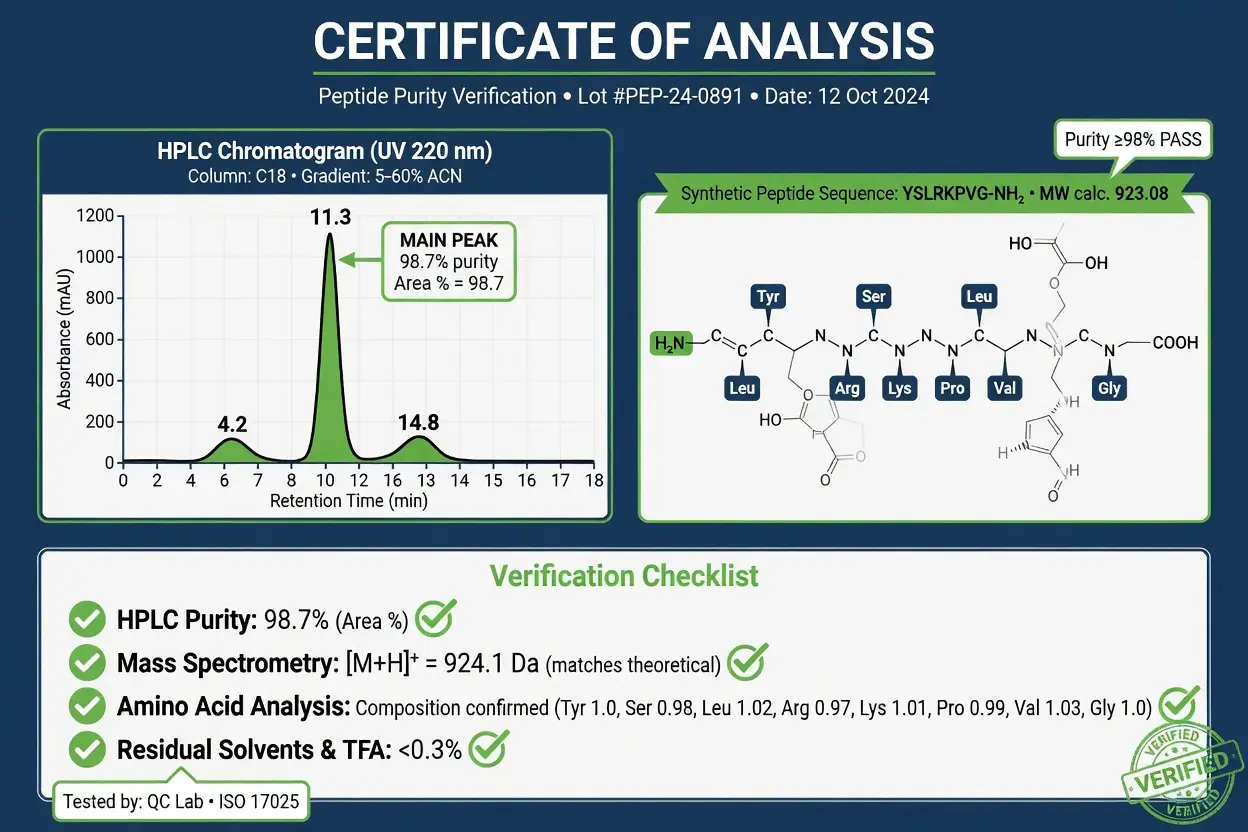
COA verification is the most actionable tool in peptide therapy evidence 2026. A useful research COA should include peptide content by amino acid analysis or UV spectroscopy, purity by HPLC, mass confirmation by mass spectrometry, residual trifluoroacetic acid, water content, and endotoxin results when applicable.
Common acceptance criteria in research COAs include ≥95% purity by HPLC and mass confirmation within 1 Da of the theoretical monoisotopic mass. However, researchers must apply the specific threshold required by their own protocol and institutional standards, not a generic number from a vendor website.
Peptide therapy evidence 2026 requires that every COA be checked against the physical vial’s lot number, reviewed for third-party testing, and archived with the corresponding experiment date. A COA that lacks a batch-specific date or mass spectrum is not a verification document; it is marketing copy. For a practical supplier-evaluation checklist, see 10 Signs of a Reliable Peptide Supplier in the USA.
What Is the Legal and Regulatory Status of Peptide Research in 2026?
Regulatory status under FDA Category 2 and specialty preparation rules continues to evolve, requiring regular documentation and bibliography updates. Peptides sold for in vitro laboratory research are not approved by the FDA for human use, not intended for veterinary use, and not permitted to be marketed as treatments, cures, or preventives for any disease.
Peptide therapy evidence 2026 treats regulatory literacy as a core competency. Researchers must understand that the terms “research peptide” and “therapy” cannot be combined in any human-use context. The only legal framing for these products is research-use-only, and buyers must be 21 or older. The FDA maintains current guidance on unapproved peptides and bulk drug substances, and researchers should consult those resources quarterly.
💡 Key Takeaway: What Is the Legal and Regulatory Status of Peptide Research in 2026?
How Should Bibliography Hygiene and Review Cadence Work?
Bibliography hygiene means maintaining an annotated reference file that records the PMID or DOI, evidence tier, endpoint measured, and a one-line relevance note for every peptide citation. Review cadence should be quarterly for active protocols and semi-annually for background files.
For peptide therapy evidence 2026, a clean bibliography flags preprints as provisional, marks retracted papers, and separates human data from animal data. When new human trial results appear, the researcher updates the evidence tier rather than leaving an outdated claim in place.
A simple review workflow works best: export new PubMed results into a spreadsheet, assign each to tier 1–5, update the summary table for each peptide, and archive the previous version with a date stamp. This process takes less than one hour per month and is the single highest-yield habit for maintaining evidence boundaries.
What Training Scenarios Help New Research Staff Build Literacy?
Effective training scenarios for peptide therapy evidence 2026 include mock COA audits, evidence-tier sorting exercises, protocol documentation drills, and supplier comparison case studies. New staff should be given a vendor COA with a missing lot number and asked to identify the deficiency before any bench work begins.
Another useful drill is to present three claims about BPC-157 — one from a peer-reviewed animal study, one from a forum post, and one from a vendor product page — and ask trainees to assign an evidence tier and write a non-prescriptive summary. This directly builds the critical thinking required for peptide therapy evidence 2026.
Supplier comparison training can use real-world examples such as Searching “Almighty Peptides”? How to Compare Suppliers to show how COA transparency, third-party testing, and research-use-only language separate credible sources from risky ones. The goal is not brand loyalty; it is source-quality literacy.
How Can Researchers Compare Peptide Suppliers Without Overstepping Evidence Boundaries?
Supplier comparison should focus on documentation quality, not price or marketing language. For peptide therapy evidence 2026, the relevant criteria are COA availability, third-party testing, batch-specific purity data, storage and shipping conditions, and the absence of human-use claims or dosing suggestions.
Researchers can compare suppliers by requesting a COA before purchase, checking whether the vendor publishes mass spectra and HPLC traces, and confirming that every product page includes a research-use-only notice. A supplier that suggests a peptide cycle, a “research subject” dosing schedule, or a therapeutic benefit has already stepped outside the evidence boundary.
Resources like Tiger Peptides | Research-Grade Peptides for Laboratories and tigerpeptides: 7 Proven Research-Grade Peptide Solutions illustrate how a vendor can present technical specifications without making prohibited claims. Comparison should always end with the same question: does this supplier help me verify evidence, or does it ask me to trust a story?
💡 Key Takeaway: How Can Researchers Compare Peptide Suppliers Without Overstepping Evidence Boundaries?
FAQ
What does peptide therapy evidence 2026 say about BPC-157 human data?
Human evidence for BPC-157 remains limited to case series, anecdotes, and one small study showing limited pain relief. Strong preclinical data exist for tendon, muscle, and gut repair, but peptide therapy evidence 2026 classifies BPC-157 as having strong preclinical and limited human evidence. All references remain research-use-only.
Which peptides have the strongest human evidence in 2026?
CJC-1295 and Ipamorelin have moderate human data showing increases in GH and IGF-1, but body-composition benefits are modest and long-term data are lacking. Most other commonly discussed peptides, including TB-500, GHK-Cu, Semax, and Selank, remain preclinical or emerging in the peptide therapy evidence 2026 framework.
What should a COA include for research peptides?
A COA should include peptide content, purity by HPLC, mass confirmation by mass spectrometry, residual TFA, water content, endotoxin results when applicable, lot number, and date. Peptide therapy evidence 2026 treats any COA missing these elements as insufficient for verification.
How often should researchers update their peptide evidence files?
Quarterly for active protocols and semi-annually for background files. Peptide therapy evidence 2026 recommends exporting new PubMed results, assigning evidence tiers, updating summary tables, and archiving previous versions with a date stamp.
Are peptide research products legal to buy in 2026?
Yes, when sold strictly for in vitro laboratory research and labeled as research-use-only, not for human or veterinary use. Buyers must be 21 or older. The legal status under FDA Category 2 and specialty preparation rules continues to evolve, so researchers should consult current FDA guidance regularly.
Ready to Take the Next Step?
Every product includes lot-specific documentation and third-party purity testing.
Explore Our Research Products →Free shipping on qualifying orders · Batch COA on request