
tigerpeptides: 7 Proven Research-Grade Peptide Solutions
tigerpeptides supplies research-grade peptides for laboratories. Explore verified purity, third-party testing, and cold-chain shipping for in vitro studies.
📋 Table of Contents
tigerpeptides is a research-grade peptide supplier that provides lyophilized peptides for in vitro and in vivo laboratory studies. Researchers rely on tigerpeptides for verified purity, third-party analytical testing, and cold-chain shipping of peptide vials used in receptor binding assays, cell culture experiments, and molecular pharmacology.
Key takeaways
- tigerpeptides supplies research-grade peptides with HPLC purity documentation.
- Lyophilized vials are shipped with cold-chain handling for stability.
- Third-party testing reports accompany every research peptide lot.
- Peptide formats include standard vials, aliquots, and custom synthesis.
- Laboratory accounts receive batch-specific certificates of analysis.
What Is tigerpeptides?
tigerpeptides operates as a specialized supplier of synthetic peptides intended exclusively for laboratory research. The catalog includes peptide sequences used in receptor binding studies, enzyme inhibition assays, and cell signaling investigations. Each product is manufactured under controlled conditions and lyophilized to preserve structural integrity during storage and transport. For an overview of the catalog, see [Tiger Peps research peptides](/tiger-peps/).
Unlike cosmetic or therapeutic peptide vendors, tigerpeptides focuses on research applications only. The product line supports in vitro pharmacology, animal model studies, and biochemical characterization. No product is labeled for human or veterinary clinical use.
How Does tigerpeptides Verify Peptide Purity?
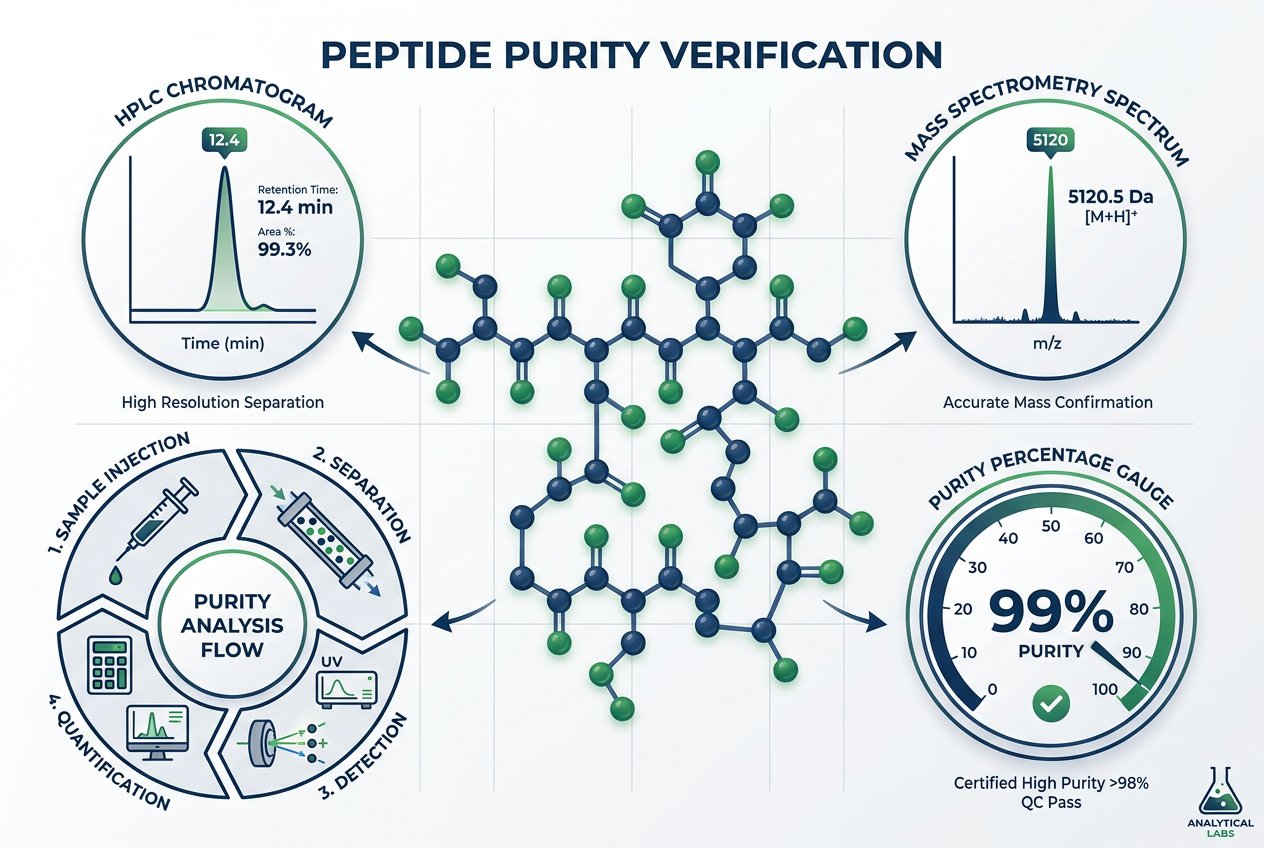
Purity verification at tigerpeptides begins with high-performance liquid chromatography (HPLC) analysis for every synthesized batch. Mass spectrometry confirms molecular weight and sequence identity. Researchers receive a certificate of analysis that lists retention time, peak area percentage, and observed mass-to-charge ratio. High-performance liquid chromatography is a standard method for peptide purity assessment (PubMed).
Third-party testing adds an independent layer of quality control. tigerpeptides submits selected lots to external analytical laboratories for orthogonal methods such as amino acid analysis and residual solvent testing. These reports are available upon request for institutional purchasing records. For more on this process, see [third-party testing protocols](/third-party-testing/).
💡 Key Takeaway: How Does tigerpeptides Verify Peptide Purity?
Which Peptide Formats Does tigerpeptides Supply?
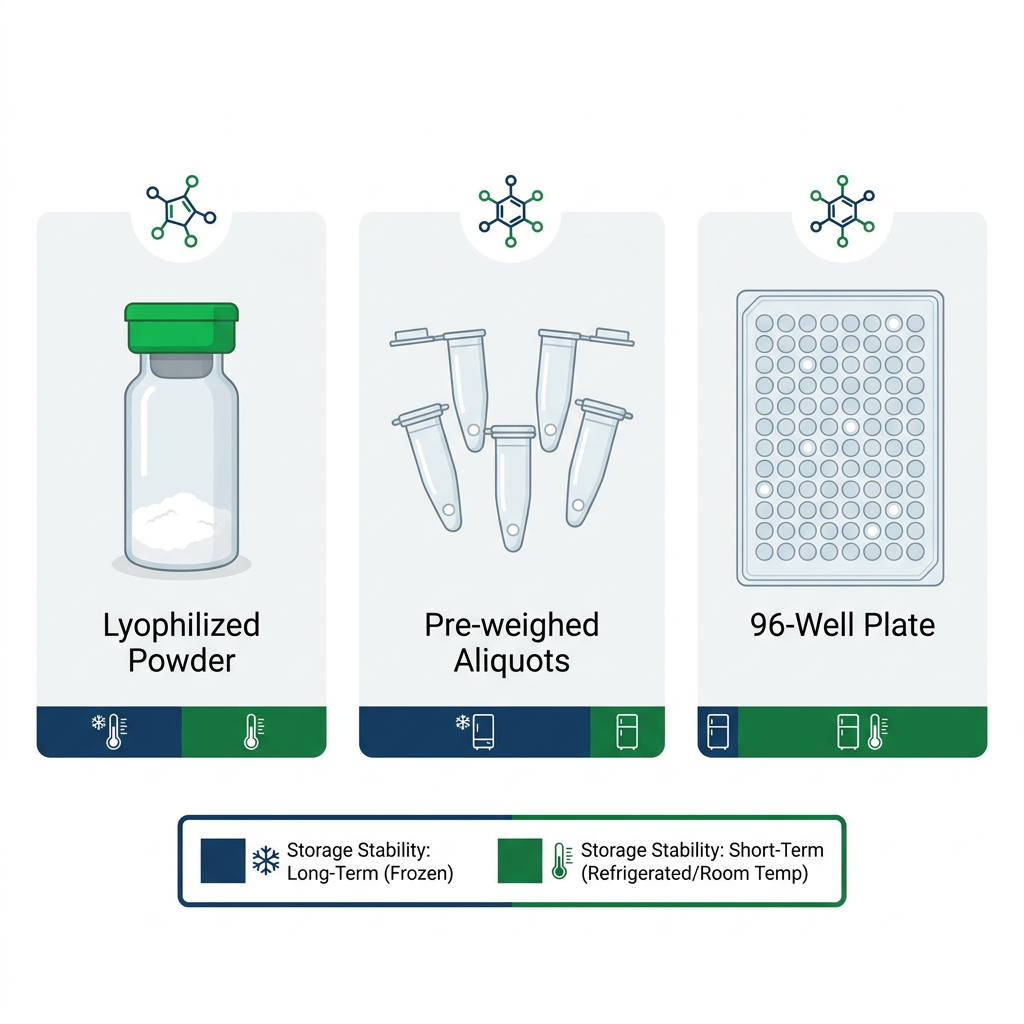
tigerpeptides provides lyophilized peptide powders in sterile, sealed vials ranging from 1 mg to 100 mg per vial. Researchers can order standard catalog peptides or request custom synthesis for novel sequences. Pre-weighed aliquots reduce handling variability in dose-response experiments.
For cell culture applications, tigerpeptides offers peptide vials with documented endotoxin levels below 0.1 EU/mg. Each vial is labeled with net peptide content, lot number, and recommended storage temperature. Solubility guidelines are provided for common buffers such as PBS and DMSO.
What Are the Storage Requirements for tigerpeptides Products?
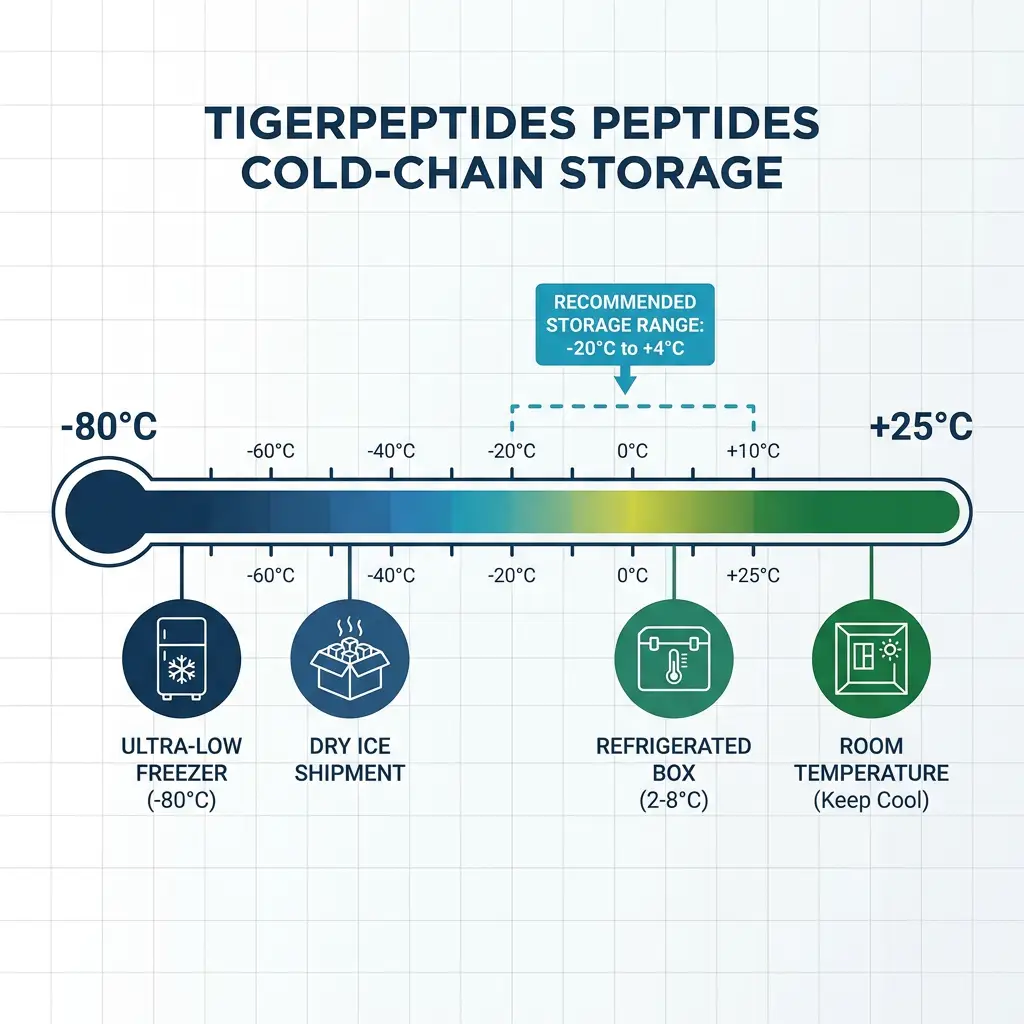
Lyophilized peptides from tigerpeptides should be stored at -20°C or -80°C in a dry, dark environment. Short-term storage at 4°C is acceptable for up to two weeks. After reconstitution, peptide solutions should be aliquoted and frozen to avoid repeated freeze-thaw cycles.
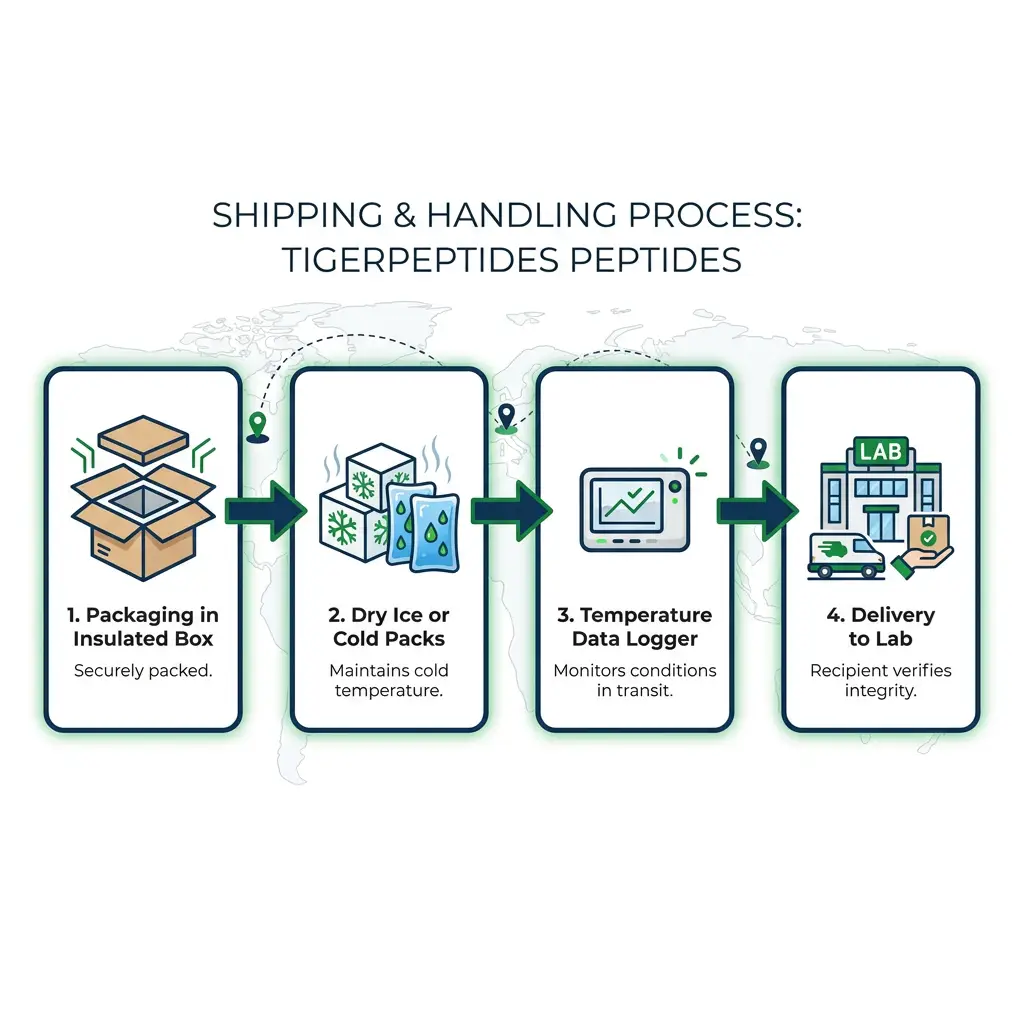
tigerpeptides ships all peptide vials with cold packs and insulated packaging to maintain temperature during transit. Researchers should inspect the package upon arrival and transfer vials to laboratory freezers immediately. Desiccants are included to minimize moisture uptake.
How Does tigerpeptides Compare to Other Research Peptide Suppliers?
The table below compares measurable attributes of tigerpeptides with typical research peptide suppliers.
| Attribute | tigerpeptides | Typical research supplier |
|———–|—————|—————————|
| Purity documentation | HPLC and MS report per lot | Often batch-level only |
| Third-party testing | Independent lab verification available | Varies; not always offered |
| Shipping temperature | Cold-chain with ice packs | Ambient or cold pack optional |
| Peptide formats | 1 mg to 100 mg vials, custom synthesis | Limited catalog sizes |
| Certificate of analysis | Batch-specific, downloadable | May require request |
These differences matter for laboratories that require reproducible results across experiments. tigerpeptides documents each step from synthesis to shipping, reducing ambiguity in peptide identity and concentration. For a detailed supplier comparison, see [this guide](/almighty-peptides-supplier-comparison/).
💡 Key Takeaway: How Does tigerpeptides Compare to Other Research Peptide Suppliers?
What Quality Controls Apply to tigerpeptides Orders?
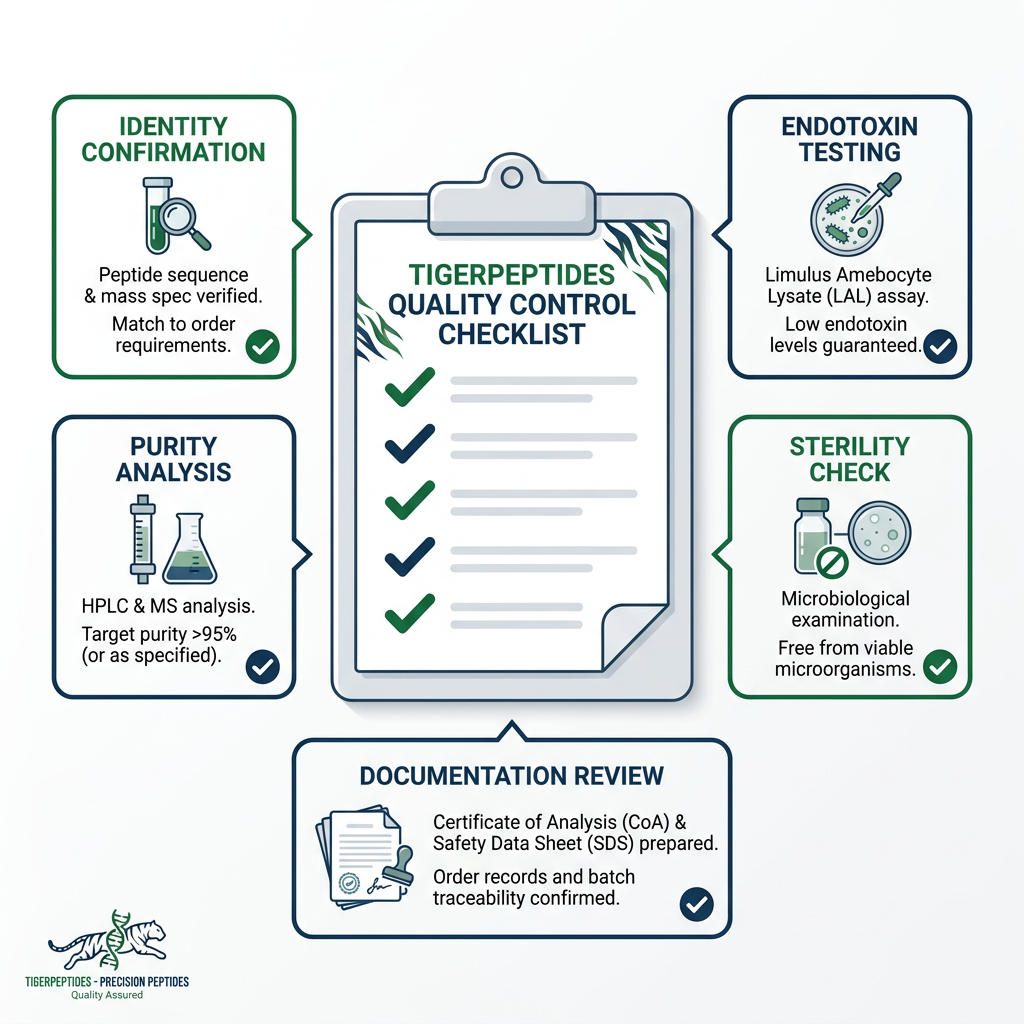
Every tigerpeptides order includes a lot-specific certificate of analysis with HPLC purity percentage, mass spectrometry data, and residual solvent levels. The company retains retention samples for each batch to support future analytical comparisons. Researchers can request raw chromatograms for institutional audits.
Quality control at tigerpeptides follows current Good Manufacturing Practice (cGMP) principles for research chemicals, though products are not pharmaceutical grade. Internal release specifications require ≥95% purity for standard peptides and ≥98% for custom synthesis projects.
Why Choose tigerpeptides for Laboratory Research?
tigerpeptides reduces experimental variability by supplying peptides with documented purity and consistent net peptide content. Researchers working on receptor binding assays or enzyme kinetics need reliable molar concentrations, which depend on accurate peptide quantification.
The catalog at tigerpeptides covers common research sequences such as angiotensin fragments, melanocortin ligands, and growth factor mimetics. Each product page lists molecular weight, sequence, and suggested reconstitution solvents for in vitro use.
For academic labs and contract research organizations, tigerpeptides offers institutional pricing and batch reservation. This allows multi-year studies to use the same peptide lot, minimizing inter-batch variability in longitudinal experiments.
What Analytical Methods Support tigerpeptides Quality Claims?
tigerpeptides relies on reverse-phase HPLC with UV detection at 214 nm for purity assessment. Mass spectrometry using electrospray ionization (ESI-MS) confirms the monoisotopic mass of each peptide. Together, these methods verify both chemical purity and sequence identity. Mass spectrometry protocols are described by the National Institutes of Health.
For peptides with disulfide bonds or complex folding, tigerpeptides may include circular dichroism or analytical ultracentrifugation data on request. These techniques support structural characterization for receptor-ligand interaction studies.
💡 Key Takeaway: What Analytical Methods Support tigerpeptides Quality Claims?
How Are tigerpeptides Peptides Shipped and Handled?
tigerpeptides packages lyophilized vials in medical-grade plastic secondary containers with desiccant. Cold packs maintain 2–8°C during transit for standard orders, while temperature-sensitive peptides ship with dry ice for frozen delivery.
Upon arrival, laboratory staff should log the lot number and storage location. tigerpeptides recommends using a barcode scanner to track vials in inventory systems. Any temperature excursion should be reported to the supplier for stability assessment.
What Research Applications Use tigerpeptides Peptides?
Receptor binding assays represent a primary use case for in vitro studies with these peptides. Researchers incubate peptide ligands with membrane preparations or recombinant receptors, then measure displacement of a labeled tracer. Competitive binding curves yield IC50 and Ki values for structure-activity relationship studies. Receptor binding assay protocols are reviewed in PubMed Central.
Cell culture experiments also rely on these peptides for dose-response and signaling analyses. Peptides are reconstituted in sterile buffer and added to culture media at defined concentrations. Endpoint assays include proliferation, apoptosis, and phosphorylation of downstream targets.
In vivo animal model research uses these peptides for pharmacokinetic and pharmacodynamic profiling. Rodent studies require precise dosing based on peptide content, which is documented on each certificate of analysis. All animal protocols must follow institutional IACUC guidelines.
Enzyme inhibition studies benefit from these peptides with high purity, because impurities can interfere with kinetic measurements. Researchers use fluorogenic or chromogenic substrates to determine inhibition constants.
How to Order tigerpeptides for Your Laboratory?
Laboratories can request a quote through the tigerpeptides website by submitting an institutional email address and purchase order number. New accounts undergo verification to confirm research use only. Standard catalog peptides ship within 3–5 business days after payment confirmation.
Custom synthesis requests require a sequence, desired purity, and scale. This supplier provides a feasibility assessment and quote within two business days. Minimum order quantities vary by peptide length and modification complexity.
For nationwide shipping, this supplier partners with temperature-controlled carriers. See [nationwide peptide shipping options](/nationwide-peptides/) for delivery zones and lead times.
💡 Key Takeaway: How to Order tigerpeptides for Your Laboratory?
How Does This Supplier Support Reproducible Research?
Reproducibility is a core requirement in laboratory research. This peptide supplier retains batch samples and provides raw analytical data to support independent verification. Researchers can request aliquots from the same lot for multi-year studies.
Documentation includes lot-specific HPLC chromatograms, mass spectra, and residual solvent reports. These records allow laboratories to compare results across experiments without ambiguity about peptide concentration or degradation.
Batch reservation is available for long-term projects. By reserving a single lot, researchers eliminate inter-batch variability as a confounding factor. This practice is recommended for longitudinal animal studies and multi-site research collaborations.
What Peptide Modifications Are Available for Research?
Peptide modifications expand the utility of synthetic sequences in laboratory experiments. Common options include N-terminal acetylation, C-terminal amidation, and phosphorylation of serine, threonine, or tyrosine residues. These modifications mimic post-translational states found in endogenous proteins.
Biotinylation and fluorescent labeling support detection in binding assays and imaging studies. Researchers can request biotin at the N-terminus or lysine side chains, or conjugates with FITC, rhodamine, or Cy5 dyes. Each modification is verified by mass spectrometry.
Disulfide bridge formation is available for peptides that require constrained conformations. Oxidation conditions are optimized to yield the correct cysteine pairing. Circular dichroism data can confirm secondary structure for folded peptides.
How Does This Supplier Handle Custom Peptide Synthesis?
Custom synthesis begins with a sequence submission through the laboratory account portal. Researchers specify the amino acid sequence, desired purity, scale, and any modifications. A feasibility assessment follows within two business days.
Synthesis uses solid-phase Fmoc chemistry with automated peptide synthesizers. Cleavage and deprotection are followed by HPLC purification to the requested purity threshold. Mass spectrometry confirms the final product mass.
For difficult sequences, the supplier may recommend segment condensation or native chemical ligation. Long peptides over 50 residues often require multiple fragments. Each fragment is purified before final assembly.
Lead times for custom peptides range from two to four weeks depending on length and modification complexity. Rush synthesis is available for an additional fee. All custom peptides include a certificate of analysis.
💡 Key Takeaway: How Does This Supplier Handle Custom Peptide Synthesis?
What Shipping and Delivery Options Are Available?
Standard shipping uses insulated containers with cold packs to maintain 2–8°C during transit. Domestic orders typically arrive within two to three business days. International shipments may take five to seven business days depending on customs clearance.
Temperature-sensitive peptides ship with dry ice to keep vials frozen. Dry ice shipments require special handling and may incur additional fees. Tracking information is provided for all orders.
For large institutional orders, the supplier can arrange dedicated courier service. This option is recommended for multi-vial shipments or temperature-critical peptides. Delivery confirmation includes a signed receipt.
What Documentation Supports Institutional Purchasing?
Every shipment includes a lot-specific certificate of analysis with HPLC purity, mass spectrometry data, and residual solvent levels. Safety data sheets are available for each peptide and solvent. These documents support institutional biosafety and chemical hygiene plans.
Purchase orders from accredited universities and research institutes are accepted. The supplier provides W-9 forms and vendor registration documents upon request. Net-30 payment terms may be available for established accounts.
For grant-funded research, the supplier can provide quotes that meet federal procurement guidelines. Documentation includes catalog numbers, unit sizes, and per-vial pricing. This simplifies budget justification in grant applications.
FAQ
Q: Are these peptide products intended for human use?
A: No. tigerpeptides products are strictly for laboratory research applications, including in vitro assays and animal model studies. They are not labeled for human or veterinary clinical use.
Q: What purity level can researchers expect from this supplier?
A: Standard catalog peptides have a minimum HPLC purity of 95%, while custom synthesis projects typically meet 98% or higher. Each lot includes a certificate of analysis with mass spectrometry confirmation.
Q: How should peptide vials be stored after delivery?
A: Lyophilized vials should be stored at -20°C or -80°C in a dry, dark environment. After reconstitution, aliquot and freeze to avoid repeated freeze-thaw cycles. Cold-chain shipping preserves stability during transit.
Q: Does this supplier provide third-party testing documentation?
A: Yes. Selected lots are submitted to independent analytical laboratories for orthogonal testing. Reports are available upon request for institutional purchasing and audit records.
Q: Can laboratories order custom peptide sequences?
A: Yes. Custom synthesis is available for novel sequences. Researchers submit the amino acid sequence, desired purity, and scale. A feasibility assessment and quote are provided within two business days.
Topics covered in this article:
Ready to Take the Next Step?
Every product includes lot-specific documentation and third-party purity testing.
Explore Our Research Products →Free shipping on qualifying orders · Batch COA on request