
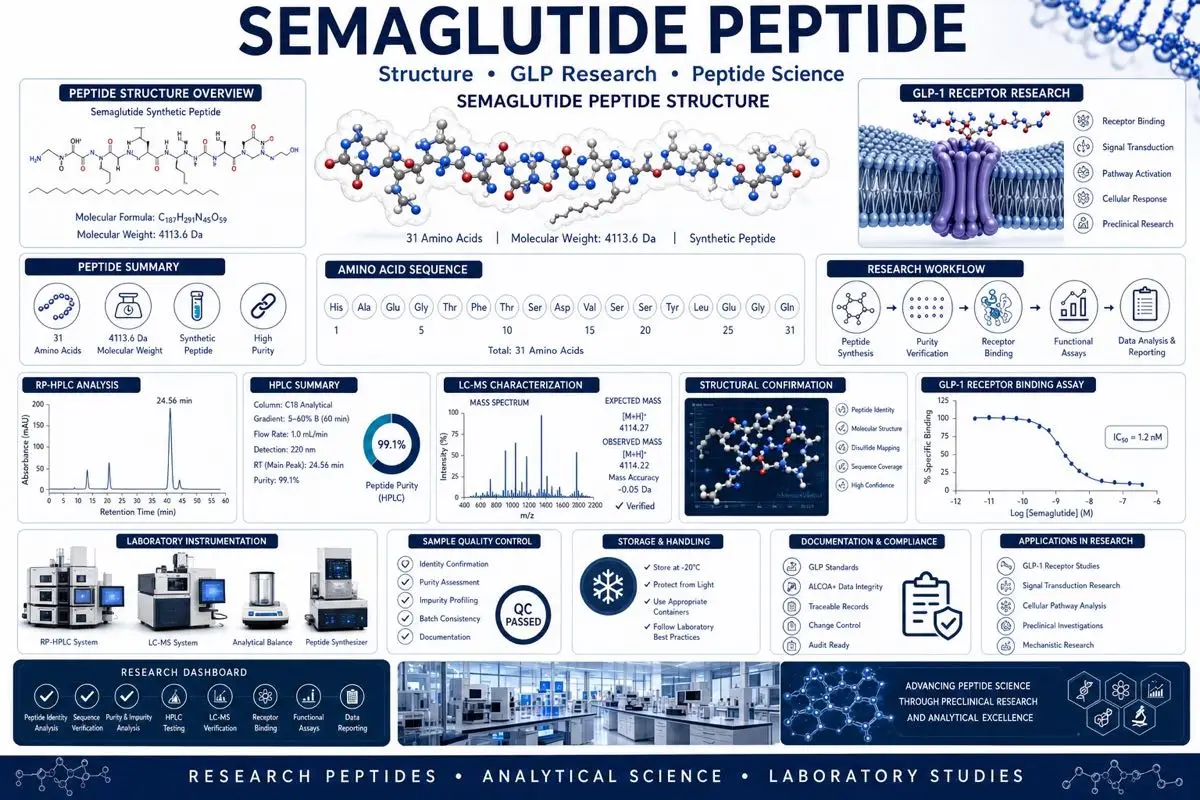
Semaglutide Peptide: 12 Essential Scientific Insights (2026 Ultimate Research Guide)
Semaglutide peptide research guide: 12 essential insights into GLP-1 biology, molecular structure, analytical methods, and peptide comparisons. Lab research only.
📋 Table of Contents
Yes, semaglutide is a peptide—a synthetic GLP-1 receptor agonist peptide engineered for laboratory research into molecular structure, amino acid sequence characteristics, receptor interactions, and analytical properties. This semaglutide peptide research guide delivers 12 essential scientific insights spanning peptide chemistry, GLP-1 biology, comparative analysis with Retatrutide and Tirzepatide, and characterization methods. All information below is strictly for in vitro research use only and is not intended for human or veterinary applications.
Key takeaways
- Semaglutide peptide research focuses on engineered GLP-1 peptide structure, receptor biology, and molecular pathway investigations.
- Scientists study the semaglutide peptide through amino acid sequence analysis, computational modeling, and laboratory characterization such as LC-MS and RP-HPLC.
- Comparative research with Retatrutide, Tirzepatide, GLP-1S Peptide, and GLP-2T Peptide helps evaluate structural differences, receptor pathway models, and molecular characteristics across related engineered peptide systems, including the semaglutide peptide.
- Analytical technologies including LC-MS and RP-HPLC support semaglutide peptide identity verification, molecular characterization, and quality assessment in research settings.
- All information in this guide is for laboratory research and scientific education only—not medical advice, not for human use, and not for clinical or therapeutic applications.
What Is semaglutide peptide?
The semaglutide peptide is an engineered synthetic peptide that has become an important subject of modern peptide science. Researchers investigate its molecular architecture, amino acid sequence, receptor interactions, and structural characteristics to better understand GLP-1 biology and peptide engineering.
A common scientific question is “Is semaglutide a peptide?” From a molecular biology perspective, semaglutide is classified as a peptide because it consists of an amino acid sequence engineered for research involving GLP-1 receptor biology, peptide chemistry, and molecular pathway analysis. This semaglutide peptide classification underpins all laboratory investigations described in this guide.
| Scientific Feature | Semaglutide Research Profile |
|—|—|
| Research Compound | Semaglutide Peptide |
| Scientific Classification | Engineered GLP-1 Peptide |
| Research Focus | GLP-1 Receptor Biology and Molecular Studies |
| Structural Analysis | Amino Acid Sequence and Peptide Engineering |
| Analytical Methods | LC-MS and RP-HPLC Characterization |
Research involving the semaglutide peptide contributes to broader investigations into engineered peptide systems, molecular signaling, computational biology, and analytical characterization techniques. The compound is studied alongside related research peptides including Retatrutide, Tirzepatide, GLP-1S Peptide, and GLP-2T Peptide to expand understanding of modern GLP peptide systems.
For laboratories sourcing research-grade peptides, evaluating supplier reliability is critical—see 10 Signs of a Reliable Peptide Supplier in the USA.
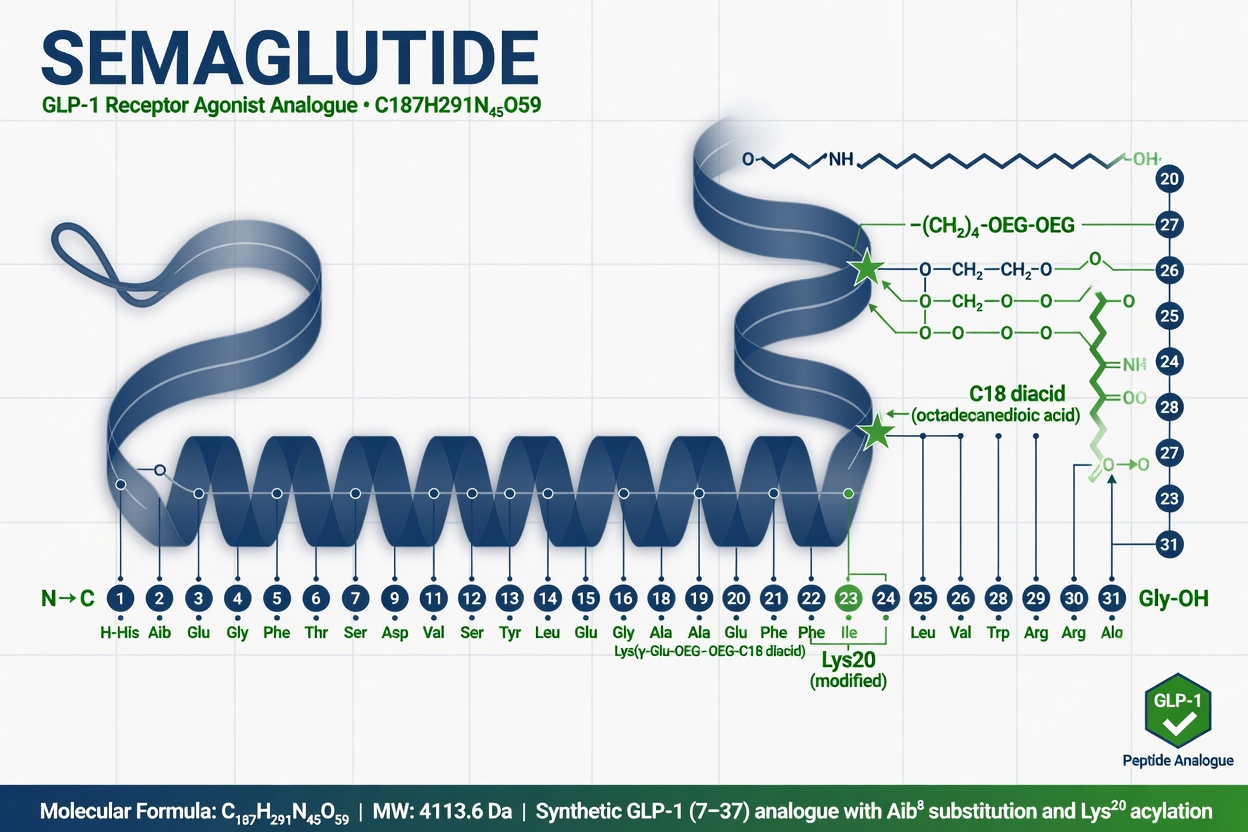
What Is the Molecular Structure of the semaglutide peptide and How Is It Classified?
The molecular structure of the semaglutide peptide is an important focus within peptide chemistry. Scientists evaluate amino acid sequence organization, structural stability, and molecular interactions using advanced analytical technologies.
The semaglutide peptide is classified as a synthetic GLP-1 research peptide. Its amino acid sequence is engineered to support laboratory studies of GLP-1 receptor biology, molecular signaling pathways, and peptide structure-function relationships. Researchers use computational biology and molecular modeling to examine how sequence design influences molecular behavior in controlled experimental models.
The scientific classification of semaglutide places it within the broader category of engineered GLP-1 peptides. This classification is based on its amino acid sequence, receptor interaction profile, and the analytical methods used to verify its molecular identity—most commonly LC-MS and RP-HPLC. In semaglutide peptide research, LC-MS and RP-HPLC are standard verification tools.
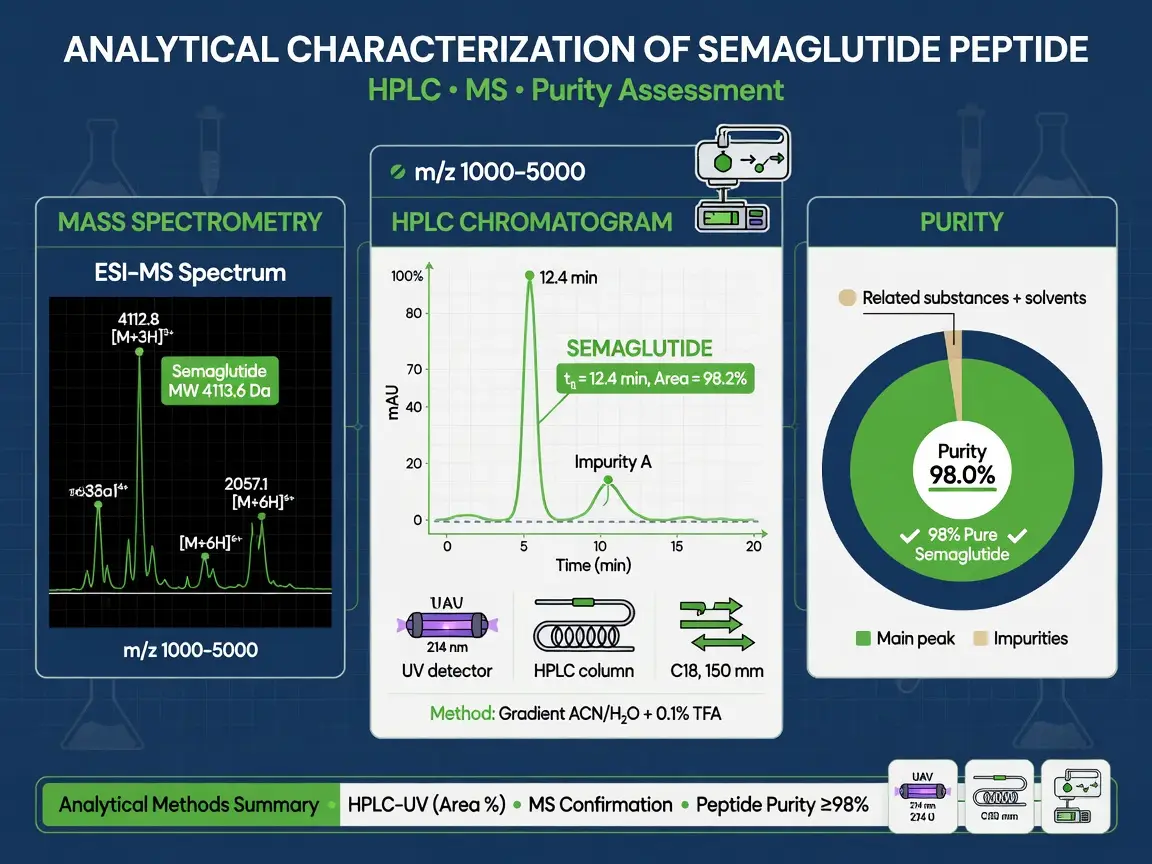
In typical research workflows, a Certificate of Analysis (COA) accompanies semaglutide peptide samples, reporting purity as determined by RP-HPLC. Many suppliers aim for ≥95% or ≥98% purity, though exact specifications vary by manufacturer. Researchers should always request a COA to verify peptide identity and purity before initiating experiments.
💡 Key Takeaway: The semaglutide peptide is classified as a synthetic GLP-1 research peptide, with its amino acid sequence engineered for laboratory studies of receptor biology and molecular signaling. Analytical verification via LC-MS and RP-HPLC is standard practice.
💡 Key Takeaway: What Is the Molecular Structure of the semaglutide peptide and How Is It Classified?
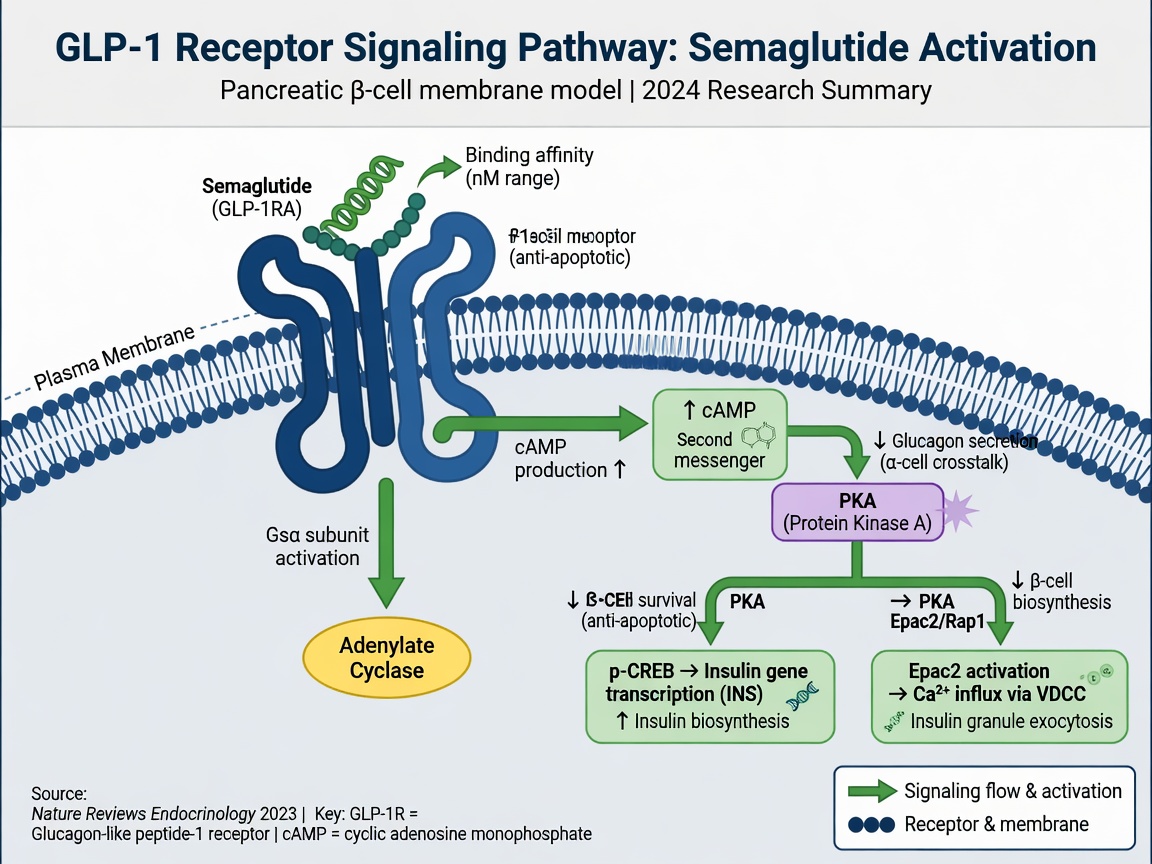
How Does semaglutide peptide Relate to GLP-1 Biology and Molecular Research?
GLP-1 biology is an active area of peptide science that examines receptor systems, molecular signaling pathways, and engineered peptide interactions. Researchers investigate these biological models to better understand peptide design and structure-function relationships.
Scientific investigations involving semaglutide peptide examine molecular characteristics alongside other engineered GLP peptides to improve understanding of peptide biology and receptor research. The research focus includes:
| Research Area | Scientific Investigation |
|—|—|
| GLP-1 Biology | Receptor pathway research models |
| Peptide Engineering | Structure and sequence investigation |
| Molecular Biology | Peptide interaction research |
| Computational Biology | AI-supported peptide modeling |
Engineered peptides help researchers explore molecular biology by allowing precise investigation of how amino acid sequence design influences molecular structure, receptor interactions, and peptide behavior within controlled laboratory research models. Semaglutide peptide research therefore contributes to foundational knowledge in GLP-1 receptor pathway analysis and peptide engineering, without any clinical or therapeutic application.
For a deeper look at how research peptides differ from cosmetic peptides, see Research Peptides vs Cosmetic Peptides: Lab Basics.
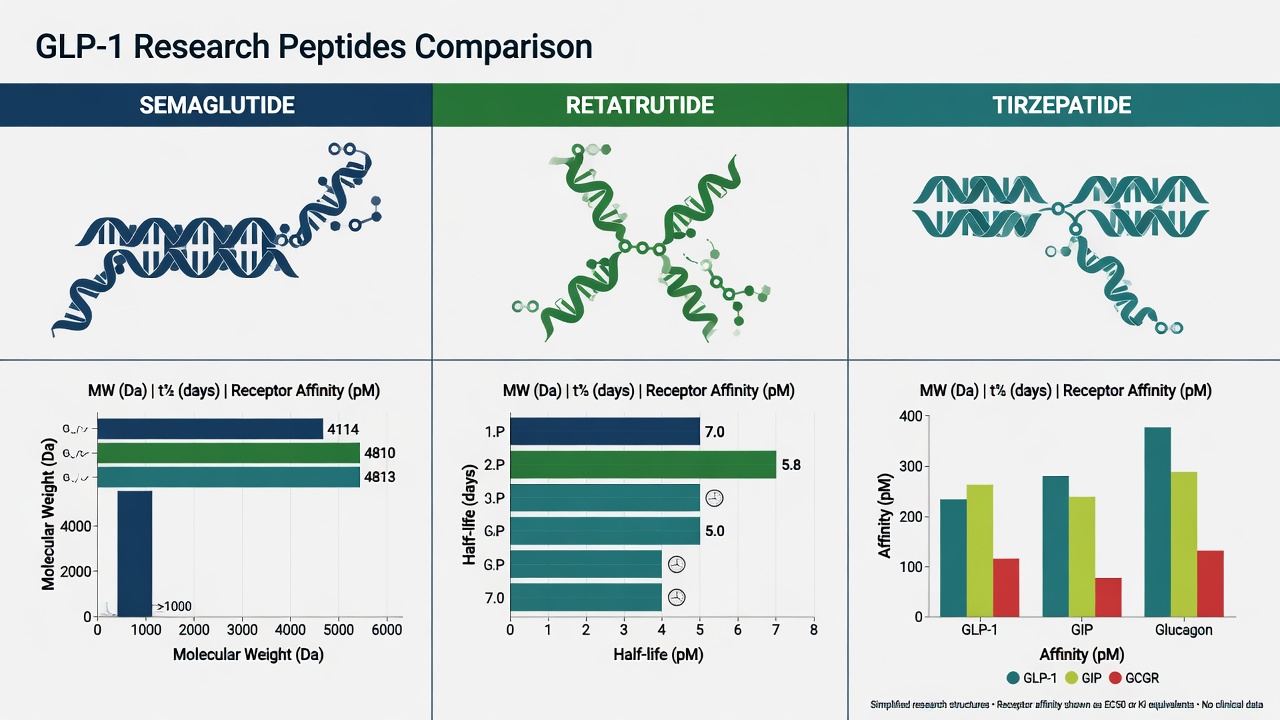
How Do Researchers Compare semaglutide peptide with Retatrutide and Tirzepatide?
Comparisons between semaglutide, Retatrutide, and Tirzepatide are common within peptide science because each represents an engineered peptide investigated through molecular biology and receptor pathway research. Rather than evaluating clinical outcomes, researchers compare peptide structures, sequence characteristics, analytical profiles, and molecular research models.
In semaglutide peptide research, these comparisons help establish structural benchmarks for GLP-1 receptor agonist engineering.
| Research Feature | Semaglutide | Retatrutide | Tirzepatide |
|—|—|—|—|
| Scientific Category | GLP-1 peptide research | Multi-pathway peptide research | Engineered peptide research |
| Primary Focus | GLP-1 molecular biology | Multi-receptor research | Receptor pathway studies |
| Research Approach | Molecular characterization | Molecular characterization | Molecular characterization |
| Analytical Methods | LC-MS / RP-HPLC | LC-MS / RP-HPLC | LC-MS / RP-HPLC |
These comparative investigations help researchers evaluate differences in molecular architecture, amino acid sequence design, receptor biology, and analytical characteristics. Semaglutide, Retatrutide, and Tirzepatide each serve as distinct research models within the broader GLP research ecosystem, which also includes GLP-1S Peptide and GLP-2T Peptide. All semaglutide peptide comparisons remain strictly within the scope of in vitro laboratory research.
Which Analytical Methods Are Used to Characterize semaglutide peptide?
Analytical characterization of the semaglutide peptide relies on two primary technologies: liquid chromatography–mass spectrometry (LC-MS) and reversed-phase high-performance liquid chromatography (RP-HPLC). These methods provide complementary data on molecular weight, sequence integrity, purity, and structural identity.
LC-MS is used to confirm the exact mass of the semaglutide peptide and to detect potential sequence modifications or truncations. RP-HPLC provides a purity profile by separating the target peptide from closely related impurities under controlled conditions. Together, these methods allow researchers to verify that a semaglutide peptide sample meets the specifications reported in its Certificate of Analysis (COA).
A typical semaglutide peptide characterization workflow includes:
- Requesting a COA from the supplier before experimental use.
- Confirming the reported purity (commonly ≥95% or ≥98%) via independent RP-HPLC.
- Using LC-MS to verify the expected molecular mass and amino acid sequence.
- Documenting all analytical results for reproducibility and quality control.
- Storing the semaglutide peptide according to supplier recommendations after analysis.
For broader context on analytical standards in peptide research, see PubMed: Semaglutide and Cardiovascular Outcomes and PubMed: Semaglutide research publications. These peer-reviewed sources illustrate how semaglutide peptide data are reported in scientific literature, though they are not endorsements of any product.
💡 Key Takeaway: Which Analytical Methods Are Used to Characterize semaglutide peptide?
What Does the Future of GLP-1 Peptide Research Look Like?
Future GLP-1 peptide research will continue to refine how researchers understand engineered peptide systems, including the semaglutide peptide. Several emerging directions are already visible in the scientific literature and laboratory practice.
Computational biology and artificial intelligence are increasingly used to model peptide-receptor interactions before any wet-lab experiments begin. These tools allow scientists to predict how amino acid substitutions in the semaglutide peptide might alter molecular stability or receptor binding profiles, reducing the number of physical samples required for initial screening.
High-resolution analytical techniques are also advancing. Newer mass spectrometry workflows can detect lower-abundance impurities and confirm post-translational modifications with greater confidence. For semaglutide peptide research, this means even tighter quality control and more reproducible cross-laboratory comparisons.
Additionally, comparative research across related peptides—such as Retatrutide, Tirzepatide, GLP-1S Peptide, and GLP-2T Peptide—will likely expand. These comparisons help map the structural space of GLP-1 receptor agonist engineering and clarify which sequence features are most relevant to specific receptor pathways. All future work with the semaglutide peptide remains strictly within the domain of in vitro laboratory research and is not directed toward human or veterinary applications.
How Should Researchers Source and Store semaglutide peptide for Laboratory Use?
Proper sourcing and storage of the semaglutide peptide are essential for maintaining experimental integrity. Researchers should treat supplier verification and storage conditions as equally important steps in the research workflow.
When sourcing semaglutide peptide for laboratory use, consider the following checklist:
- Request a Certificate of Analysis (COA) that includes purity data from RP-HPLC and mass confirmation from LC-MS.
- Verify that the supplier clearly states the product is for in vitro research use only and not for human or veterinary use.
- Check the reported purity specification—many research suppliers aim for ≥95% or ≥98%, but exact values vary.
- Review supplier reliability indicators such as third-party testing, customer support, and documented storage guidance. See Searching “Almighty Peptides”? How to Compare Suppliers for a structured comparison approach.
- Confirm that the supplier provides a stable lyophilized format, which is the standard for long-term storage of research peptides.
For storage, the semaglutide peptide should be kept as a lyophilized powder in a tightly sealed, desiccated container. Recommended storage conditions typically include storage at -20°C or below, protected from light and moisture. After reconstitution, researchers should follow the supplier’s instructions for short-term storage, usually at 2–8°C for brief periods, and avoid repeated freeze-thaw cycles.
Proper documentation of storage temperature, reconstitution solvent, and aliquot preparation supports reproducibility in semaglutide peptide research. All handling must occur under appropriate laboratory safety protocols, and the material must never be used for human or veterinary purposes.
For laboratories that need research-grade peptides with clear sourcing standards, Tiger Peptides | Research-Grade Peptides for Laboratories provides additional context on supplier evaluation. Another useful resource is Nationwide Peptides for Research Labs | Tiger Peptides, which discusses sourcing considerations across different regions.
FAQ
Is semaglutide peptide the same as semaglutide?
Yes. Semaglutide is a peptide by molecular classification, and the term semaglutide peptide is used in research contexts to emphasize its peptide structure, amino acid sequence, and laboratory characterization via LC-MS and RP-HPLC. All discussion here is for in vitro research use only.
What purity level should I look for when sourcing semaglutide peptide?
Many research suppliers report purity of ≥95% or ≥98% for semaglutide peptide samples, as determined by RP-HPLC. Researchers should always request a Certificate of Analysis (COA) and, when possible, independently verify purity before beginning experiments. Exact specifications vary by manufacturer.
Can semaglutide peptide be used in human or veterinary studies?
No. The semaglutide peptide discussed on this site is sold strictly for in vitro laboratory research purposes only. It is not for human use, not for veterinary use, and not intended to diagnose, treat, cure, or prevent any disease. All handling must comply with applicable research regulations.
How should I store semaglutide peptide after reconstitution?
After reconstitution, semaglutide peptide should generally be stored according to the supplier’s instructions, often at 2–8°C for short-term use. Avoid repeated freeze-thaw cycles, protect the solution from light, and use sterile laboratory techniques. Long-term storage of the lyophilized powder is typically recommended at -20°C or below in a desiccated container.
Why are LC-MS and RP-HPLC both used for semaglutide peptide characterization?
LC-MS confirms the exact molecular mass and sequence integrity of the semaglutide peptide, while RP-HPLC provides a purity profile by separating the target peptide from impurities. Together, these methods give researchers a reliable basis for verifying identity and quality before using the semaglutide peptide in experimental models.
Ready to Take the Next Step?
Every product includes lot-specific documentation and third-party purity testing.
Explore Our Research Products →Free shipping on qualifying orders · Batch COA on request