
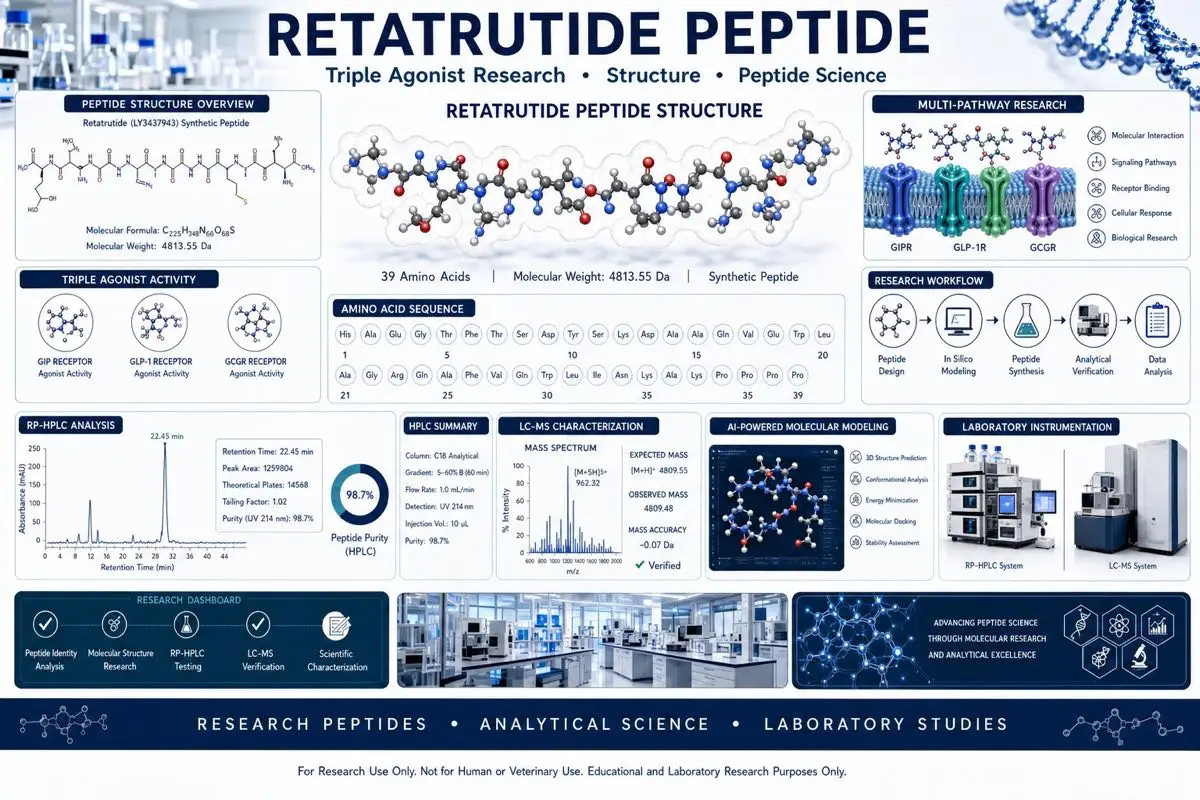
Your Ultimate Retatrutide Peptide Research Guide: GLP Pathways, Structure & Scientific Studies
Retatrutide peptide research guide: 7 proven lab facts on GLP pathways, peptide structure, LC-MS/RP-HPLC analysis, and storage protocols. Research use only.
📋 Table of Contents
Yes, Retatrutide is a synthetic research peptide studied within molecular biology for its relationship with GLP-related peptide pathways, receptor interaction models, amino acid sequence characteristics, and advanced peptide engineering research. This retatrutide peptide research guide provides a laboratory-focused overview of Retatrutide peptide structure, analytical testing, pathway comparisons, and scientific study approaches — all for research and educational purposes only.
Key takeaways
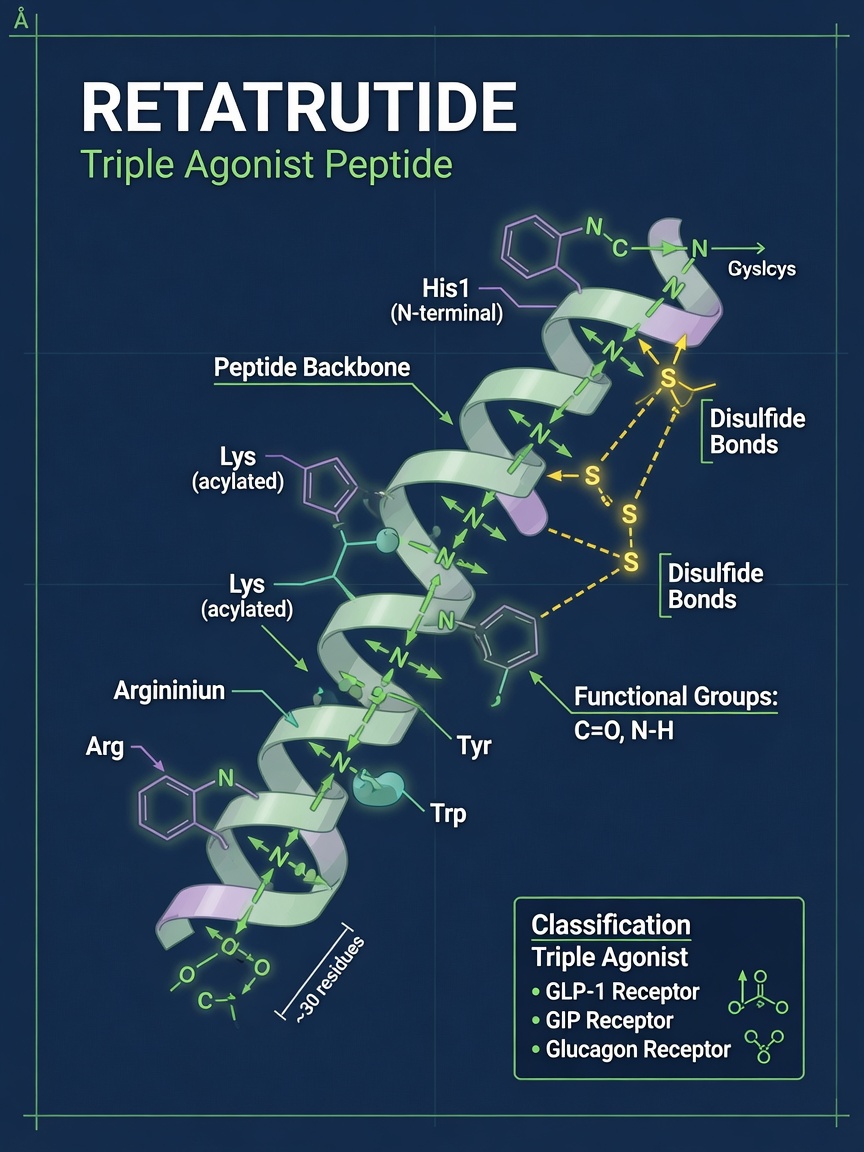
- Retatrutide is an engineered synthetic research peptide studied for GLP-related receptor pathway models, molecular structure, and amino acid sequence characteristics, as detailed throughout this retatrutide peptide research guide.
- Analytical technologies such as LC-MS (liquid chromatography–mass spectrometry) verification and RP-HPLC (reverse-phase high-performance liquid chromatography) analysis support peptide identity research and molecular evaluation.
- Scientific comparisons of Retatrutide vs Tirzepatide focus on structural differences, peptide design approaches, and molecular pathway models — not direct biological or clinical outcomes.
- Related GLP peptide research areas include GLP-1S Peptide and GLP-2T Peptide, studied within broader peptide research frameworks for structural and sequence comparisons.
- All Retatrutide information is provided for laboratory research and educational purposes only; it is not medical advice and not for human use.
What Is Retatrutide Peptide?
Retatrutide is a synthetic research peptide studied within molecular biology and peptide science for its engineered structure, receptor pathway research, and amino acid sequence characteristics. This retatrutide peptide research guide emphasizes that scientific investigations focus on understanding molecular interactions, peptide architecture, and experimental research models. Researchers examining peptide Retatrutide study its molecular properties through analytical chemistry, computational modeling, and laboratory-based characterization methods.
Retatrutide research peptide studies are part of a growing scientific field focused on understanding GLP-related peptide systems and how structural modifications influence molecular research pathways. The retatrutide peptide research guide approach centers on peptide chemistry, molecular biology, analytical characterization, and experimental research models — not human use. This retatrutide peptide research guide repeatedly underscores that point. Retatrutide belongs to an advanced peptide research category; engineered peptides are studied to understand how amino acid sequence modifications influence molecular structure, receptor research models, and peptide characteristics within controlled scientific environments.
Understanding Retatrutide in this retatrutide peptide research guide treats Retatrutide strictly as a research compound. Laboratory evaluation includes sequence analysis, purity verification via COA documentation, and stability testing under controlled storage conditions. Researchers typically request certificates of analysis (COAs) that list HPLC purity (commonly ≥95% for research-grade peptides) and mass spectrometry confirmation. Lyophilized peptide powders are usually stored at -20°C or below, with desiccant, and reconstituted only when ready for experimental use — always following the supplier’s storage guidelines.
| Research Compound | Retatrutide Peptide |
|—|—|
| Research Category | Engineered Synthetic Peptide |
| Scientific Area | GLP-Related Molecular Research |
| Primary Study Focus | Peptide Structure and Receptor Pathway Models |
| Analytical Methods | LC-MS / RP-HPLC Characterization |
| Storage (Typical) | Lyophilized, -20°C, desiccated |
| COA Documentation | HPLC purity, mass spec, sequence |
What Is the Structure and Peptide Classification of Retatrutide?
The molecular structure of Retatrutide is a major focus in peptide chemistry research. This retatrutide peptide research guide explains that scientists analyze amino acid sequences, structural arrangements, and molecular interactions to better understand peptide design principles. Analytical technologies allow researchers to investigate structural characteristics and compare engineered peptide systems across different scientific models. The peptide classification for Retatrutide is an engineered peptide research compound within the GLP-related peptide research family.
Study approaches center on molecular characterization and analytical testing, not clinical evaluation. A core part of this retatrutide peptide research guide is the emphasis on structural verification: each lot should be accompanied by a COA that lists exact amino acid sequence, HPLC purity percentage, and LC-MS mass confirmation. Researchers compare these data across lots to ensure batch-to-batch consistency. Computational models often complement wet-lab analysis by predicting folding patterns and receptor-binding surfaces.
Structural Analysis Workflow in This Retatrutide Peptide Research Guide
1. Obtain lyophilized peptide powder from a research-grade supplier.
2. Verify COA documentation for sequence, purity, and mass.
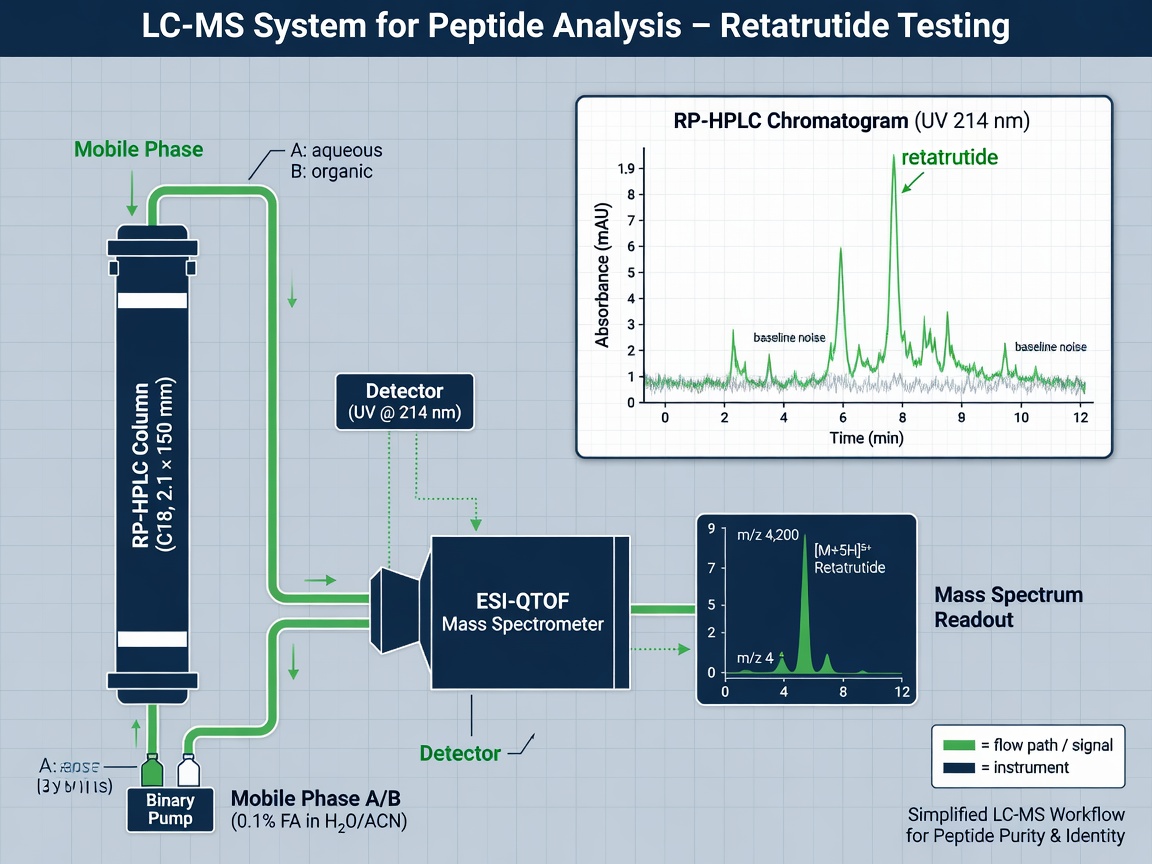
3. Perform in-house RP-HPLC to confirm purity and retention time.
4. Use LC-MS to validate molecular weight and fragmentation pattern.
5. Store aliquots at -20°C to prevent degradation between experiments.
| Scientific Feature | Retatrutide Research Profile |
|—|—|
| Research Compound | Retatrutide Peptide |
| Research Category | Engineered Synthetic Peptide |
| Scientific Area | GLP-Related Molecular Research |
| Primary Study Focus | Peptide Structure and Receptor Pathway Models |
| Analytical Methods | LC-MS / RP-HPLC Characterization |
| Typical COA Purity (Research) | ≥95% (verify each lot) |
| Storage Conditions | -20°C, lyophilized, desiccated |
💡 Key Takeaway: What Is the Structure and Peptide Classification of Retatrutide?
How Does Retatrutide Relate to GLP Pathway and Molecular Research Studies?
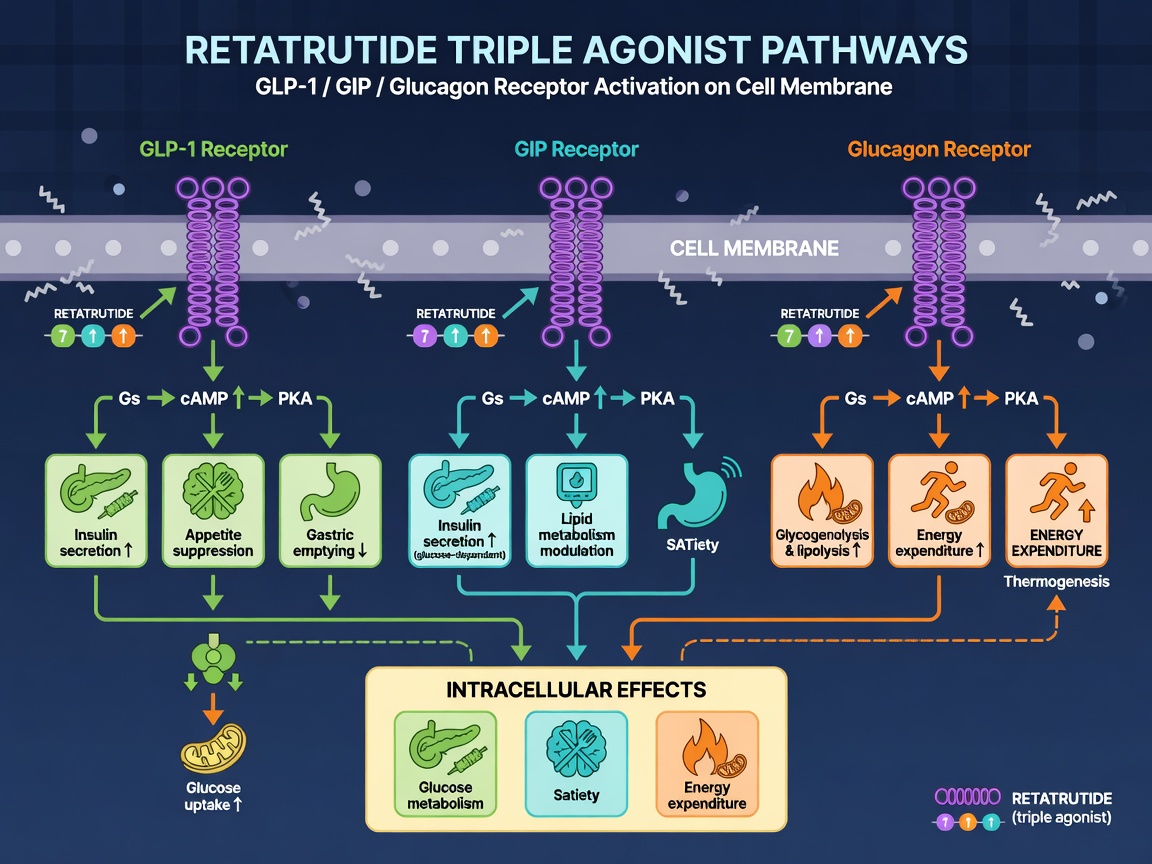
GLP-related peptide research explores molecular pathways, receptor biology models, and peptide interactions. This retatrutide peptide research guide highlights that scientists investigate these systems to understand relationships between peptide structures and biological research mechanisms. Research involving peptides Retatrutide examines molecular characteristics within this broader scientific field alongside other GLP-related peptide investigations. Topics such as GLP-1S Peptide and GLP-2T Peptide are studied within broader peptide research frameworks.
Researchers compare GLP-related peptide systems to better understand differences in molecular structure, sequence characteristics, and experimental research pathways. The retatrutide peptide research guide approach to GLP pathway studies includes receptor-binding assays, signal transduction models, and competitive binding experiments — all conducted in vitro. Computational biology adds predictive power by simulating peptide-receptor docking and stability.
For peer-reviewed context on GLP-1 receptor pharmacology, researchers may consult PubMed.
| Research Area | Scientific Focus |
|—|—|
| GLP Pathway Studies | Molecular signaling research models |
| Peptide Engineering | Structure and sequence investigation |
| Receptor Research | Analysis of molecular interactions |
| Computational Biology | Peptide modeling and prediction studies |
| Analytical Verification | COA cross-check, HPLC, LC-MS |
GLP Pathway Context in This Retatrutide Peptide Research Guide
This retatrutide peptide research guide notes that GLP-related peptides share common structural motifs, but engineered modifications can alter receptor selectivity and metabolic stability. Laboratory studies often compare Retatrutide with native GLP-1 analogs to map sequence-function relationships. All such work remains strictly in vitro; no human or animal testing is implied.
How Does Retatrutide Peptide Compare to Tirzepatide in Scientific Research?
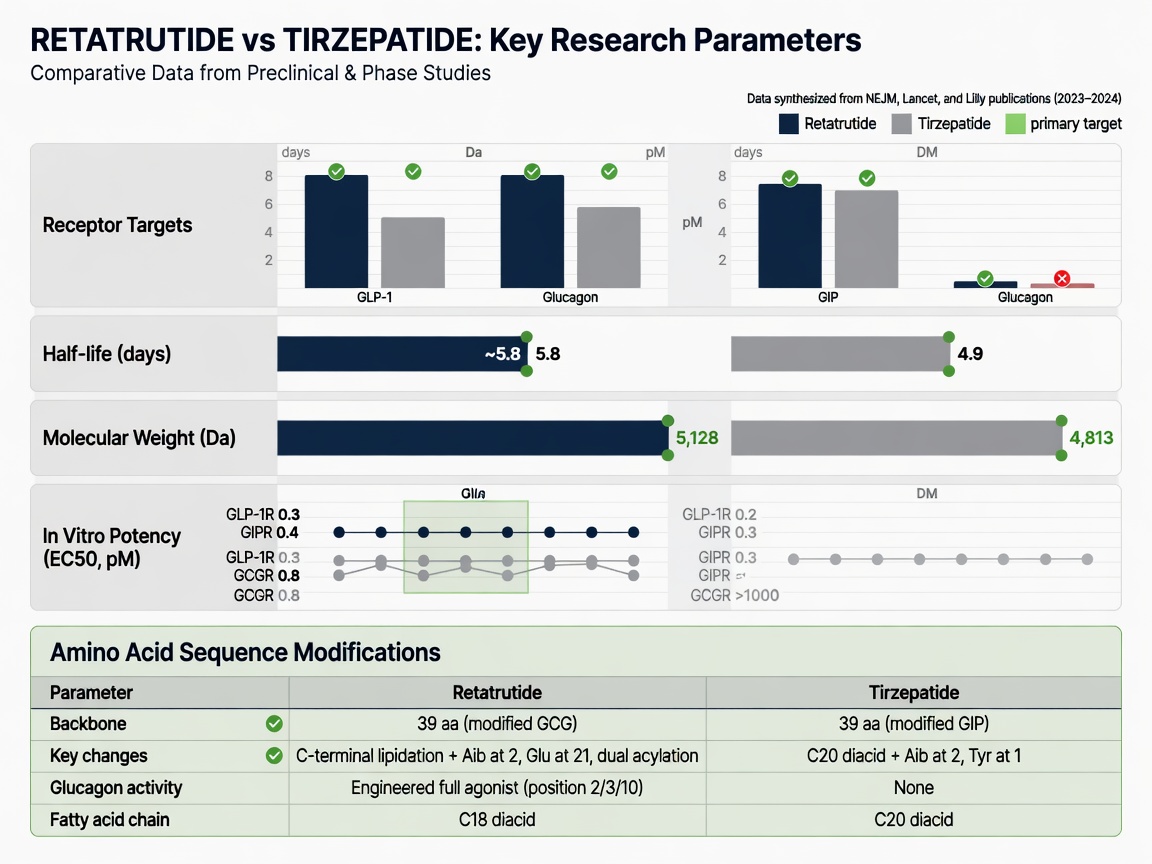
Scientific comparisons of Retatrutide vs Tirzepatide are common in this retatrutide peptide research guide because both compounds belong to engineered GLP-related peptide research categories. However, the comparison is strictly structural and molecular, not clinical. Researchers examine differences in amino acid sequence, peptide design approach, receptor interaction models, and analytical fingerprints such as HPLC retention time and mass spec fragmentation.
Tirzepatide is another synthetic peptide studied for GLP-related receptor pathways, often referenced in comparative peptide engineering. This retatrutide peptide research guide emphasizes that no direct biological or clinical outcome claims are made. Instead, laboratory teams use side-by-side LC-MS and RP-HPLC data to document molecular distinctions. Such comparisons help refine peptide design hypotheses and inform future synthetic modifications.
For additional structural context, researchers may review NIH PMC literature.
| Comparison Parameter | Retatrutide (Research Profile) | Tirzepatide (Research Profile) |
|—|—|—|
| Research Category | Engineered Synthetic Peptide | Engineered Synthetic Peptide |
| Scientific Area | GLP-Related Molecular Research | GLP-Related Molecular Research |
| Structural Focus | Amino acid sequence and receptor pathway models | Amino acid sequence and receptor pathway models |
| Analytical Verification | LC-MS, RP-HPLC, COA purity ≥95% | LC-MS, RP-HPLC, COA purity ≥95% |
| Study Limitations | In vitro research only | In vitro research only |
What Analytical Methods Are Used for Retatrutide Peptide Testing?
Analytical verification is a cornerstone of any retatrutide peptide research guide. The two primary methods cited throughout this guide are LC-MS (liquid chromatography–mass spectrometry) and RP-HPLC (reverse-phase high-performance liquid chromatography). LC-MS confirms molecular weight and fragmentation patterns, while RP-HPLC quantifies purity and retention time. Together, these methods establish peptide identity and batch consistency. No analytical discussion in this retatrutide peptide research guide implies clinical use.
Every research lot should include a COA that lists HPLC purity percentage (typically ≥95% for research-grade peptides), mass spectrometry confirmation, and the exact amino acid sequence. This retatrutide peptide research guide recommends cross-checking the COA against in-house analytical results. For guidance on evaluating suppliers, see 10 Signs of a Reliable Peptide Supplier in the USA.
| Analytical Method | What It Measures | Typical Research Threshold |
|—|—|—|
| RP-HPLC | Purity percentage, retention time | ≥95% purity |
| LC-MS | Molecular weight, fragmentation | Confirmed mass match |
| COA Review | Sequence, purity, mass documentation | Lot-specific verification |
| Stability Testing | Degradation under storage | -20°C lyophilized stability |
💡 Key Takeaway: What Analytical Methods Are Used for Retatrutide Peptide Testing?
How Should Researchers Handle Retatrutide Peptide in the Laboratory?
Proper handling is critical for maintaining peptide integrity, and this retatrutide peptide research guide outlines standard protocols. Lyophilized Retatrutide peptide powder should be stored at -20°C or below, with desiccant, protected from light and moisture. Researchers should aliquot the powder only after verifying the COA and only when ready for experimental use. Reconstituted peptide solutions are typically more fragile and should be used promptly according to supplier guidelines.
All laboratory work must remain in vitro. This retatrutide peptide research guide does not provide any dosing, human use, or veterinary use instructions. Instead, it focuses on stability, analytical verification, and experimental design. For additional research-grade peptide solution options, see tigerpeptides: 7 Proven Research-Grade Peptide Solutions.
| Handling Step | Recommended Practice |
|—|—|
| Storage of lyophilized powder | -20°C or below, desiccated |
| COA verification | Before any experimental use |
| Reconstitution | Only when ready for experiments |
| In-house analysis | RP-HPLC and LC-MS after receipt |
| Documentation | Record lot number, purity, storage date |
What Does the Future of GLP Peptide Research Look Like?
The future of GLP peptide research is likely to expand beyond current structural comparisons. This retatrutide peptide research guide anticipates more sophisticated computational models, higher-resolution mass spectrometry, and automated peptide synthesis platforms. Researchers will continue to study how sequence modifications influence receptor selectivity and stability, all within controlled laboratory environments.
Peptide libraries and high-throughput screening are also emerging as valuable tools. The retatrutide peptide research guide notes that engineered peptides like Retatrutide serve as model compounds for testing analytical workflows and receptor-binding hypotheses. No clinical or therapeutic predictions are made; the focus remains on molecular science.
For a broader view of research-grade peptide solutions, see Tiger Peptides | Research-Grade Peptides for Laboratories.
FAQ
What is the primary purpose of this retatrutide peptide research guide?
This retatrutide peptide research guide provides a laboratory-focused overview of Retatrutide peptide structure, GLP-related pathways, analytical testing methods, and storage protocols. It is strictly for research and educational purposes.
What analytical methods are recommended in this retatrutide peptide research guide?
The retatrutide peptide research guide recommends LC-MS for molecular weight and fragmentation confirmation, RP-HPLC for purity quantification (typically ≥95%), and COA documentation for sequence and batch verification.
How should Retatrutide peptide be stored according to this retatrutide peptide research guide?
According to this retatrutide peptide research guide, lyophilized Retatrutide peptide powder should be stored at -20°C or below, with desiccant, and protected from light and moisture. Reconstitute only when ready for experiments.
Does this retatrutide peptide research guide compare Retatrutide to Tirzepatide?
Yes, this retatrutide peptide research guide compares Retatrutide and Tirzepatide at the structural and analytical level, focusing on amino acid sequence, peptide design, and molecular pathway models — not clinical outcomes.
Is Retatrutide for human use according to this retatrutide peptide research guide?
No, this retatrutide peptide research guide states that Retatrutide is for in vitro laboratory research only. It is not for human use, not for veterinary use, and not intended to diagnose, treat, cure, or prevent any disease.
Ready to Take the Next Step?
Every product includes lot-specific documentation and third-party purity testing.
Explore Our Research Products →Free shipping on qualifying orders · Batch COA on request