
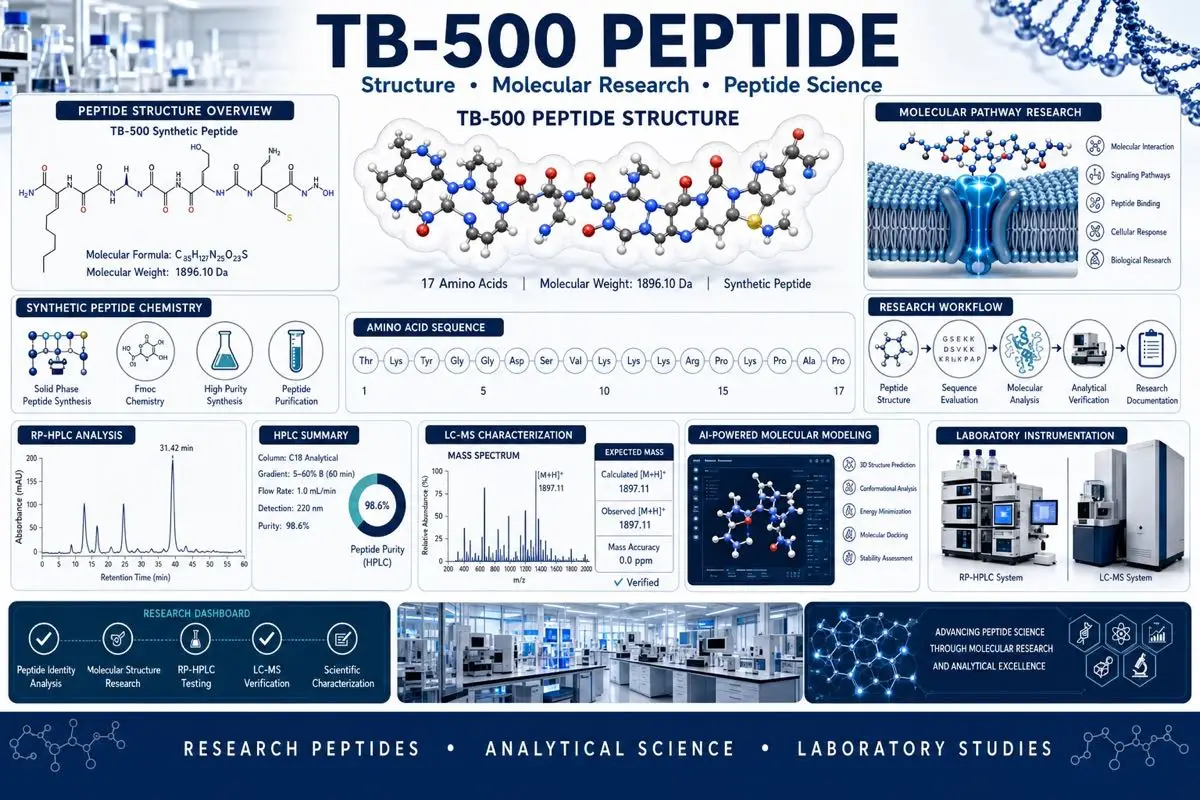
6 Checks Before You Buy TB-500 Online for Research
500 peptide buyers: verify batch COA, 97.947% LCMS/MS purity, Ac-LKKTETQ sequence, and traceability with 6 proven checks before you buy TB-500 for research.
📋 Table of Contents
Before you buy a 500 peptide such as TB-500 for research, require a batch-specific Certificate of Analysis, confirm the listing stays strictly within research-use-only language with no human-use or therapeutic claims, and verify the exact peptide sequence—including acetylation state—against the lot and vendor traceability documents. The safest procurement decision for a 500 peptide is not about price but about evidence: a COA matched to the exact vial, analytical methods such as LCMS/MS or HPLC, and a supplier that can document chain of custody.

Key takeaways
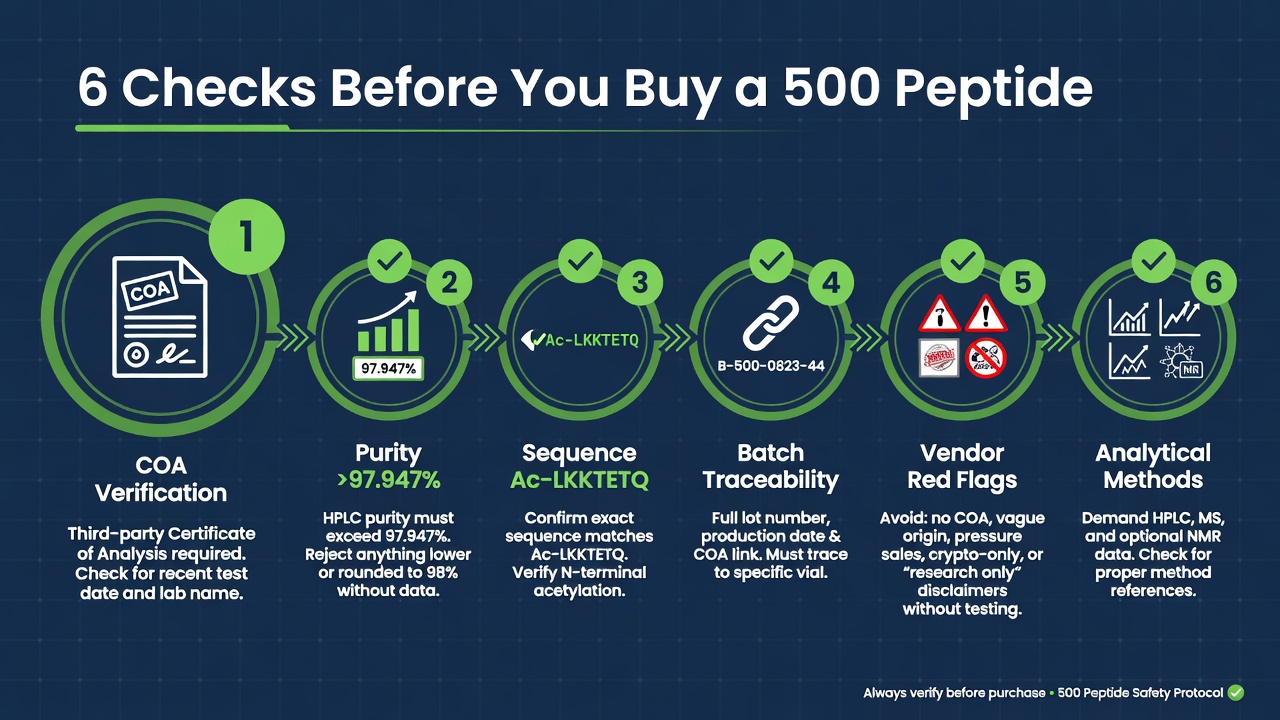
- Require a lot-specific COA with analyte name, batch number, analytical method, purity result, and matching product page data before any order for a 500 peptide.
- FDA lists thymosin beta-4 fragment (LKKTETQ), also called TB-500, as a substance that may pose immunogenicity risk from aggregation and peptide-related impurities, and FDA has not identified human exposure data for TB-500 drug products.
- “Research use only” is not enough by itself; FDA warning letters dated December 10, 2024 show websites can still be treated as marketing unapproved drugs if they make dosing, recovery, healing, or body-function claims about a 500 peptide.
- WADA research describes TB-500 as the N-terminal acetylated 17-23 fragment of thymosin beta-4, Ac-LKKTETQ, so confirm exact sequence, acetylation state, and naming consistency for any 500 peptide.
- LCMS/MS adds mass-based identity support while HPLC is widely used for purity profiling; a COA reporting 97.947% purity via LCMS/MS is stronger than a generic “lab tested” badge for a 500 peptide.
What should you check first before you buy a 500 peptide?
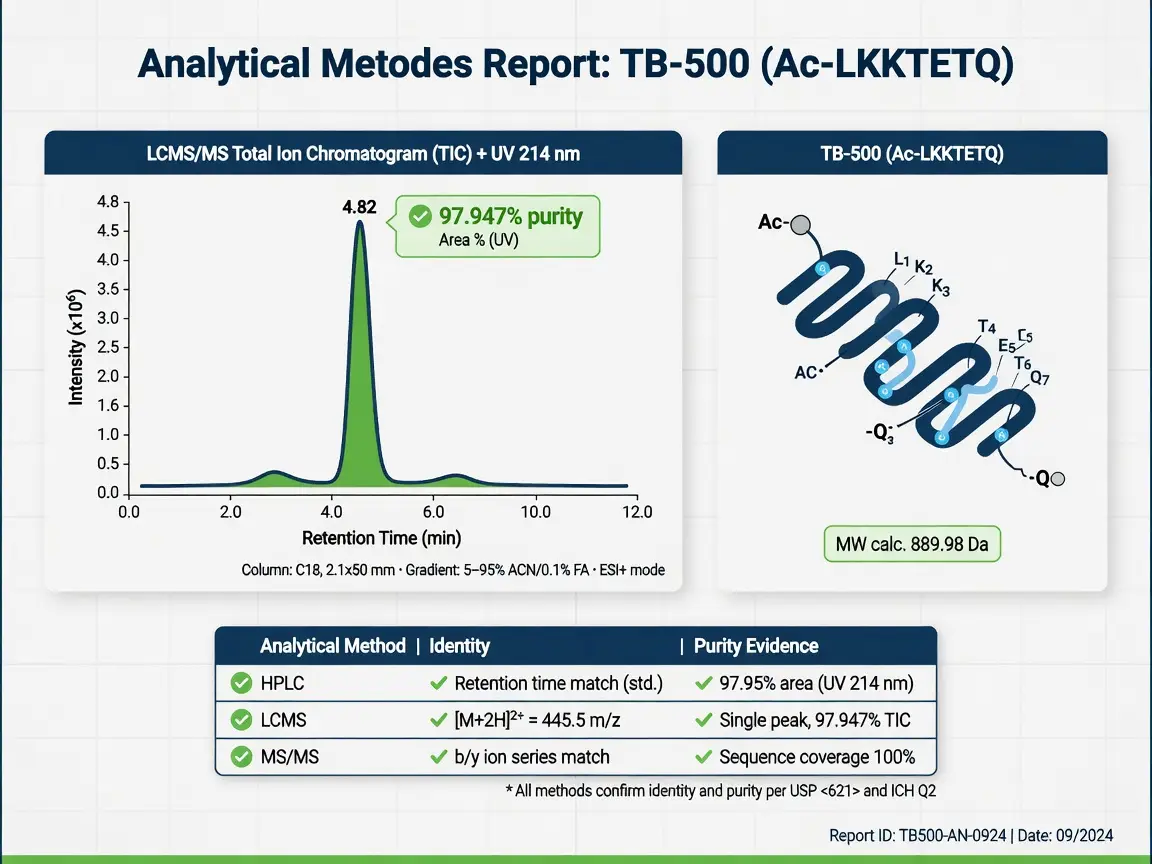
A 500 peptide like TB-500 sits at the intersection of peptide sourcing risk, analytical verification, and regulatory scrutiny. Before you buy a 500 peptide online for research, review primary literature: PubMed results on TB-500 and thymosin beta-4 provide a baseline for understanding the peptide and its fragment nomenclature. But the first procurement filter is not literature—it is the COA and the product page.
FDA and WADA materials make analytical proof, research-only positioning, and the absence of human-use claims the first filter for any 500 peptide. A strong first pass uses three signals together: a lot-specific Certificate of Analysis, a page that stays strictly within research language, and seller information that can support traceability. A common misconception is that “research use only” by itself makes a listing compliant or credible. FDA warning letters dated December 10, 2024 say website evidence can override that label when a seller also makes therapeutic or body-function claims about a 500 peptide.
If a vendor states a 500 peptide is sold for research use only, not for human use, and publishes a downloadable Certificate of Analysis for the product, that listing is worth deeper review. If the site mixes a disclaimer with recovery, wound, muscle, or dosing language, treat that as a red flag and keep looking.
How do you verify a COA before you buy a 500 peptide?
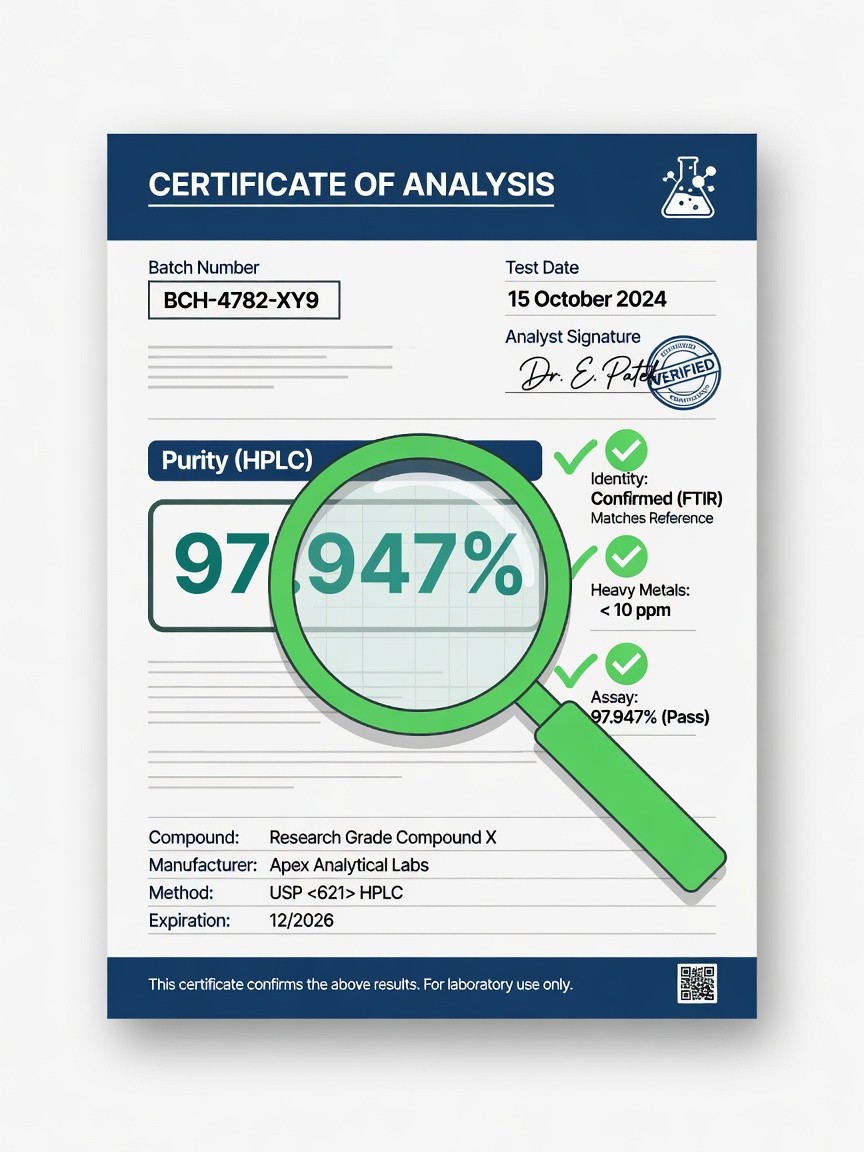
A COA is only useful if it matches the exact item you will receive. Verification for a 500 peptide has three steps.
Step 1 is document matching. The COA should match the exact product name, lot or batch number, and test date. If the site shows only a generic PDF with no lot reference, you cannot tell whether the analysis belongs to your vial of 500 peptide.
Step 2 is method review. A useful COA states the analytical method, the result, and the conditions at a practical level. In the background sources here, a TB-500 COA reports 97.947% purity and says the purity analysis was conducted using LCMS/MS under standard laboratory conditions. That is stronger than a badge that only says “lab tested” for a 500 peptide.
Step 3 is internal consistency. If the product page claims 99% purity but the attached batch COA shows a lower result, ask which figure applies to the lot of 500 peptide you will receive. Pro tip: ask whether the seller can provide the chromatogram or mass data if your SOP requires raw analytical support.

💡 Key Takeaway: How do you verify a COA before you buy a 500 peptide?
What are the 6 checks before you buy a 500 peptide for research?
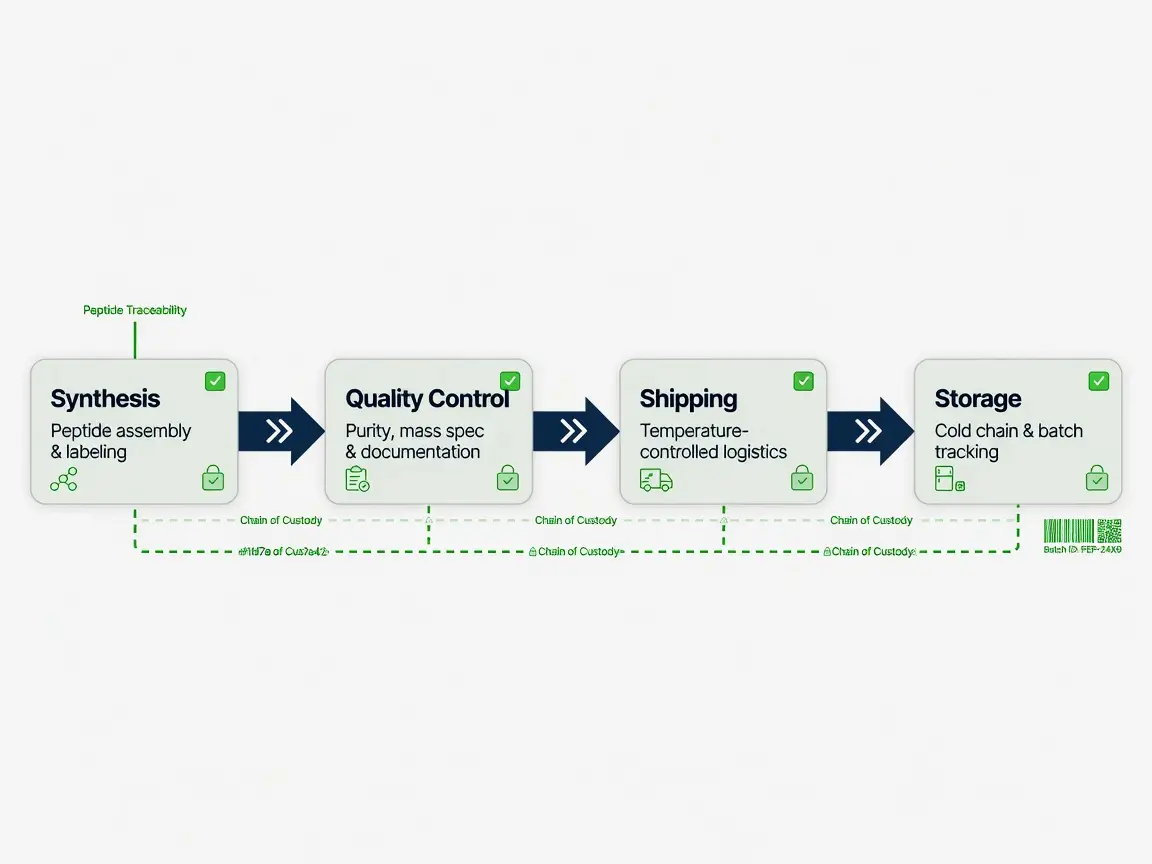
These six checks cover analytical credibility, regulatory risk, and procurement hygiene. They are the fastest way to separate a research-grade 500 peptide listing from a high-risk one.
| Check | What to verify | Red flag |
|——-|—————-|———-|
| 1. COA matching | Certificate of Analysis shows exact product name, lot/batch number, and test date matching vial and invoice for the 500 peptide. | Generic PDF with no lot reference. |
| 2. Analytical method | Require LCMS/MS or HPLC with a stated result; LCMS/MS gives stronger identity support for fragment peptides like a 500 peptide. | “Lab tested” badge without method or result. |
| 3. Purity reporting consistency | Compare product page purity claim with batch COA result; a 99% marketing claim and a 97.947% batch result are not the same kind of statement for a 500 peptide. | Page says 99% but COA shows lower. |
| 4. Site-wide claim screening | Read product title, short description, footer, FAQ, and blog links for therapeutic, recovery, healing, or dosing language about the 500 peptide. | Any human-use or body-function claim. |
| 5. Sequence and identity confirmation | Confirm whether the product is the FDA-named thymosin beta-4 fragment (LKKTETQ) or the WADA-described Ac-LKKTETQ; ask for exact sequence and identity method if naming is loose for the 500 peptide. | Vendor uses “Thymosin Beta-4” loosely while COA refers only to a short fragment. |
| 6. Traceability and chain of custody | Confirm business identity, U.S. operating location, batch linkage across vial/invoice/COA, and whether chain-of-custody documentation is available for audits or deviation reviews for the 500 peptide. | Anonymous seller, no physical address, no batch linkage. |
How do you screen a listing for red flags before you buy a 500 peptide?
Screen the whole site, not just the product block. FDA treats page copy, FAQs, and linked claims as evidence of intended use for a 500 peptide.
Step 1 is top-down review. Read the product title, short description, footer, FAQ, and blog links. Step 2 is claim detection. Search the page for disease terms, tissue repair language, body-function claims, and dosing language. Step 3 is cross-page consistency. If the product page says research use only but an article on the same site tells buyers what effects to expect in the body from a 500 peptide, that is not a clean research-only presentation.
A credible listing might state that the 500 peptide is a lyophilized powder and a research-grade peptide with a full Certificate of Analysis verifying identity and purity. This is where many 500 peptide buyers get tripped up: the disclaimer is not the deciding factor if the rest of the site looks like consumer drug marketing. If your lab needs a clean procurement file, archive screenshots of the listing on the order date.
For more on supplier comparison, see Searching “Almighty Peptides”? How to Compare Suppliers.

Is TB-500 the same as thymosin beta-4 fragment, and why does that matter for a 500 peptide buyer?
They are related labels, not always interchangeable labels. FDA uses thymosin beta-4 fragment (LKKTETQ), while WADA materials discuss Ac-LKKTETQ in anti-doping research. That naming gap matters because sequence and modification define the analyte for any 500 peptide.
WADA’s research page describes the active compound as the N-terminal acetylated 17-23 fragment of thymosin beta-4, Ac-LKKTETQ. If a vendor sells a 500 peptide under the name TB-500 but the COA refers only to a short fragment without specifying acetylation, you cannot assume the product matches the WADA-described sequence. Ask for the exact sequence, modification state, and the identity method used to confirm it.
This distinction also affects regulatory positioning. FDA uses the term thymosin beta-4 fragment (LKKTETQ) when discussing potential immunogenicity risk from aggregation and peptide-related impurities. For a 500 peptide buyer, confirming whether the product is the acetylated form or the unmodified fragment is a basic identity check, not a semantic detail.
💡 Key Takeaway: Is TB-500 the same as thymosin beta-4 fragment, and why does that matter for a 500 peptide buyer?
Which analytical methods give the strongest identity and purity evidence for a 500 peptide?
Two methods dominate peptide QC: LCMS/MS and HPLC. For a 500 peptide like TB-500, LCMS/MS adds mass-based identity support by confirming the molecular mass of the analyte. HPLC is widely used for purity profiling because it separates peptide species based on retention time. A COA that reports 97.947% purity via LCMS/MS under standard laboratory conditions provides stronger evidence than a badge that only says “lab tested” for a 500 peptide.
When comparing methods, ask whether the vendor can provide raw data such as chromatograms or mass spectra. A batch-specific COA with method, result, and test date is the minimum. If the listing claims 99% purity but the batch COA shows 97.947%, the page-level claim is not tied to the lot you would receive. Always request the COA that corresponds to the exact vial of 500 peptide you are ordering.

How do you assess vendor traceability and chain of custody for a 500 peptide?
Traceability means you can follow the 500 peptide from synthesis to your freezer. Confirm the seller’s business identity, U.S. operating location, and physical address. Then check that the batch number on the vial, invoice, and COA all match. Chain-of-custody documentation is important for audits or deviation reviews; ask whether the supplier can provide it.
Anonymous sellers, missing physical addresses, or mismatched batch numbers are red flags. A vendor that cannot link a specific COA to the vial you will receive has not demonstrated traceability for a 500 peptide. For a broader checklist of supplier reliability, see 10 Signs of a Reliable Peptide Supplier in the USA.
What does FDA say about a 500 peptide like TB-500 safety and human exposure data?
FDA lists thymosin beta-4 fragment (LKKTETQ), also called TB-500, as a substance that may pose immunogenicity risk from aggregation and peptide-related impurities. FDA has not identified human exposure data for TB-500 drug products. This means any claim that a 500 peptide is safe or effective in humans is not supported by FDA-reviewed data.
FDA warning letters dated December 10, 2024 demonstrate that “research use only” language does not protect a seller if the website makes dosing, recovery, healing, or body-function claims about a 500 peptide. The agency can treat such copy as evidence of intended use as an unapproved drug. Keep all procurement and documentation strictly research-use-only.
💡 Key Takeaway: What does FDA say about a 500 peptide like TB-500 safety and human exposure data?
FAQ
What is the first check before buying a 500 peptide?
The first check is a lot-specific Certificate of Analysis that matches the exact product name, batch number, and test date for the 500 peptide vial you will receive.
Why is 97.947% purity via LCMS/MS important for a 500 peptide?
A COA reporting 97.947% purity via LCMS/MS provides mass-based identity support and a specific purity result, which is stronger than a generic “lab tested” badge for a 500 peptide.
Does “research use only” make a 500 peptide listing safe?
No. FDA warning letters dated December 10, 2024 show that if a site makes therapeutic, recovery, or dosing claims about a 500 peptide, the research-use-only label can be overridden as evidence of intended drug use.
What sequence should I confirm for a TB-500 500 peptide?
Confirm whether the product is the FDA-named thymosin beta-4 fragment (LKKTETQ) or the WADA-described Ac-LKKTETQ, and ask for the exact sequence, acetylation state, and identity method.
Can I use a 500 peptide for human or veterinary purposes?
No. The products discussed are sold strictly for in vitro laboratory research purposes only, not for human use, not for veterinary use, and not intended to diagnose, treat, cure, or prevent any disease. Must be 21+ to purchase.
Ready to Take the Next Step?
Every product includes lot-specific documentation and third-party purity testing.
Explore Our Research Products →Free shipping on qualifying orders · Batch COA on request